
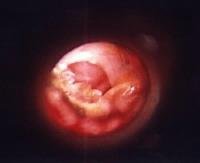
How long does it take a perforated (ruptured) eardrum to heal?
After a few weeks, the patient should notice no long-term symptoms. Perforated eardrums generally heal within two months, and any accompanying hearing loss is usually temporary. Rarely, a dangerous infection can spread into the brain or skull. This requires immediate hospitalization or surgery. Also, if the patient has symptoms of severe dizziness and vomiting, facial paralysis, or hearing loss, more extensive surgery of the inner or middle ear may be required beyond patching the eardrum.
What about surgery to fix a perforated (ruptured) eardrum?
Some large holes or non-healing small holes require surgery.
Surgical procedures are performed with a general anesthetic. Most people go home from the hospital or clinic on the same day.
An ear, nose, and throat specialist (ENT, otolaryngologist) may graft or patch the eardrum with paper, fat, muscle, or other material.
These materials act as a bridge, allowing the tympanic membrane to grow together.
Which specialties of doctors treat a perforated (ruptured) eardrum?
A primary care provider (PCP) such as a family practitioner, an internist, or child’s pediatrician may diagnose a perforated eardrum. You may also see an emergency medicine specialist in a hospital’s emergency department.
Most perforated eardrums heal on their own, but if you need further treatment such as a patch or surgery, you may see an otolaryngologist (ear, nose, and throat specialist, or ENT).
When to seek medical care for a perforated (ruptured) eardrum
Call a doctor immediately if you suspect you or someone you know has a ruptured eardrum and any of the following occur:
An uncontrolled spinning sensation
Difficulty walking
An abrupt change in hearing
A change in the ability to taste foods
You accidentally put your ear under water
The following symptoms suggest a potentially life-threatening complication and require immediate medical evaluation:
Stiff neck
High fever
The worst headache of your life
Numbness or weakness in face, arms, or legs
Difficulty talking or opening mouth
Continued vomiting
Pain or swelling behind the ear
Abrupt change in vision
Difficulty staying awake
Can a perforated (ruptured) eardrum be prevented?
Some causes of ruptured eardrums cannot be prevented or avoided. A little caution can lower the risk.
Treat ear infections early.
Avoid flying or scuba diving if you have sinus infection or upper respiratory tract infection.
If you must fly or scuba dive, pinch your nose and swallow air frequently to help equalize the pressure.
Never put anything in your ear, even to clean it (for example, Q-Tips).
Wear proper ear protection such as ear plugs or protection designed for sports activities.