A Taichung doctor has drawn attention to Crohn’s disease after a boy was diagnosed with the condition.
Asia University Hospital Department of Pediatric Gastroenterology doctor Chen Te-ching (陳德慶) said the hospital has admitted a grade-school student who complained of diarrhea and a fever that had persisted for several days.
The boy was initially diagnosed with gastroenteritis, but his condition did not improve after a week in hospital, which prompted doctors to perform a colonoscopy, he said.
Cultures collected during the procedure confirmed that the boy had Crohn’s disease, Chen said.
The disease is considered rare in Taiwan, with only 0.2 people out of 100,000 diagnosed with it, Chen said.
It is an autoimmune disease that usually causes chronic inflammation in the intestinal and stomach area, which leads to malabsorption of nutrients, he said, adding that the disease is mostly diagnosed in people 20 to 40 years old.
The disease can develop in any part of the gastrointestinal tract from the mouth to the anus, Chen said, but added that the small intestine and the colon are usually the most affected areas.
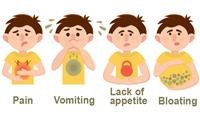
Its symptoms are similar to those of gastroenteritis, including diarrhea, stomach pain, malabsorption and bloody stool, which often causes it to be misdiagnosed as gastroenteritis, Chen said.
Left untreated, Crohn’s disease could cause hepatitis, arthritis, iritis and uveitis, he said.
It is a chronic illness and difficult to treat completely, and usually patients need to take medication for life, he added.
Steroids are usually prescribed to treat an acute attack of the disease, while chronic patients are usually prescribed immunomodulator medication, Chen said, adding that surgery is recommended should medication prove ineffective.
People with Crohn’s disease should maintain a low-residue diet to prevent exciting the stomach and intestines, Chen said.
Patients should not stop taking medicine on their own and should undergo routine checkups, he said.
The causes of Crohn’s disease are unknown and could be tied to environmental, immune or bacterial factors, Chen said, adding that some people could be genetically susceptible to the disease.