The invention of an implantable industrial college represents a breakthrough in the field of medicine, and provides a successful solution to the problem of chronic shortage of kidney donation necessary for the transplant process. Researchers have continued to deal with this problem over the past decades, and their problem has been very complex. It is how to keep the blood flowing, without clotting, through such devices
Industrial.
The platelets respond to the mechanical forces with these devices, and they have a natural tendency to clot, causing the devices to malfunction, according to the website of the US Department of Health based in Maryland, the National Institute of Biomedical Imaging and Bioengineering.
To overcome this problem, a combination of rare experiences in the field of industrial college development and those specializing in quantitative computer simulation for simulating the blood flow process, in the framework of a study whose results have been published in the journal "Biomechanics".
Hemodialysis
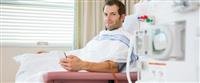
While dialysis saves the lives of thousands, not millions, every year, it is not the ideal solution to treat kidney failure. Instead of continuous blood filtration, which keeps the blood chemistry within a healthy range, it results in washing blood that is extremely clean, free of nutrients, and gradually becomes more toxic until the next hemodialysis session.
Blood clotting
The industrial college provides the advantage of continuous blood filtration, and this reduces the effects of kidney disease and relieves patients.
To that, the researchers made progress in the models of wearable devices around the body, but the transformation of the device to be able to be implanted inside the body encountered obstacles, due to the problem of blood flow in the body due to blood clotting.
"The risk of blood clotting lies in the fact that a thrombus can move up to the heart and cause a heart attack, and it can even cause a stroke if it reaches the brain," says Rosemary Hunzaker, director of the NIBIB Institute program in tissue engineering and regenerative medicine.
Biological engineering
The implantable artificial kidneys are a biologically engineered device that combines a highly efficient silicon filter, which is a kidney reactor, a small tube of cells, in the framework of a long-term project that has been implemented by Professor Shufu Roy of the University of California # In San Francisco (UCSF) Professor of Biomedical Engineering and Therapeutic Science, Professor William Wessel from Vanderbilt University School of Medicine.
The experimental device is designed to hold up to one liter of blood per minute, and filter it through a set of silicon films.
The filtered liquid contains toxins, water, electrolytes, and sugars. The fluid then undergoes a second stage of treatment in a bioreactor of cells grown in the laboratory of the type that usually lines the kidney tubes.
These cells also regain the absorption of most sugars, salts and water back into the bloodstream. As for what remains, it becomes a urine directed to the bladder to be excreted from the body.
The implantability challenge
There are a lot of techniques to implement this complex process, but one of the challenges remained before researchers, which is to bundle various innovations into one device that performs all the functions and can be transplanted into the human body.
Fruitful cooperation
San Francisco University and Vanderbilt University, Tennessee team collaborated on the one hand, and co-author Professor Danny Blaustein, Professor of Biomedical Engineering at New York State University, Stony Brook.
The Blaustein methodology
Professor Blaustein''s method was also used to determine the flow patterns and pressures that occur during blood flow. While explaining to a computer simulator about the tendency of blood to meet DTE materials, Roy and Visell immediately realized the possibility of applying his theories to the design of their artificial kidneys.
A sophisticated quantum computer simulation was also implemented to shorten many years of experiments and research in designing a device that gives good results that can be accurately analyzed, and can be safely tested, with respect to plate activation and the resulting clot formation.
This step contributed to making long strides in the project in the shortest possible time, as it is an native to experimental animals and paves the way for the start of clinical trials during the current year.