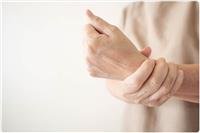
Sometimes, bony nodules develop on the fingers at the middle joint (Bouchard’s nodes) or last joint Heberden’s nodes). Patients with osteoarthritis may feel a deep ache at the base of the thumb, along with some swelling and perhaps a bump at the place where the thumb joins the wrist. This arthritic condition is surprisingly common in women, occurring in 25% of women over 50 years, and 50% of those over 70 years, but only 5% of men. The patient may notice the feebleness of grip and pinch, in the affected hand, as well as finding it difficult to open a door or turn a key, both of which require strong fine motor movements.
Treatment overview
To relieve such pain, which can interfere seriously with daily life activities, there are several lines of treatment. The level of treatment will be determined by many factors such as:
• The progression of the condition
• The number of joints involved
• The age and level of use of the hand
• Dominant or non-dominant hand affected
• Patient’s needs and goals, as well as the capability to follow a treatment plan properly
Non-surgical treatment
The first step is to temporarily stop any activity, fully or partially, which is causing the pain.
Secondly, a rigid splint may be placed over the hurting joint for short periods at a time. The forced immobility relieves the pain considerably when it is next put to use. The splint supports the joint, which reduces the stress on it. Long periods of splinting (for over a few weeks) are not advised as it can cause joint weakening by muscle atrophy.
Ice packs are very helpful, when applied following acute pain (as after a bout of hand use for a fairly strenuous activity) since they reduce the joint temperature and the secretion of inflammatory cell signaling molecules.
Warm fomentation is usually of great use in making the joint more comfortable, provided it is not actively inflamed.
Over-the-counter medications such as anti-inflammatory drugs help relieve symptoms but do not help the joint to heal or repair itself. NSAIDs (non-steroidal anti-inflammatory drugs) may prevent further damage by preventing the production of more inflammatory chemicals that can wear away more of the joint surface. However, these drugs may cause gastritis, peptic ulceration, liver damage, or kidney damage if taken in too high doses, for too long, or in combination with certain other medications.
Later on, if the symptoms persist or worsen, intra-articular injections of corticosteroids may be given to temporary relief of symptoms. These may sometimes need to be repeated once or twice, but not very often as it can weaken the tendons. Corticosteroids are powerful anti-inflammatory drugs and are often coupled with a long-acting anesthetic.
Hand therapists can help keep the affected joints flexible and strong once the acute inflammation is relieved. Exercises to build strength and stretches to keep the hand flexible are both very useful to relieve future pain as well as to prevent more damage. These strengthen the muscles which support the hand joints, thus reducing the load on the tendons and ligaments. Massage and mobilization by a physical therapist are also important at periods when the patient is in too much pain to do joint exercises.
Occupational assistance such as devices like tap turners, which make it easier for arthritic fingers to turn on taps, is invaluable in helping such patients to manage their pain and keep their independence.
Surgical treatment
When non-surgical therapy fails to control pain and allow normal hand or wrist movement, or when the condition causes the deformity, surgery is recommended. There are several options available, which should be discussed with the doctor.
Reconstructive surgery – for instance, with arthritis of the base of the thumb, this joint is reconstructed by removing one of the bones in the arthritic joint and replacing it with a packed tendon from the forearm. This provides padding to the injured joint, allows the joint to be mobile and relieves pain.
Joint fusion or arthrodesis is done by modifying the surfaces of a painful arthritic hand or wrist joint and then holding them together using a pin, for instance, to make sure they heal as one. This eliminates movement at that joint but relieves pain.
Joint replacement – this is usually only beneficial for patients who do not have heavy use of their hands. For instance, in many patients with rheumatoid arthritis, the joints at the finger bases are very damaged. Replacing this may allow free movement and relieve pain, but heavy loads cannot be put on the fingers as the joints are less stable and durable than the original. Most joint replacements use ceramic, sturdy plastic or metal parts.
Joint resurfacing – this is a less radical form of joint replacement where only small metal parts are used to replace the worn surface of the joint alone, and the replaced surfaces typically last longer.