Appendectomy is the surgical removal of the appendix. The appendix is a finger-shaped structure attached to the first part of the colon. Appendicitis is the most common reason for an appendectomy and is an inflammation and infection of the appendix. There is no medication to treat an inflamed appendix, and a burst appendix is considered to be a medical emergency. Performed under general anesthesia, a laparoscopic appendectomy involves three small incisions - one to allow a miniature video camera to view the abdomen, and two other incisions to insert tiny instruments to cut and remove the appendix. An open appendectomy uses one incision through which the appendix is cut and removed. Appendectomy is a very safe surgical procedure, but risks and complications should always be discussed with your doctor. Living without an appendix causes no known health problems. After surgery, most patients can resume normal activities within 1 to 3 weeks.
INTRODUCTION
Appendicitis is the inflammation and the infection of the appendix. The appendix is a finger-shaped structure attached to the first part of the colon. Appendectomy is the surgery to remove a dangerously inflamed appendix.
Appendectomy is the most common emergency surgical procedure. It is a very safe and successful procedure, if the patient seeks immediate medical attention.
This patient education tutorial reviews the anatomy of the digestive system, explains the causes of appendicitis, and the benefits and risks of an appendectomy, different types of appendectomy procedures and what to expect after surgery.
ANATOMY
The appendix is located in the digestive system. This section reviews the anatomy of the digestive system. The digestive system helps the body digest and absorb the food we eat. Swallowed food goes through the esophagus, which is the feeding tube.
The swallowed food then passes through the stomach where it is partially digested. Food goes from the stomach to the small intestines. In the small intestines nutrients are further digested and most of them are absorbed.
Fibers and digested food finally reach the colon. In the colon, the rest of the nutrients get absorbed and stools are formed. Stools are then stored in the last part of the colon before being excreted.
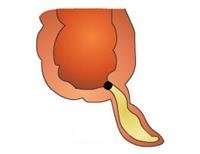
The appendix is a small, finger-like structure attached to the first part of the large intestine, known as the cecum. The appendix is located in the lower right portion of the abdomen.
The appendix has no known function. Removal of the appendix is not known to cause any change in digestive or other bodily functions.
APPENDICITIS
Appendicitis is an inflammation of the appendix. Once it starts, there is no medication that can effectively treat the inflammation. If not treated promptly, the appendix can burst causing infection to spread to the rest of the abdomen and even death. That is why appendicitis is considered a medical emergency requiring an appendectomy.
Anyone can get appendicitis, but it occurs most often between the ages of 10 and 30.
The inside of the appendix is called the lumen. When there is blockage inside the lumen, there is less blood flow and more pressure inside the appendix. This causes inflammation, which is the body’s response to fighting infections.
In most people with appendicitis, the appendix creates a swollen mass that is filled with fluid and bacteria, or pus. This fluid-filled mass can burst or rupture. Rupture is the most serious complication of appendicitis because it can lead to peritonitis. Peritonitis is a dangerous infection that happens when bacteria and other contents of the torn appendix leak into the abdomen.
Sometimes the body blocks off the area of infection forming an abscess. This appendiceal abscess may be as small as a walnut or as large as a grapefruit. Regardless of its size, it should be surgically removed before it ruptures and causes peritonitis.
In a few patients, complications of appendicitis can lead to organ failure and death. Removal of the appendix is a surgical procedure. If the appendix has already ruptured, the surgeon will also clean the abdomen during the procedure. Living without an appendix causes no known health problems.
Appendicitis is caused by a blockage inside the appendix. Most commonly, feces inside the appendix cause the blockage.
Bacterial or viral infections in the digestive tract can lead to swelling of lymph nodes, which can squeeze the appendix and cause obstruction or blockage. When the lymph nodes swell it is called lymphoid hyperplasia.
Traumatic injury to the abdomen may lead to appendicitis in a small number of people. In many cases of appendicitis, doctors are not clear what causes the inflammation.
SYMPTOMS
The main sign of appendicitis is pain in the abdomen, first around the belly button, then moving to the lower right area. This pain becomes more severe over the next 6 to 12 hours.
The pain intensifies and worsens when moving, taking deep breaths coughing, or sneezing. The lower right area of the abdomen can become very tender.
The following are other symptoms of appendicitis. Not everyone with appendicitis has all these symptoms.
loss of appetite
nausea
vomiting
constipation or diarrhea
inability to pass gas
low fever
abdominal swelling
People may have a sensation called "downward urge," also known as "tenesmus." Tenesmus is the feeling that a bowel movement will relieve their discomfort. Laxatives and pain medications should not be taken in this situation. Anyone with these symptoms needs to see a doctor immediately.
People who have diabetes, are obese, or have had a recent transplant surgery may simply have a general feeling of not being well. People who have the HIV virus, AIDS, or are taking medications that suppress their immune system may also have a general feeling of not being well.
Because abdominal pain, nausea, and vomiting are more common during pregnancy, such symptoms may or may not be the signs of appendicitis. Many women who develop appendicitis during pregnancy do not experience the classic symptoms. That is why pregnant women who experience pain on the right side of the abdomen need to contact a doctor.
Symptoms of appendicitis differ among children. Also, infants and young children cannot communicate their pain to parents or doctors. Toddlers with appendicitis sometimes have trouble eating and may seem unusually sleepy. Children may have constipation, but may also have small stools that contain mucus. If you think your child has appendicitis, contact a doctor immediately.
Elderly people often experience less fever and less severe abdominal pain than other patients do. Many older adults do not know that they have a serious problem until the appendix is close to rupturing. A slight fever and abdominal pain on one’s right side are enough reasons to call a doctor right away.
If the appendix ruptures and the pus spills into the abdominal cavity, the patient may suddenly feel better. However, soon after, the entire abdomen may become enlarged with gas and fluid and will likely feel tight and tender. If this happens, the pain may be less severe than before but it may be located in a larger area. This is a medical emergency and the patient should go to an emergency room immediately.
DIAGNOSIS
Several diseases cause abdominal pain similar to that of appendicitis. The doctor will take a detailed medical history and perform a thorough physical examination in order to make a diagnosis.
The doctor will ask many questions about the kind, timing, location, pattern, and severity of pain and symptoms. The doctor will also need to know about any previous medical conditions and surgeries, family history, medications, and allergies. If you or the patient uses alcohol, tobacco, or any other drugs, be sure to tell the doctor. This information is considered confidential and cannot be shared without the patient’s permission.
Before beginning a physical examination, a nurse or doctor will usually measure the patient’s vital signs. These include: temperature, pulse rate, breathing rate, and blood pressure. The locations of the pain and tenderness patterns are also important in helping the doctor make a diagnosis.
The doctor may also move the patient’s legs to test for pain when the hip is moved. These tests can help doctors detect inflammation, but not all patients have this symptom. A rectal examination may also be done. The rectal examination is usually not painful but may be uncomfortable.
In women, a pelvic exam may also be done to make sure that symptoms are not coming from a ruptured ovarian cyst or other problems in the female reproductive system.
Blood tests are used to check for signs of infection, such as a high white blood cell count. Blood analysis can also tell whether the patient is dehydrated or has a chemical imbalance. Analysis of the urine, or urinalysis, is used to rule out a urinary tract infection.
X rays, ultrasound, and CT scans can produce images of the abdomen. These tests can help make the diagnosis when other diagnostic tests are not conclusive.
Laparoscopy may be requested to rule out inflammation of the ovary or fallopian tube. Doctors may also order a pregnancy test for women of childbearing age.
SURGERY
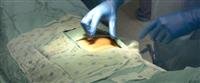
The operation to remove the appendix is called an appendectomy. It can be performed through an open surgery or a laparoscopic surgery. Both are done under general anesthesia.
In open surgery, the surgeon makes a standard small incision in the right lower part of the abdomen through which the appendix is cut and removed.
During a laparoscopic surgery, the surgeon inserts a laparoscope into the abdomen through a small incision. The laparoscope has a miniature video camera that allows the surgeon to view the inside of your abdomen on an outside video monitor. Two other small incisions are made to insert tiny instruments that cut and remove the appendix.
In some patients, laparoscopy is preferable to an open surgery because the incisions are smaller, recovery time is quicker, and less pain medication is required. But if the appendix has ruptured or if an abscess is present, open surgery may be the only option.
Sometimes the surgeon starts the operation using scopes but may have to switch to an open operation if he or she decides that it is safer for the patient. This may happen if the patient has lots of scarring in the abdomen.
In an open surgery and a laparoscopic surgery the abdomen is entered and the appendix is taken out, even if it is found to be normal. If the appendix is completely removed, any later episodes of pain will not be diagnosed as appendicitis.
RISKS AND COMPLICATIONS
Appendectomy is very safe. There are, however, several possible risks and complications. These are unlikely but possible. You need to know about them just in case they happen. By being informed you may be able to help your doctor detect complications early.
The risks and complications include
Risks related to general anesthesia
Risks related to any type of surgery
Risks specific to an appendectomy
Risks of general anesthesia include nausea, vomiting, urinary retention, cut lips, chipped teeth, sore throat, and headache. More serious risks of general anesthesia include heart attacks, strokes, and pneumonia. Your anesthesiologist will discuss these risks with you and ask you if you are allergic to certain medications.
Blood clots in the legs can occur due to inactivity during and after the surgery. If they occur, they usually show up a few days after surgery. They cause the leg to swell and hurt.
Blood clots can become dislodged from the leg and go to the lungs where they will cause shortness of breath, chest pain and possibly death. It is extremely important to let your doctors know if any of these symptoms occur. Sometimes the shortness of breath can happen without warning. Getting out of bed shortly after surgery may help decrease the risk of blood clots in the legs.
Some of the risks are seen in any type of surgery. These include infection, bleeding, and skin scar. Infection can be deep or at the skin level. Infections can involve the abdomen incision. Deep infections may involve the abdominal cavity itself. This is known as peritonitis. Treating deep infections may require long-term antibiotics and possibly surgery to drain the pus. In extremely rare cases there is a possibility of rerouting the intestines to the outside for some time. The risk of peritonitis is higher if the appendix has ruptured prior to surgery.
Bleeding, either during or after the operation. This may require a blood transfusion or another operation. This is rare.
A skin scar that may be painful or ugly. The skin scar is bigger for open surgery than for laparoscopic surgery.
Other risks and complications are related specifically to appendectomy. These again are very rare. However, it is important to know about them.
Internal organs in the abdomen may, in very rare cases, be injured. These include blood vessels, the intestines, the colon, the liver and other organs. Such an injury may require another operation to fix the problem.
A hernia may occur at the incision site because of weakened abdominal muscles. This is very rare because the abdominal wall where the surgery is performed is very strong. However, it may happen, and may require another operation to fix it.
In cases of rupture of the appendix, peritonitis may set in despite the surgeon’s effort to clean the abdomen Peritonitis is the inflammation and/or infection of the abdominal cavity. Such an inflammation can lead to scarring of the abdominal cavity. Rarely this scarring can lead to a connection between the intestines and the outside through the skin. This is known as a fistula and may require one or more surgeries to fix.
Scarring, also known as adhesions, can result in future bouts of abdominal pain. Rarely, this can result in a blockage of the intestines that may make future abdominal operations necessary. Such blockages can occur years after the appendicitis and the appendectomy procedure.
Sometimes the surgeon may find the appendix is not inflamed or infected and is normal. It is still taken out as a preventive measure so that another episode of abdominal pain may not be mistaken for a future attack of appendicitis.
AFTER SURGERY
The patient is usually taken to the recovery room after the operation. Afterwards the patient is taken to a regular hospital bed.
An IV will be connected to the patient’s vein to provide nourishment until he or she can eat and drink again. The patient will not be allowed to eat or drink until he or she passes gas, which is an indication that the intestines are functioning. The patient may have a small tube that comes out of the abdomen to drain extra abdominal fluid.
The nurse will help the patient walk as soon as possible so he or she can circulate blood in their legs. This helps prevent blood clots in the legs.
The patient may go home the same day or in a few days, depending on whether an open or laparoscopic procedure was performed. If the surgery was to treat a ruptured appendix with peritonitis, the patient may need to stay longer at the hospital and receive intravenous antibiotics.
Severe abdominal pain usually improves rapidly even though some incisional pain may persist for few days.
The doctor will probably prescribe pain medication and ask the patient to limit her or his physical activity. Recovery from laparoscopic appendectomy is generally faster, but limiting strenuous activity may still be necessary for 4 to 6 weeks after surgery.
Most people treated for appendicitis recover and rarely need to make any changes in their diet, exercise, or lifestyle. Most patients can resume normal activities within 1 to 3 weeks after surgery.
Make sure to contact your doctor in case of any new symptoms, such as fever, severe abdominal pain, weakness, swelling, or infection.
CONCLUSION
Appendicitis is an infection of the appendix. It is usually a painful condition that may end in the rupture of the inflamed appendix.
If the infected appendix ruptures, it spills the pus and the infection into the abdominal cavity. This may cause peritonitis, which is infection of the abdominal cavity. The complications of peritonitis include organ failure and death. That is why emergency medical treatment is required when the appendix ruptures.
Appendicitis does not respond well to antibiotics. That is why the most common treatment is removal of the appendix. This surgery is known as an appendectomy. An appendectomy can be done through an open surgery or through a laparoscopic surgery. Your doctor will help you determine which is best for you.
Appendectomy is a very safe and a very successful operation. Risks and complications are very rare. Knowing about such risks and their signs may help you detect and treat them early.