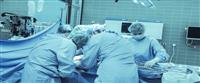
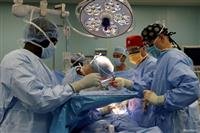
Renal excision is the removal of the kidney surgically, as it is the organ that filters waste from the blood and produces urine, and each person has two kidneys on the right and left sides, each about 4: 5 inches long, located in the back of the abdomen, below the diaphragm, behind the liver On the right, and the spleen on the left, according to the "drugs" website.
Part of each kidney is protected by one or two ribs and muscles that cover the back and side of the body, and there are two types of kidney resections, either kidney or part of one kidney or two kidneys:
Partial nephrectomy: a portion of one kidney is removed.
Simple nephrectomy: the kidneys are removed.
Radical nephrectomy: Each single kidney is removed with the adjacent adrenal gland (the adrenaline-producing gland above the kidneys) and the adjacent lymph nodes.
Dual nephrectomy: both kidneys are removed.
Nephrectomy is performed with conventional open surgery for simple nephrectomy, in which the surgeon removes the kidney through a standard incision (surgical cut) whose length ranges between 8 and 12 inches, when possible, this incision is made on the side of the body to allow the surgeon access to Kidney with abdominal organs disturbed to the minimum however, depending on the cause of kidney removal and patient health, an incision may be made in the front of the abdomen or in the back.
In the laparoscopic procedure, four small incisions are made in the abdominal wall, the doctor uses a laparoscope (a penis-shaped tool with a camera for viewing inside the body) to direct surgical instruments and to free the kidneys. Until the kidneys can be removed in one piece, this is usually the largest incision next to the navel.
Both conventional open endoscopy and laparoscopic nephrectomy are done with the patient under general anesthesia, so that the patient is not awake during the operation, endoscopic nephrectomy usually causes less pain during the hospitalization period than conventional nephrectomy, and allows faster recovery and less visible scarring.
However, laparoscopic nephrectomy takes longer under anesthesia than is open nephrectomy.
Kidney removal can be used to remove the kidneys for the following reasons
Kidney cancer.
Kidney damage, damage causes frequent symptoms or problems (such as infection), damage can be caused by infection, kidney stones or abscesses, damage can also occur if the urine increases pressure due to obstruction somewhere in the urinary system.
The patient suffers from a sharp rise in blood pressure due to narrowing of the renal artery. In this case, the affected artery results in damage to one kidney, usually nephrectomy does not treat high blood pressure in this disease, but it can make controlling blood pressure more manageable.
Severe trauma, such as a car accident, has damaged the kidneys beyond repair.
One person wants to donate a kidney to another person.
The transplanted kidney is rejected by the recipient''s body and does not work. Surgery to remove this kidney is called an allogeneic resection and is surgically different from removing the sick kidney.
How is the patient prepared for the process of nephrectomy
About a week before surgery, the patient needs to stop taking aspirin and other blood-thinning medications, starting from midnight on the night before surgery, the patient should not eat or drink anything This reduces the risk of vomiting during surgery, and as part of the preparations General of surgery, the doctor will review allergies and medical and surgical history, if the patient is pregnant, she must inform the doctor before surgery.
The risks of kidney resections
The risks of the procedures depend on the type of nephrectomy (simple, radical, bilateral, laparoscopic) and on the surgical approach (incision site). Some risks include:
Injury to neighboring organs, such as the intestine, liver, spleen and pancreas.
Bleeding, either inside the abdomen or from a surgical wound.
Accidental cutting or puncture of the chest cavity, causing lung collapse.
A temporary decrease in lung function immediately after surgery.
Wound infection
A temporary decrease in kidney function if only one kidney is removed.
Nerve injury near the incision site.
Hernia (flatulence) causes a bump under the crevice.