
the conservative spirit of society
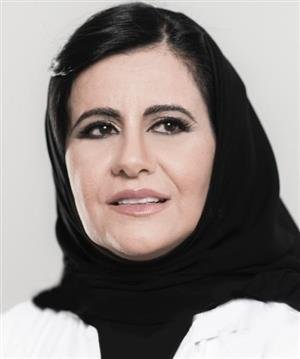
Dr. Salwa Al-Hazza..When the woman''s development emerged from the conservative spirit of Saudi society in 1978, the family returned from America. The father finished the master’s thesis and the five girls were well-educated, well-developed, proficient in the English language, and had very ambitious ideas, days later one of their relatives said to their father, and heard from them: “If these girls were boys, I guarantee you that they will achieve big things. But unfortunately they are girls.” Now these girls occupy large and influential positions and are active in serving the issues of Saudi women, and one of them is the famous Dr. Salwa Al-Hazaa. She says: (After I heard it, I was disappointed. It was the first door to slap strongly in our faces). However, this did not cause her to revolt against the customs and traditions of Saudi society despite her strong influence. She has a realistic and practical look and does not seem to show hatred for the things that bother her. Without feelings of hatred, she wants to change the things that hinder the advancement of women, not because they hate them, but because they only hinder women. "We are in a country where customs and traditions control," she says. "My desire to change some of them does not diminish my respect for them. I think the noise is disturbing and will not provide any positive result, on the contrary. Things will not happen day and night." In recent years, positions and titles have been searched for. In addition to heading the Ophthalmology Department at King Faisal Specialist Hospital in Riyadh, she is president of the Friends of Saudi Arabia Association and associate professor at the prestigious American University John Hopkins. She recently received the Distinguished Arab Women Award from the Arab University and Forbes magazine gave her the title of Strong Arab Woman. She says: (I did not look for anything. But maybe these good and encouraging things will come to you after many years of hard work). However, all this did not make the doctor, who speaks in an accent under the pressure of pronouncing English and inlaid with her poetic words, give up her modesty, and most importantly, the strength of influence she obtained did not change her way of serving women''s issues. It works in a very pragmatic way. "You will not be able to confront a large and proven system. Try to be part of it and change from the inside," she says. So far, this result seems very effective for her. She was able to overcome many obstacles and move forward to achieve positions for the first time that Saudi women obtain, and this does not seem to offend anyone, but it seems very acceptable and natural. She considers this method very appropriate to help women. She says: (Some women are not convinced of this viewpoint, but I now know that girls who want to enter medicine and face the refusal of their families on the pretext of what may cause them to be deprived of marriage and childbearing are saying to their families with great confidence: Look at Salwa Al-Hazaa got married and gave birth to. Has this affected her with something? Happy to be a model that inspires girls and I think I serve them with that.) But she faces the criticism faced by the one in the middle because each party counts it against the other, and she seems to understand that, but she believes in the slow and effective way that she practices. She says: (There are different groups of women who oppose my vision. We are not getting late). The idea of lingering and not taking things at random became her like obsessive who did not spoil her, an idea that grew with her since childhood when her father was telling her with her siblings to take great care before they make their decisions. This obsession becomes more urgent when there are points of collision with the Saudi social system. She says: "I believe that if something happens to upset many, it will not be as strong as it would be if the majority of men were satisfied and provided you with support and support." Her view of men is very different from that of most women activists in women''s rights. She understands equality with men as being confined to one aspect and not the other. She says: “I do not look at the same dry view of the project of equality with men. I do not want to interfere in the natural physiological aspects. I am a lady and I like people to treat me like a lady ..”. So the doctor seems very understanding of most situations that anger even ordinary women, such as the presence of a mahram and travel with permission of parents. And she adds: (All our progress, success, failure, and regression are related to a simple word: patience). Dr. Salwa Al-Hazaa, who drew a lot from her realism and solidity from her own experience emanating from the conservative spirit of Saudi society and her family, the struggle that started from scratch and is now one of the well-known families (with a strict request from her father who believed in the importance of the personal struggle for success, she, while she was a small, printed his letter to the master that takes the size of a book Huge) Do not sleep more than five hours a day to complete the tasks that multiply every day and make them watchful until two o''clock after midnight. She says in a friendly tone: (I think my strength lies in my continuous knowledge and work) ... although many women may not like it but it quickly turns into a symbol for many Saudi girls.