and solutions are available
Snoring is medically defined as a sound that a person makes during breathing when falling asleep. It is usually accompanied by inhalation, but it may happen with exhalation sometimes, and there are people who suffer from snoring in the waking as well. Statistics show that about 45% of adult people suffer from the problem of snoring sometimes, and about 25% of adults suffer from it permanently, and that the proportion of snoring increases with age.
Causes of snoring
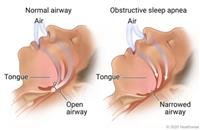
Dr. Abtihaj Saleh Gharib, Consultant of ENT - she obtained a fellowship from the British College of Ear, Nose and Throat surgeons and a member of the American Academy of Ear, Nose and Throat member of the Saudi Society for Ear, Nose and Throat - made it clear to your “health” It is a partial blockage of the airway in the nasopharynx, oral pharynx and back of the tongue.
It explains the relaxation in the anatomical triangle of the muscles that make it up, in part, preventing the withdrawal of air into the lungs. With the diaphragm contracting, the air is drawn, confined to passing through the partial obstruction of the upper duct, and oscillation of the soft tissues of the roof of the throat and soft palate occurs, and the sound of snoring occurs ... sometimes a complete interruption of breathing may occur.
Dr. Ibtihaj Gharib adds that snoring has other organic causes, which are: Weakness of the tongue muscles and the oral pharyngeal cavity: Extreme relaxation occurs in this area during deep sleep (sleep after severe stress or staying up late).
Increased tissue density surrounding the oral cavity of the pharynx, such as enlarged tonsils and adenocarcinomas (nasal pharyngeal fever) that occurs in children, and excessive weight gain in adults. The softening of the soft palate and soft palate tissues.
Organic stuffy nose: such as deviation of the nasal septum, enlargement of the nasal pods, nasal growths or nasal fevers and tumors.
There are some diseases that can lead to an increase in the density of tissues surrounding the oral pharyngeal cavity, such as hypothyroidism, which leads to weight gain and fat accumulation. There are also central neurological causes of respiratory failure which are rare, including polio, diseases related to the visual thalamus in the brain (Thalamus) such as stroke, and diseases related to the spinal cord.
Complications of snoring
Is snoring a problem and has complications? Dr. Ibtihaj Gharib answers: Yes, snoring is a problem for the person who has it and for others who share the habitat. Healthy sleep is three stages, the sleeper must suffice with all of them, otherwise he will suffer from insomnia and will not be able to reach the required degree of falling asleep, due to the fact that the injured needs to return from the third stage to the first stage of sleep continuously during One night to get enough air and oxygen.
Snoring may be accompanied by complete disruption of breathing. If this interruption exceeds ten seconds, and if this recurrence occurs more than seven times per hour, this means a decrease in blood oxygen, which leads to an increase in heartbeat, and gradually a chronic pathological heart fatigue in the long run and a rise blood pressure. Many of those with snoring complain of tension and loss of the ability to deal properly with others, as well as complain of fatigue, stress and lethargy during working hours during the day. This affects their accomplishments due to their loss of focus, and their achievement level will be degraded, and they may have many accidents when dealing with dangerous devices that need some focus and attention.
Diagnosis
Diagnosis is made by hosting the patient in the hospital to sleep for one night (seven hours of sleep) with his connection to the sleep planning device, which are connections that are fixed to certain areas in the patient''s head, hands and feet, and a camera installed on the patient, through which all sleep events are recorded: From snoring - apnea - muscle relaxation - hypoxia - and sleep phases. And all these readings are recorded on the computer through numbers, tables and graphs, and this information is studied, then the results are drawn that show the actual number of hours of sleep, the number of hours of partial and full alertness, the percentage of snoring, and lack of breathing. The rate of oxygen and its oscillation during sleep are determined, then the type of snoring and its method of treatment are determined.
treatment
Dr. Ibtihaj Gharib confirms that snoring treatment is basically a treatment for the reasons leading to it, such as weight loss and treatment of thyroid glandiness ... etc. and that there are non-surgical and other surgical methods.
Non-surgical methods: It aims to reduce snoring, such as urging the patient to sleep on his side instead of on the back with the delivery of a type of stimulants on the back to prevent the patient from taking a lying position on the back during sleep fall asleep.
(C-PAP) device can be connected to the area of the mouth and nose directly before bed, as this device works to pump air into the airway by means of continuous pressure. In order to cross the soft or dense tissue barrier, snoring is thus zero.
There are also some auxiliary devices with which the tongue can be stretched forward to prevent it slipping backward during sleep.
Surgical methods: They are multiple, including tonsillectomy and adenoidectomy, as the problem may end after this procedure. Or, the patient may need to perform a shortening of the soft palate and reshape the uvula by laser or regular surgery. Some patients need to reduce the density of the back tongue. Finally, we say that prevention is always better than cure. One has to constantly notice his weight and avoid constant sleep.