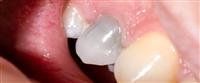
The exam period is one of the difficult periods that students undergo in schools and universities, which often overshadows their psychological state. And usually such mental disorders appear in the form of bad, painful and destructive habits of the teeth, such as stubbing or grinding teeth, especially during sleep. And the continuation of such habits may lead to erosion of the teeth, especially in the grinding surfaces and the cutting ends, which leads to shortening of the teeth and imbalance of the ideal teeth for humans. Shortening of the teeth due to erosion may affect the balance of the jaw muscles and joints, which leads to joint and muscle pain mixed with the pain of excessive sensitivity that may also occur due to exposure of the ivory layer sensitive due to chattering, and thus the patient may enter the vortex of the pain and his psychological condition will worsen more.
In the absence of sufficient awareness among the people, the incidence of these disorders increases in the people and in marked proportions, especially among students, so we must be careful not to enter this cycle and prepare for the tests well away from problems and pain. We will highlight these disorders, their causes and how to prevent them.
Psychological jaw disorder
Such symptoms are classified in dentistry by the so-called "TMJ associated with mental disorders" to which humans may be exposed. These symptoms are mastication or mowing of the teeth during sleep, dental pain, facial muscles, crackling sounds in the joints during the opening and closing of the mouth, and sometimes difficulty opening the mouth, or the mouth gets stuck in an open position, especially during yawning. In advanced cases, the patient may develop cramps in the face and neck muscles.
Usually, these symptoms begin in a simple way if a person first notices them, and he may protect himself from painful and annoying symptoms that he is indispensable, especially at an important stage such as the exam period. Therefore, everyone who feels some of these symptoms is advised to refer to the specialist doctor to prevent worse symptoms that may hinder his performance in his exams.
Mechanism of the problem and its diagnosis
The jaw joints are one of the most sensitive areas, as they are located in front of the ears and run alongside them nerves that feed the ears and the surrounding area. In addition, it represents the ends of the lower jaw, linking it to the bones of the skull, and through them the lower jaw can be moved during chewing and speaking, and therefore any imbalance that may occur to the jaw or its muscles, or any problems in occlusal teeth that may negatively affect these two joints, causing some symptoms Really troublesome, which may sometimes lead to an inability to open the mouth. The presence of the joints of the jaw in this sensitive area makes the patient and sometimes the doctor confused in terms of diagnosis, as the patient confuses ear pain and joint pain, sinus infections, gum infections surrounding wisdom teeth, and some types of headaches, because their pain is very similar. The calamity is that the diagnosis sometimes needs to be visited by more than one specialist. When the patient feels pain in that area, he may visit the ENT doctor, and after detection he finds that his ears are healthy, and his sinuses are intact, to begin the search for treatment at the dentist, believing that wisdom teeth are the cause. After removing the wisdom tooth The problem does not go away, and the patient lives in an endless cycle, except by a specialized dentist.
Diagnosis of TMJ needs a specialized dentist, and most dentists related to this are oral surgeons, as well as orthodontists. There are now specialized headache clinics supervised by a team of doctors, neurologists, ear, nose, throat, teeth and eyes, who are best at diagnosing the cause of such symptoms.
The simplest diagnostic methods depend on patient accountability, knowledge of the history of the disease, and clinical examination of the face and jaws.
Treatment and prevention
Preventive treatment is one of the most successful methods of treatment, especially in the initial stages of the disease. A global method is very useful in treating such symptoms. This method is summarized in the following:
1- The work of a moving light device for the bite the patient wears, especially during sleep. The aim is to prevent stubborn teeth and put pressure on the teeth and muscles. This device is usually made of hard transparent plastic covering all teeth in the lower or upper jaw.
2- Give the patient a muscle relaxant medicine, to help reduce and prevent muscle cramps. This medicine is usually prescribed for a period of two to three weeks.
3- Give the patient an anti-inflammatory drug. The most famous of these drugs is called Provin. Its importance is to reduce any infections that may occur in the joints and at the same time reduce the pain associated with the disease.
4- Physiotherapy by doing some exercises for the lower jaw and facial muscles and using warm compresses on the face and jaw area.
5- After eliminating acute and painful symptoms, any dental occlusal abnormalities are treated, as scientists have found an indirect relationship between some types of malocclusion and temporomandibular disorders such as the inverse bite and the second class of Angel occlusal abnormalities.
6- In advanced and chronic cases associated with joint erosion or those related to other diseases such as erosion of the joint or rheumatism, the patient may need surgical intervention ranging from arthritis, microscopic surgeries and radical surgical jaw treatment, which scientists doubted its success in many cases.