
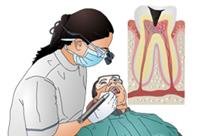
Dental Caries refers to tooth decay or cavities. Dental caries are caused by bacterial infections which cause the tooth to rot, resulting in holes (cavities) in the teeth. Cavities can become quite large and may reach the center of the tooth where the nerve is located. Not brushing your teeth after eating or drinking allows plaque to build up and rot your teeth. Frequent snacking or drinking sugary drinks allows acid to break down and decay your teeth because they never get rinsed off. Bottled water does not have the fluoride that is put into public tap water to prevent dental caries. A cavity must be treated or it will get larger and may come painful and cause infection.
INTRODUCTION
Dental caries is another way of saying tooth decay or cavities. Cavities are rotten areas in the teeth that turn into little holes.
Dental carries is the most common chronic disease of children between the ages of 5 and 17. Dental caries also affect adults and even babies.
This program explains dental caries and its causes, treatment options, and prevention measures.
TOOTH ANATOMY
The outer layer of a tooth is made of enamel. This is a hard covering that protects the inner parts of the tooth. It can be damaged by decay. Sometimes it can be built back up with fluoride treatments.
Underneath the enamel is a layer called dentin.
The center of the tooth is made up of soft tissue that contains nerves and blood vessels. This is called the pulp. Decay that reaches the pulp of a tooth can be very painful.
The top part of the tooth that you can see is called the crown. The place where the teeth and the gums meet is called the gumline.
The part of the tooth that is under the gumline is called the root. The root stabilizes the tooth and holds it in place. Even though it is under the gumline, it can also become damaged from decay.
DENTAL CARIES AND THEIR CAUSES
Dental carries are caused by bacterial infections. The infection causes the tooth to rot which results in small holes in the teeth. The holes can become quite large and at times reach the center of the tooth where the nerve is located.
People get dental caries for a number of reasons. Not brushing after you eat or drink allows plaque to build up and rot your teeth. Frequent snacking or sipping on sugary drinks allows acid to break down and decay your teeth because they never get rinsed off.
Drinking bottled water rather than tap water makes you miss out on the fluoride that is put into public tap water. Other causes of dental caries include dry mouth, eating disorders, heartburn, and certain cancer treatments.
TREATMENT
Dental caries must be treated. Cavities get bigger the longer they are left untreated. They also become very painful and can cause further infections.
When decay is only in the beginning stages, sometimes fluoride treatments help restore the enamel on the tooth. Professional fluoride treatments have more fluoride than toothpaste or mouthwash and can only be done by a dentist.
If the decay is worse than what fluoride treatment can help, a filling may be necessary. Fillings replace areas of decayed teeth and are made of various materials including porcelain, silver, or resin.
If decay is fairly extensive, just a filling may not be enough; that’s when a crown is used. Crowns are fit over the top of a tooth after the dentist removes all the decayed parts. Crowns are usually made of gold or porcelain.
If the infection spreads to the center of the tooth where the nerve is, a root canal may become necessary.
In the worst case scenario, when a tooth is severely decayed; it might have to be removed entirely. This is called a tooth extraction. Some people get an implant to replace extracted teeth so their other teeth don’t shift around.
PREVENTION
Preventing dental caries is easier than treating them. Good dental hygiene is an important lifelong habit to keep! Here are a few tips on keeping your teeth healthy:
Brush often
Go to the dentist regularly
Drink tap water
Don’t put sugary liquids in your baby’s bottle
Use a fluoride mouth rinse
Consider dental sealant, a protective plastic coating applied to the back teeth which seals the grooves where cavities are most likely to occur. Dental sealant is recommended for all school-age children.
CONCLUSION
Dental Caries are rotten areas on the teeth that turn into little holes in the teeth.
Once a person has a cavity, it must be treated. Cavities get bigger the longer they are left untreated. They also become very painful and can cause infections.
The best way to avoid getting dental caries is to practice good oral hygiene habits. By following good oral hygiene habits you can help keep your teeth healthy.