Breast reconstruction is surgery to rebuild a breast's shape after a mastectomy. It cannot give a woman back her breast - a reconstructed breast does not have natural sensations. However, the surgery offers a result that looks like a breast. Most women who had breast reconstruction are glad they did. In breast reconstruction, a surgeon forms a breast mound by using an implant or tissues from the belly, back or buttocks. Implants are silicone sacs filled with salt water or silicone gel. The type of reconstruction you get depends on your body type, age and cancer treatment. Breast reconstruction takes more than one surgery. Extra steps may include: - Adding a nipple - Changing the shape or size of the reconstructed breast - Operating on the opposite breast for a better match
INTRODUCTION
Breast reconstruction rebuilds the shape of a breast after a mastectomy. A mastectomy is an operation that removes a breast, usually to treat breast cancer. The decision whether or not to have breast reconstruction is yours. Many patients choose to have breast reconstruction after a mastectomy. Others wear a breast form called a prosthesis inside their bra or do nothing after surgery. If you are thinking about breast reconstruction, you should talk to a plastic surgeon before the mastectomy, even if you plan to have your reconstruction later on. This program will help you better understand the benefits and risks of the different breast reconstruction operations. It also discusses possible risks and complications, as well as what to expect after the surgery.
ANATOMY
This section reviews anatomy that is necessary to understand breast reconstruction. The breast is made of 15 to 20 lobes. Each lobe is made of tiny glands called lobules. The lobules are responsive to many of the female hormones, such as estrogen and progesterone. Lobules are responsible for making and secreting milk after a pregnancy. These lobules empty secreted milk into ducts and are surrounded with fat. Ducts are tubes or vessels through which fluids pass. The ducts carry the milk to the nipple. The milk is then secreted to the outside through special ducts that open up in the nipple. The ring of darkened skin around the nipple is called the areola. The lymphatic system normally drains excess breast fluid into the lymph nodes in the axilla or armpit. From there, it goes back into the bloodstream. The breasts lie over important muscles that allow movement of the arm, as well as muscles involved in breathing.
BEFORE SURGERY
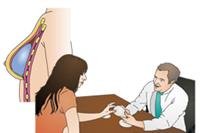
As soon as you know you are going to have a mastectomy, you can start talking about breast reconstruction. You want the surgeon performing the mastectomy to work with your plastic surgeon for the best possible plan. Your surgeon will talk to you about your best options for breast reconstruction. This depends on your age, health, body type, lifestyle, and goals. Your surgeon can explain the risks and benefits of each type of reconstruction. It is important to have realistic expectations before the surgery. A reconstructed breast will not be exactly like your natural breast. Breast reconstruction does not restore feeling in the breast. While you may still have some feeling in the reconstructed breast, it will not be the same as your natural breast. Breast reconstruction can involve more than one operation. Your doctor may talk with you about how many surgeries you will need. The first operation is to create the breast shape. This may be done at the same time as the mastectomy or later on. Other operations may be needed to better match the breasts or add a nipple and areola. Ask your surgeon about these options. Your surgeon will give you instructions on how to prepare for your surgery. Instructions may include how to quit smoking if you smoke, what and when to eat or drink, and instructions for medications. You should also ask your surgeon what to expect after surgery, the plan for follow-up care, and the costs of the surgery.
TYPES OF BREAST RECONSTRUCTION
The type of breast reconstruction that is best for you depends on many factors, including
If you had previous abdominal operations
The type of mastectomy that you had
Whether you smoke
Whether you had chest radiation on the side of the reconstructed breast
Your age
Your body type
There are two main types of breast reconstruction: immediate and delayed. Immediate breast reconstruction is done at the same time as the mastectomy. This option means less surgery. If you choose to have breast reconstruction later, it is known as delayed breast reconstruction. In certain cases your surgeon will recommend that you wait until after cancer treatments are complete before considering reconstruction. Also, this is the better option if you need radiation treatment. There are many different options to reconstruct your breast. Surgeons can use a breast implant, your own tissue in the form of a flap, known as a tissue flap, or a combination of the two to reconstruct your breast. Additional surgeries may be needed in order to better match the reconstructed breast with your natural one, or to add a nipple and areola. Nipple and areola reconstruction are optional. It is a separate surgery done 3-4 months after the original breast reconstruction. Surgeons try to make the new nipple and areola match the natural one as closely as possible. Tissue may be taken from the new breast, the nipple from your other breast, your ear, eyelid, groin, upper inner thigh, or buttocks. A tattoo may be used to match color. In either type of repair, your surgeon will leave a drain at the operative site. You will go home with the drain. The purpose of the drain is to empty the excess fluid that collects between the skin flap and the muscle. Draining excess fluid helps with faster and better healing. It also decreases the chance of an infection. The drain usually stays in for few days and will be removed by your plastic surgeon in his or her office.
BREAST IMPLANTS
Breasts implants are one way that surgeons can reconstruct the breast after a mastectomy. There are two types of implants that you can choose from: saline-filled and silicone gel-filled. Saline-filled implants are a silicone shell filled with sterile salt water. Some scientists believe silicone gel-filled implants may leak and cause immune system diseases. Others do not believe the implants increase the risk of immune system diseases. Silicone-gel filled implants are not used as often as they used to be. Your doctor may perform a surgery to place a tissue expander under the skin before placing the implant. This creates extra space between your chest bone and your chest muscle. Over several weeks, the surgeon injects a liquid into the tissue expander so it fills up like a balloon. Once the tissue has stretched enough, a second surgery is done to remove the tissue expander and place an implant. It is important to remember that implants may not last a lifetime. You may need more surgeries to replace the implant. Implants may also break, leak, or get infected.
TISSUE FLAP PROCEDURES
Other than implants, tissue flap procedures are another option for breast reconstruction. These procedures use a part of your skin, fat, and muscle from your abdomen, back, thighs, or buttocks to reconstruct a breast. Tissue flap procedures leave more scars and can cause problems at the site where the tissue flap was taken from. Tissues flaps are not an option for every woman. However, they do not need to be replaced and will not break open like implants. In certain situations, your surgeon may decide to combine both procedures. Your surgeon may place a tissue expander and cover the area with a tissue flap. This is sometimes seen in patients who underwent radiation treatments before the breast reconstruction.
RISKS AND COMPLICATIONS
This surgery is safe. There are, however, several possible risks and complications. These are unlikely but possible. You need to know about them just in case they happen. By being informed you may be able to help your doctor detect complications early. The risks and complications include:
Risks related to anesthesia
Risks related to any type of surgery
Risks specific to the breast reconstruction option
Risks of general anesthesia include nausea, vomiting, urinary retention, cut lips, chipped teeth, sore throat, and headache. More serious risks of general anesthesia include heart attacks, strokes, and pneumonia. Your anesthesiologist will discuss these risks with you and ask you if you are allergic to certain medications. Blood clots in the legs can happen due to inactivity during and after the surgery. These usually show up a few days after surgery. They cause the leg to swell and hurt. Blood clots can become dislodged from the leg and go to the lungs where they will cause shortness of breath, chest pain and possibly death. Sometimes the shortness of breath can happen without warning. It is extremely important to let your doctors know if any of these symptoms happen. Getting out of bed shortly after surgery may help decrease the risk of blood clots in the legs. Some of the complications are related to the site of the operation. Some of these are common to all operations and some are specific to breast reconstruction. These include early complications and late complications. Early complications usually happen a few days to a few weeks after surgery. These include:
Infection, deep or at the skin level. Treating deep infections may require long-term antibiotics and possibly surgery.
Bleeding, either during or after the operation. This may require a blood transfusion or another operation.
Skin scar.
Breaks in the skin and wound separation, known as dehiscence.
Failure of the repair that may require removal of the implant.
Failure of the skin flap due to skin death, known as necrosis. This causes loss of tissue, leaving a large wound that will need additional operations. The site where tissue was taken from to form your new breast can get infected as well.
Rarely, injury to the nerves, arteries, and veins going to the shoulder or arm during reconstruction may happen. This can cause shoulder weakness, loss of sensation, or arm pain.
The late complications include: 1. After removal of the drain, fluid may collect under the skin, which is known as ‘seroma.’ Seromas are fairly common and usually go away on their own. However, the fluid may need to be drained. 2. Breast sensitivity may be lost or change after breast reconstruction. The reconstructed breast will not feel like your natural breast. 3. The most common problem with breast implants is the risk of capsular contracture. Capsular contracture is when the scar, also called the capsule, around the implant tightens. It may make the breast feel hard. Removing scar tissue or replacing the implant can fix this problem. 4. Breast implants may also shift. They may change shape and be different sizes. 5. There is also the risk that you may not be satisfied with the shape, look or feel of your new reconstructed breast.
AFTER SURGERY
Your doctor can give you medicine to control pain after surgery. You should expect to feel tired and sore for a while. Depending on the surgery you had, you may be in the hospital for 1 to 6 days. You may need to wear special support garments after you go home. You will also have a drain at the operative site. The drain is a tube that removes extra fluid from the incision while it heals. Follow your doctor’s instructions for drain care at home. It may take 6 to 8 weeks to recover from reconstruction surgery. Swelling and bruising may take 8 weeks to go away. Scars may fade after 1 to 2 years but will never completely go away. Make sure to ask when you can begin wearing regular bras again. Avoid any heavy lifting, sports, and sex for 4 to 6 weeks after reconstruction. Follow your surgeon’s advice on when to begin normal activities. It may take some time to get used to your new breast. It will not be exactly the same as your natural breast. Talking to others who have gone through breast reconstruction, or with a mental health professional, may help. Breast reconstruction does not cause breast cancer to come back. Reconstructed breasts also do not cause problems with treatment if the cancer should come back. Regular mammograms to the unaffected breast and, in certain rare cases, to the affected side are still important after breast reconstruction. Breast self-exams are also still important. Talk to your doctor so you can learn what is normal and recognize any changes.
SUMMARY
Breast reconstruction rebuilds the shape of a breast after the removal of a breast. The decision whether or not to have breast reconstruction surgery is yours. Some women wear a breast form called a prosthesis inside their bra or do nothing after a mastectomy. If you are thinking about breast reconstruction, you should talk to a plastic surgeon before the mastectomy, even if you plan to have your reconstruction later on. There are many types of breast reconstruction procedures available. Ask your plastic surgeon about the risks and benefits of each procedure before deciding which option is best for you.