spread?
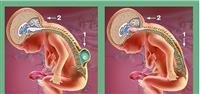
Dr. Issam Al-Shuail considers “spina bifida” as the most common complex congenital defect, a defect that affects the development of the nervous system of the fetus. The development of the central nervous system begins at an early stage of embryonic development. On the 20th day of a fetus’s life, the nerve plate cells migrate to the midline, and on the day 23 These cells merge from the top to form the neural tube and the failure to close this tube leads to the bones of the dorsal vertebrae not closing and thus the appearance of an opening in the bones of the spine, which causes damage to the spinal cord of the fetus and a defect in the functions of the nervous system, as this disease may cause paralysis and disorders Functional in various body systems due to exposure of part of the spinal cord of the fetus, and it should be noted that the injury may occur in any part of the spine, causing parts of the spinal cord or surrounding components outside the body of the fetus.
Many people wonder about the reason responsible for this type of birth defect, and we can say that the cause is still unknown until our present time, but there are factors that play an important role in the incomplete growth of a vertebra or vertebrae of the fetus, including genetic factors, in the event of a child with a family It was noted that the possibility of recurrence increases during pregnancy by 3 to 4%, while the percentage increases more than that in the case of two children affected in the same family, based on the results of a study issued by the University of Oxford in the United States, and there are environmental factors, the most important of which is the large number Exposure of the mother to radiation during pregnancy or taking some medical drugs, especially antispasmodics and alcohol. There are also nutritional factors such as a lack of "folic acid", which is considered the main cause until now in the fetus being infected with spina bifida. In this context, a recent study issued by the Duke University Medical Center in the US proves that 50 to 70% of cases of neural tube defects and spina bifida can be prevented by pre-pregnancy women taking daily doses of folic acid (vitamin B), and paying attention to eating foods. Rich in folic acid, such as dark leafy greens such as spinach and broccoli, and fruits such as oranges and apples, and finally there are pathological factors, which is that the mother during pregnancy suffers from diabetes and obesity, neglecting to regulate blood sugar, as well as the high temperature of the mother during the first months of pregnancy is one of the pathological factors.
The symptoms of this disease vary in relation to the different forms of injury, there is spina bifida occulta, which is the simplest type of spina bifida, in this case the patient often does not show any neurological symptoms or clinical signs due to the integrity of the nerves and spinal cord, and most people with sclerosis are often ignorant Concealed cleft palate is infected and is detected by chance during a diagnostic scan of any other disease, or by a strand of hair or a hole in the skin at the site of the injury.
But the most dangerous type of hidden cleft steel is Meningocele, and here the meningeal membranes surrounding the spinal cord are outside the hole in the vertebrae in the form of a water bag. In this case, the spinal cord remains in its normal position, which enables surgeons to perform surgery to remove this cyst formed outside the child''s body, which in most cases is covered with a layer of skin, which reduces the occurrence of damage to the spinal cord or surrounding nerves.
While the most dangerous type of spina bifida is myelomeningocele: in this case the spinal canal remains open along many vertebrae, and this opening is often in the middle of the back (the lumbar vertebrae) or below it (the sacral vertebrae), which leads to the exit of the spinal cord and nerves It sits alongside the meninges in the form of a cyst, often not covered by skin or covered with a thin layer.
The danger of this type of spina bifida lies in the fact that the spinal cord and nerves may be easily damaged, which leads to serious complications and neurological disorders such as loss of mobility (paralysis of the limbs), convulsions and disturbances in the urinary and digestive systems, and the failure to cover the nerve tissue makes it vulnerable to infections and infection. That threaten the child''s life.
The medical intervention depends on the degree and severity of the condition. In cases of hidden spina bifida, the intervention is only performed when there are signs of disease or symptoms, while the rest of the types require surgical intervention to close the open area of the back. It is always preferable to perform surgery as soon as possible, to avoid any complications later.
As supportive and therapeutic steps, the affected cases are periodically monitored and the disorders associated with spina bifida are treated, such as the disorder of the urinary and digestive systems, if any, treatment of movement effects through the use of natural remedies, rehabilitation and treatment of hydrocephalus, if any, follow-up cases of intellectual delay and provide psychological and social support to the parents.
Stem cells, which have many questions about them, we can say frankly that this topic is still under laboratory research, but that the matter has not reached its experiment on humans, but there are medical centers in China, India and some other regions in the world claiming to use stem cell transplantation and this is done Injecting cells into patients with spina bifida, and we have not witnessed any case treated in this way that we can consider successful, as it is considered a placebo treatment rather than a scientific medical treatment case.
As we have previously explained, stem cell transplantation has not proven successful, and the current methods that we use in treating spina bifida are the methods that have proven to be the best in reducing or delaying the problems that afflict with spina bifida patients, because, as we mentioned above, this disease occurs during pregnancy and cannot be cured in a straightforward manner. Completely curable, it is a congenital anomaly.
But we can reduce the prevalence of infection through awareness and early pre-pregnancy examination. A statistic issued by the "World Health Organization" stated that the incidence rate is approximately one case per 1000 births in the United States of America, and according to recent studies the West has been able to reduce these The ratio is to 1 per 100,000 births, through certain methods, the most important of which is spreading awareness and health education, and thus early examination for the mother, and paying attention to the causative factors and their non-spread.