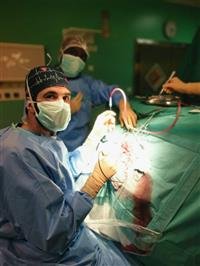

brain operations
People''s fears abound regarding brain diseases, and many people may refrain from undergoing surgery, which may be a reason for his recovery. Parts of this device cannot be compensated because the nerve cells do not regenerate, and that the patient should not hesitate or be late in accepting the surgical decision in the event that he is informed of the need for surgical intervention because its delay affects the quality of the results after the operation.
The most prominent diseases
Al-Juhani mentioned that neurosurgery is a medical and especially surgical intervention to treat the central nervous system consisting of the brain and spinal cord. He added that the diseases that affect the brain are divided into five sections in general, which are: genetic and hereditary diseases, birth defects, infections and inflammatory diseases, mechanical injuries from falls and traffic accidents, tumors and diseases resulting from an imbalance in the secretions or in the structure of the brain such as Parkinson''s and multiple sclerosis.
Serious surgeries
Regarding the most dangerous surgeries, Al-Juhani revealed that there is no surgical intervention that is not dangerous in brain and nerve surgeries, but the most dangerous and sensitive ones in his view are those related to cerebral blood vessels and their problems such as aneurysm and distortions.
How to treat
Al-Juhani said: The process of diagnosis and treatment generally begins with a clinical examination and taking the medical history and disease, then after that the doctor puts several possibilities in front of him and begins to confirm or deny them by making a group of simple and complex rays such as magnetic resonance imaging and some electrical measurements of the brain and muscles.
After making the final diagnosis, treatment protocols, including medical, surgical, and in some complex cases, such as some brain tumors, are put in place. We hold a meeting for more than one specialty, including oncologists, neurologists, neuroradiologists, in addition to brain and neurosurgeons.
He added that, unfortunately, there are many cases, especially those with brain tumors, the patient is late in going to the surgeon, and when the tumor reaches certain stages, the surgeon''s options are limited.
Types of brain surgeries
Consultant in arterial and interventional neurosurgery, Dr. Sultan Al-Qahtani, said: Neurosurgery involves multiple subspecialties, including traditional open-skull surgery, and there is still an urgent need for this specialization, especially in peripheral and non-central cities, but in major cities most subspecialties are available The vast majority are Saudis with high international competencies, in addition to the specialization of brain and interventional neurosurgery and cerebral catheterization, and we deal with most diseases of the arteries of the brain and nerves, which include the brain, spinal cord and arteries of the neck and neck, adding that the reason people fear brain and nerve operations due to the precision and complexity of the specialization, but with Specialized competencies and the presence of modern capabilities and technologies made it easier to deal with many neurological diseases.
Cases to be treated
Al-Qahtani mentioned some cases that are treated, such as acute stroke, which is often due to a blood clot that closes one of the main cerebral arteries, where the blood clot is withdrawn, by means of an urgent catheter operation during the first hours of the occurrence of symptoms. This technology is now available in major hospitals in major cities, 2- Brain haemorrhage of all kinds, where we diagnose and treat the causes of bleeding, either with traditional surgeries or through catheters, and the options are considered according to the type and location of the cause.
Symptoms of infection depend on the type and location of the problem and the speed of disease progression, so they are:
Chronic headache
Weakness and movement disorder
Cases of convulsion, and the patient may enter into a coma
A change in the patient''s personality, especially if it is in the front part of the brain