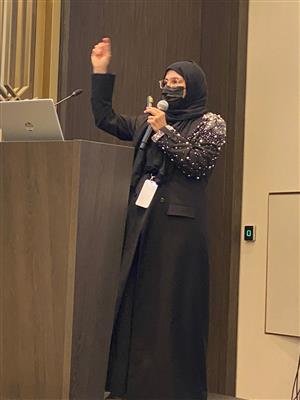

Rajaa Bint Muhammad Al-Raddadi, Consultant of Community Medicine, Head of Studies and Research Department at the Public Health Department in Jeddah Health, won the first prize from Professor Mohammed bin Rashid Al-Faqih Awards for Scientific Research in Cardiac Sciences announced in the twenty-fourth Saudi Heart Association Conference that was held at the Intercontinental Hotel In Riyadh, February 2013.
And Dr. Rajaa Al-Raddadi had applied for the award by scientific research on
The spread of risk factors for cardiovascular diseases and predicting the risk of heart disease occurring within 10 years .. Al-Radadi emphasized in her research that non-communicable diseases account for 70% of deaths globally and heart diseases account for 42% of them.
She indicated that the research objectives are summarized in determining the prevalence of risk factors for cardiovascular disease. And determining the expected rate of developing cardiovascular disease within 10 years.
She explained that she based her research on the basis of a survey of 400 people who were ed from health center auditors in the city of Jeddah and who were 30 years of age or older. Information about them was collected through eight risk factors for developing cardiovascular disease, namely obesity Obesity around the waist And smoking Diabetes High blood pressure High cholesterol The lack of movement activities in addition to the infection of a family member with any of the previous factors .. It was found that 100% of women have one or more risk factors and 58% of them have more than three risk factors at the same time.
As for men, it was found that 98.6% of them have one or more risk factors and 61% have three or more risk factors .. After receiving the award, Dr. Rajaa, the Lord of the Worlds, praised her for her success in this research and confirmed that the award is an encouragement for her going forward in continuing to study scientific research in this The field for the benefit of its community and its homeland by following up diseases and finding effective solutions to them and limiting their spread among individuals and different segments of society in the future