recovery
Grandmother: Dr. Abdul Hafeez Yahya Khoja Breast cancer is the most common type of cancer in women, accounting for 25% of their cancer cases. More than 700,000 new cases of breast cancer are diagnosed annually worldwide. As for the regional situation, the majority of cases (about 64%) occur under the age of fifty, and they are diagnosed in the advanced stages of the disease, as 40% of cases are localized at diagnosis.
Dr. Mona Basleem, consultant general surgery and supervisor of the breast oncology unit at King Fahd Hospital in Jeddah and supervisor of the breast cancer campaign in Jeddah, spoke to “Your Health”, stressing that “we urgently need to raise the level of health awareness in our country about (breast cancer), after the statistics have been proven. Global as well as patriotism is one of the most important causes of death, and it ranks first for cancer among women (25%).
Therefore, the Health Affairs Directorate in Jeddah Governorate, represented by King Fahd Hospital, King Abdulaziz Hospital, and the Cancer Center in Jeddah, in cooperation with primary health care centers, and sponsored by Siemens Medical Equipment Company, Roche Medical Company and Allergan Medical Company, implemented the national campaign to raise awareness of cancer. Breast, sponsored by Princess Haifa bint Faisal bin Abdulaziz, Chair of the Board of Directors of Zahra Breast Cancer Association. The campaign will last for three months, ending on January 12, 2011. She explained the importance of this broad campaign .. and among its activities are the following:
Distributing brochures and brochures of the campaign in health centers, women''s groups and large marketing centers.
Awareness messages that invite and encourage the work of mammograms (mammograms) and a mobile survey (SMS).
A breast cancer awareness website has been established, and all the information needed for the campaign and the early detection program can be obtained from it «www.bcaed.net».
Conducting a screening mammogram for Saudi women from 40 to 69 years old from various regions of Jeddah. It excludes pregnant and lactating women, those who suffer from a breast abscess, or those who previously or currently had breast cancer.
Performing the necessary radiological examinations for cases detected and suspected of having breast cancer, as samples are taken if necessary in the breast imaging unit at King Abdulaziz Hospital and Oncology Center, and then the case is transferred to the breast clinic in each of King Abdulaziz Hospital, Oncology Center and King Fahd Hospital.
A continuous education and awareness program throughout the year about breast cancer and the importance of early detection. This program is aimed at the general public as well as medical service providers such as primary health care physicians, obstetricians and gynecologists, radiologists, nurses and radiologists involved in mammography.
A mobile mammogram
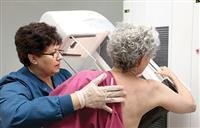
Dr. added. Mona Basleem, that the mammogram will be done inside a large mobile tanker provided by the company «Siemens» for medical devices, where there is a digital mammogram device in the tanker (full field digital mammogram) working on it a team of physicians and technicians to work on mammograms inside the tanker that stands next to the primary health care centers participating in this campaign .
The aim is to encourage an increase in the demand for mammograms, and thus the collected information can be used as a preliminary study (Pilot study) for the beginning of the comprehensive breast cancer screening program in the region, and this radiological scan at this stage is called (Pilot ScreeningProgram).
All rays will be studied by a specialized medical team headed by Dr. Iman Baroum, and then an inventory of breast cancer cases discovered during this period so that we can provide statistics that help in knowing the true size of breast cancer in the Kingdom, and then the possibility of applying the early detection program at the level of the Kingdom in general to increase the rate of cure and reduce death rate.
Constraints
Then I spoke to "Your Health", Dr. Iman Baroum, Head of Radiology Department and Consultant Diagnostic Radiology at King Abdulaziz Hospital and Oncology Center in Jeddah and Vice Chairman of the Organizing Committee for the Activities of the Breast Cancer Awareness Campaign in Jeddah, explaining that women in the Gulf community can be described as neglected by our examination and their safety, as most of them are of age 40 and more had not performed a mammogram before, which was indicated by the results of the questionnaire designed for this purpose, and the women''s explanations were as follows:
I do not need a mammogram because no doctor asked me to do it.
I never thought about doing it.
I have no breast problems, so a mammogram is not necessary.
I don''t have time to do.
I am afraid of pain while doing the mammogram.
I am afraid of being discovered for breast cancer.
Test costs are expensive for me.
I live far from the hospital.
While there are millions of women who perform mammograms periodically every year or two, in European countries and the United States, where the majority of cases occur there between 60 and 65 years old.
She points out that broadcasting activities and programs for awareness of breast cancer and encouraging early detection are far behind us in the Kingdom, compared to the countries of the world that preceded us by more than twenty years in starting the national comprehensive programs for early detection of breast cancer.
The role of officials
Dr. Imanbarum added that early detection and awareness programs for breast cancer are still being carried out on individual initiatives, despite the seasonal awareness campaigns. “And we must reach more than that.
Herein lies the importance of providing a program prepared by the Ministry of Health that supervises early detection of breast cancer, and includes annual monitoring and licensing of radiographic centers according to scientific guidelines and specifications in cooperation with scientific societies.
We must also strive to a medical record for every woman, so that their health conditions are monitored and reminded of the annual filming dates .. “We must overcome the difficulties that limit the efficiency of the National Cancer Registry and thus lead to inaccurate statistics.”
Late detection increases the cost of treatment 7 times.
The role of society
Dr. Imanbarum adds that the NGOs must be an alliance to combat breast cancer, with the aim of expanding the network of community-based associations and providing them with practical tools to combat breast cancer. Therefore, it is imperative to unify all the protocols used in the radiological diagnosis of breast cancer and the methods and controls for taking samples from the breast in all hospitals in the Kingdom and centers concerned with early detection of breast cancer. This also includes standardizing the design of the computer information program through which the audit information and their radiological results are entered from all over the Kingdom to strengthen and enhance the database and increase the credibility of local statistics. Physicians and technologists must strive for continuous self-development education and expertise to prevent errors in the profession.
Facts about breast cancer