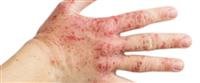

Consultant of dermatology and hair transplantation, Associate Professor, Head of the Laser Unit / College of Medicine - King Saud University Dr. Abdul Majeed Al-Ajlan The main cause of this disease is not known precisely, but it is agreed upon that there is a defect in the immune system that leads to inflammation on the surface of the skin and an increase in the rate of division of its cells resulting in the appearance of thick white scales and red spots on the skin. As the skin usually takes between 28-30 days in the cycle of division of its natural cells to mature and turn into dead corneal cells that gradually fade on the surface of the skin.
In the case of psoriasis, the skin cells mature at a much faster rate between 3-6 days, and the dead corneal cells accumulate and accumulate on the surface of the skin, forming those white scales with redness as a result of inflammation under the skin. These peels form an exaggerated and bad effect on the surface of the skin, especially when spreading over large areas or in prominent places of the skin. This is reflected in the appearance of the patient and his body, which makes him vulnerable to people turning away from him or his isolation from society for fear of that.
The effect of psoriasis is not limited to the appearance of the skin only, but it negatively affects his private and public family life. Rather, scientific studies have proven that it has bad effects on the psychological, social, functional and economic aspects.
Among the psychological effects is the occurrence of anxiety and depression, and among the social effects of the affected patient''s social isolation because of his exposure to looks of surprise from others or looks of contempt and disgust, especially that there are false beliefs associated with this disease that it is contagious or that it results from the patient’s lack of interest in his personal care. Marriage is ashamed and fearing failure in marital life.
Among the economic effects is the patient''s interruption from work for multiple periods of time, which may affect his success and even his continued work. Add to this the huge sums spent on treating the disease and mitigating its effects.
Psoriasis has multiple patterns, including guttate psoriasis, general psoriasis, intertrigo psoriasis, purulent psoriasis, psoriasis of the hands and feet, psoriasis of nails, and psoriasis of the head, and there is a type of psoriasis that affects the joints, causing pain and inflammation called rheumatism psoriasis. And then there are misconceptions that we would like to warn about, namely:
First Misconception
Psoriasis is an infectious disease
There are those who believe that due to the exfoliative appearance of psoriasis, it is an infectious disease, and it should be avoided. In fact, psoriasis is not contagious, and people with it should be treated naturally and without apprehension.
Second Misconception
Psoriasis is a cosmetic problem
Some believe that psoriasis is in fact a slight change in the skin and is viewed as a cosmetic problem. This is contrary to reality, as psoriasis is a skin disease that has its own concept and has different types and shapes. It is also not a purely skin disease, but rather has a link to the body and is accompanied by some internal matters in the body that go beyond the skin.
Third Misconception
Psoriasis can be cured
Psoriasis is a chronic disease that a sufferer lives with. So far, there is no complete cure for psoriasis. However, the great advances in psoriasis treatment have greatly contributed to controlling the disease and providing a comfortable life for those with it. Research is still going on to find a cure for this disease. From this standpoint, psoriasis patients must understand that they must live with this disease and take the necessary treatments according to the evaluation of the specialist doctor, and not move between doctors and clinics in search of a complete cure for this disease so that they do not fall prey to some of the souls. Everyone hopes that in the future a treatment will be provided that will cure millions of this disease.
Fourth Misconception
Psoriasis occurs due to lack of body care
This concept is not correct, as psoriasis occurs as a result of several factors, including what is related to the immune system or genetics factor and others. However, psoriasis can be affected by the increase due to factors such as some infections, psychological stress and some medications.
Fifth Misconception
Psoriasis is not a hereditary disease
In fact, psoriasis has a genetic and genetic link. It is believed that 40-60% of people with this disease have a genetic link. However, the genetic link does not mean that the disease is necessary. This means that whoever has a genetic predisposition may show signs of disease in the presence of other additional factors.
Sixth Misconception
Psoriasis is only an organic disease
It is true that psoriasis is an organic disease that is greatly affected by psychological factors, and these factors may lead to an increase in the disease, and the disease may lead to psychological repercussions.
Seventh Misconception
Folk remedies and herbs eliminate psoriasis
Among some of the observed practices in our society is the circulation of some people with psoriasis of some herbs and folk remedies, thinking that they lead to the elimination of the disease and a cure from it completely. This concept is wrong, as psoriasis is still seen as a chronic disease that the sufferer must live with until God willing, an effective treatment that guarantees a definitive cure for it is explored.