Wilhelm Konradrottingen is the discoverer of x-rays, who was born in the city of Lenape, which is now called by the name of Remscheid, which is located in Rheinsch in the state of Russia and was the only son of his father who used to work in the clothing industry, he moved with his family to Apeldoorn and grew up in the Netherlands, received elementary education in one of the Boarding schools there, which were named after the Institute of Van Dorn Martinus Hermann in the year one thousand eight hundred and sixty-one, and there he continued to study until one thousand eight hundred and sixty-three.
Then he moved to another school, and it was said that he was expelled from it because he concealed the identity of a student who had painted an insulting picture of one of the teachers in that school, and after that he committed himself with the Swiss Federal Institute, in which he passed all the exam and studied mechanical engineering there, in the year one thousand nine hundred and sixty-nine He had a doctorate awarded by the University of Zurich, and then he became the best student for his professor August Aunt.
His career: Röttingen became a professor at the University of Strasbourg, then a professor at the Academy of Agriculture, then returned as a professor of physics in 1876, then assumed the position of head of the physics department at the University of Giessen.
Find it on an x-ray
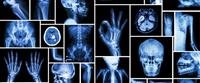
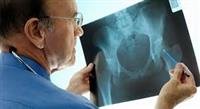
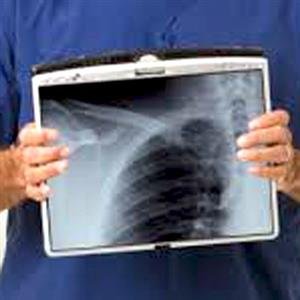
In 1895, Röttingen was checking the external influence of different types of vacuum tube devices, and a faint flash appeared with him, and Rötingen expected that a modern type of radiation might be responsible in the weeks following that day he kept sitting in the laboratory to verify some of the characteristics of the new rays which he called X-rays, although this name was temporary, but it is the most popular name despite the multiplicity of names for it. About two weeks after this discovery, he took the first picture using these rays in the hand of his wife when she saw her bone, and she said: I saw my dead, then he began planning to use the screen as a step Later in the development of his discovery, and today Röntgen is considered the father of diagnostic radiology used in the diagnosis of diseases.
Awards and honors presented to him: In the nineteen ninety-one year, Röttingen received the Nobel Prize in Physics, and this was an appreciation for the exceptional discoveries he granted to the world, and it is worth noting that Rötingen donated the monetary reward for this award to his university in which he works, and from the medals:
Rumford Medal
Mattius Medal.
Elliott Cresson Medal
In November 2004 the International Union of Pure and Applied Chemistry gave the name Röntgenium to element 111 in honor of this scientist who made the best discovery of mankind.