The National Guard Health Authority organizes the “Awareness Day for Patients with Multiple Sclerosis” starts today, the “Awareness Day for Multiple Sclerosis Patients”, which is organized by the Department of Neurology in King Abdulaziz Medical City in Jeddah and King Saud Bin Abdulaziz University for Health Sciences in cooperation with the Saudi Society for Internal Medicine, at the Crown Plaza Hotel. Jeddah, the organization of this day comes in the belief in the importance of awareness-raising, which has become a local and global strategy that the National Guard Health Affairs has given the most attention to.
Dr. Hussein Al-Qahtani, Chairman of the Organizing Committee - Associate Dean of the College of Medicine, King Saud bin Abdulaziz University for Health Sciences in Jeddah and Head of the Department of Neurology at King Abdulaziz Medical City in Jeddah, explained that multiple sclerosis has become common as studies in recent years have shown its significant spread in Arab countries, including In the Kingdom of Saudi Arabia, at a rate ranging between 30 to 40 per 100,000 people, and there is a belief that its spread is directly proportional to the distance from the equator, the further we move from the equator to the north or south, the spread of the disease increases (60 - 100 cases per 100,000 people) and the infection increases in The age group is from 20 to 40 years, and it is more common in women (2 to 1).
He explained that many drugs and medicines have been found that control symptoms and even stop the progression of the disease, and he also explained that scientists are working diligently to find new medicines, some of which are the cause of recovery from the disease and some that better control symptoms, and therefore medical scientists specializing in The field of neurosurgery is very optimistic to find a complete solution to this disease.
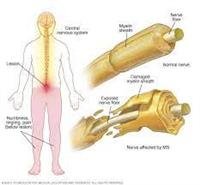
And he indicated that MS is a chronic inflammation that affects the myelin sheath in the central nervous system, which consists of the brain, cerebellum, brain stem and spinal cord, and its symptoms appear in the form of seizures and various ailments in the body, including muscle tension, fatigue, fatigue, vision, imbalance and movement disorder.