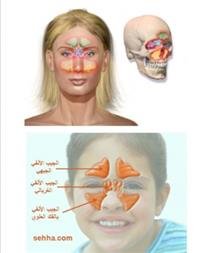
Sinusitis is one of the most common complaints that patients make when they visit doctors, as their diagnosis is often incorrect for the disease they are suffering from. This is only due to the similarity of symptoms between allergic rhinitis and sinuses and the different infections that affect the upper respiratory system throughout the year.
God Almighty d these rooms at the front of the human face for a very important wisdom, as they are part of the upper respiratory system, and they work to protect the lower respiratory system, which consists of the lungs and the trachea. They are the path to the delicate sensory capillaries of the sense of smell. The sinuses, along with the nose, moisturize the air and deal with the germs immunologically before they reach the throat, trachea and lungs. The beauty of God’s creation and wisdom is complete with the presence of these chambers in the human head, as they reduce the weight of the skull bone and increase the beauty of the face, so that the person’s head stands in the best alignment. We also note that the sinuses work to amplify the voice, which may differ in the voice layer when an infection occurs in the nose and sinuses.
Inflammation of the upper respiratory system has symptoms, including: a person feels a stuffy nose, a runny nose, a headache, and a slight heat, in addition to losing the natural sense of smell, and pain in the face and throat, and a cough, especially at night. As mentioned above, most of these symptoms are the same when they occur for many different sinus diseases. If the sinus infection continues for more than several weeks, then it is diagnosed as acute or sudden infection, but if the suffering continues for more than several months, it is diagnosed as a chronic sinusitis.
If we review the causes of sinus congestion, it is often a result of allergies to several causes, such as pollen for plants, or dust and dust, or perfumes, or chemicals, or dementia and moisture, as well as hair or waste from domestic animals, all of these reasons work to stimulate the mucous membrane of the nose and the sinuses. This leads to cell breakdowns and the release of histamine, which causes most of the above-mentioned symptoms.
Sinusitis may be caused by several infectious viruses through the lets spread in the air from the patient’s sneezing or coughing to others around him, so care must be taken to cover the patient’s mouth with his sleeve and frequently wash hands with disinfectants. The human body gets rid of viral infections with its immune system, and we do not need antibiotics, and it is satisfied with palliative and analgesic medicines only.
The congestion in the nose and sinuses may be due to bacterial infection of different types, and their difference depending on the type of infection is it acute or chronic and recurring. The type of infection is diagnosed with a clinical examination, in addition to a CT scan of the sinuses
The specialist doctor treats infections by prescribing the appropriate antibiotic in the type, dose and duration, in addition to medicines that help open the nasal passages, and the nasal passages and openings of the sinuses, such as nasal wash with sea water and sprays containing cortisone, and allergy pills, which - according to the patient''s condition - is given with the cidofedrine compound on Form pills and nasal s to open the nasal and sinus niches. The treating physician may have to use the cortisone pill for a certain period of time.
There are many other diseases in the body that contribute to recurring sinus infections, foremost among which are, for example, but not limited to: asthma, and allergic polyps as an abnormal benign growth (polyps) in the nose and sinuses, which are other than the normal corneas in the nose (conchids) which may enlarge Due to sensitivity.
And if the correct treatment by an otolaryngologist has been exhausted for the required period and after follow-up with a CT scan and it becomes clear to the doctor that the condition has become chronic, and medical treatment is no longer useful, then the treatment is to remove the membranes and infections from the sinus wall and the nose with surgical endoscopes, with modification of the nasal septum and nasal corneas Under general anesthesia in the operating room.
Sinus and nose surgery with binoculars technology)
Here, it should be noted that sinus and nasal problems are usually chronic and recurring and require frequent visits with the attending physician.
Prof. Dr. Khaled Mohamed Taiba