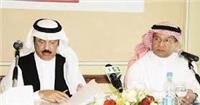
Jeddah hosts the Fifth International Gulf Conference of Obstetrics and Gynecology Society ... Today, His Royal Highness Prince Mishaal bin Majid bin Abdulaziz, Governor of Jeddah Governorate, today, Monday, opens the launch of the Fifth International Gulf Conference of the Saudi Society for Obstetrics and Gynecology under the title "Scientific Innovation in Women''s Health" at the Westin Hotel In Jeddah and lasts three days.
The conference reviews 70 working papers presented by seventy international speakers over 13 sessions and five workshops, and 25 hours were approved by the Saudi Commission for Medical Specialties. It is held in cooperation between the four largest organizations concerned with health, namely the World Health Organization, the International Federation of Obstetricians and Gynecologists, the British Royal College of Obstetrics and Gynecology, and the Arab Association of Obstetrics and Gynecology. It is expected that the conference will witness the participation of more than 500 gynecologists and obstetricians from the Gulf countries, Egypt, Jordan, Yemen, Morocco, Algeria, Tunisia, Iraq, Sudan, the European Union countries, America, Canada and Australia.
Professor Hassan Saleh Jamal, Assistant Professor at the College of Medicine and Medical Sciences at King Abdulaziz University, Chairman of the Board of Directors of the Saudi Obstetrics and Gynecology Society and President of the Fifth International Gulf Conference, called for strengthening health care programs for women and increasing the financial allocations and training programs necessary to achieve this purpose. In a press conference held by the organizing committee, he appealed to the Arab health ministers, especially the health ministers in the countries of the Cooperation Council for the Arab Gulf States, to allocate more comprehensive and in-depth strategies for the advancement of women''s health, and to take the necessary measures to stop the continuous deterioration in the levels of care allocated to women, which has resulted in increased rates of serious diseases that are exacerbated. In the last years.
On the occasion of the conference sponsored by His Highness the Governor of Jeddah, Jamal stressed that there are challenges that are difficult to ignore, which obstruct the safe path of women in life and warn of increasing their suffering with diseases that were not spread at the same rates in the past, especially among young women, which pushed Gulf societies to the forefront of the countries suffering Her women suffer from these diseases.
For his part, Dr. Hisham Arab, a consultant of obstetrics, gynecology and fetal medicine, Secretary-General of the Saudi Obstetrics and Gynecology Association and Chairman of the Organizing Committee of the Fifth Gulf International Conference, explained that the most prominent of these challenges is the high rates of maternal death due to pregnancy, which reached 14 cases per 100,000 people in the Kingdom of Saudi Arabia . In addition, osteoporosis is spreading at an increasing rate in the countries of the region, not only among women over the age of fifty, but also at younger ages.
Breast cancer is one of the most common diseases that affect women''s health in the Gulf and the Arab world, and Bahrain, Qatar and Kuwait lead the incidence of this disease. Cervical cancer kills more than 600 women every day all over the world.
He pointed out that official reports indicate that five Gulf countries are among the top ten countries affected by diabetes in the world. The UAE ranks second in the world in the number of people infected with the disease, with a rate of 18.7%, followed by Saudi Arabia, with an adult infection rate of 16.8%. Then Bahrain comes in fifth place with a rate of 15.4 percent, and Kuwait is ranked seventh with a rate of 14.6 percent, and Oman ranks eighth in the world with a rate of 13.4 percent. Reports indicate that 18% of pregnant Gulf women suffer from gestational diabetes, which is one of the highest rates in the world.
Dr. Arab said that the Gulf countries have recorded an increase in the obesity problem, which is spread by 60 percent in the countries of the region, especially among women, where the weight of Gulf women increases more than expected during pregnancy by 20 kilograms. Professor Hassan Jamal appealed to His Excellencies the Arab Health Ministers to develop strategies that take into account these important repercussions, and take into account the allocation of greater attention specifically to women''s health, which the conference seeks to explain extensively through its specialized sessions. He pointed out that the conference will discuss the developments of stem cells and their therapeutic importance, how to sew a woman’s wounds during childbirth, the accuracy of their work, the fetal heart rate during childbirth, diseases of the reproductive organs, how to do physical hygiene as well as advanced surgeries in obstetrics and gynecology, and the latest research in gynecology and obstetrics.
The conference will also discuss the health of the pregnant mother, the death of the mother during pregnancy, urinary diseases, diseases of the pelvic muscles falling in women, and the effect of excess weight on women''s urine function. As well as information about labor, intrauterine imaging techniques, preterm labor, and more.