Multiple myeloma or multiple myeloma
Multiple myeloma / plasma cell neoplasm
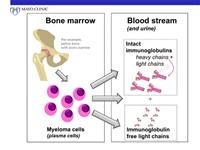
It is a tumor that affects the cells responsible for producing antibodies (plasma cells), which is an abnormal growth of these cells, which stimulate the osteoclast cells, which leads to osteolysis.
Although multiple myeloid cancer affects the bones, it is not considered a bone cancer.
And when these cells are carcinogenic, they form a huge amount of cells in the bone marrow and produce a sick protein that can affect the rest of the organs, especially the kidneys
Which makes the patient unable to live normally and shows
• Anemia
Pain in the bones as well as fractures
A breakdown in immune function
High calcium (hypercalcemia) due to bone breakdown or erosion
Protein in the urine
Deficiency or kidney failure.
statistics
Myeloma is estimated to be approximately
1% of all cancers
13% of malignancies are hematopoietic.
In the Western world about 40,000 new patients are diagnosed every year
Cancer most often occurs in old age, and the average age for the onset of cancer is 60 years and over.
The reasons are still unknown
Usually the disease appears in several types of facets
(1) Monoclonal gammopathy of undetermined significance: the onset stage of the disease
(2) Smouldering myeloma: the disease exists without symptoms that are felt by the asymptomatic patient
(3) Isolated or single Plasmozytom
(4) Multiple myeloma
(5) Plasma cell leukemia: the appearance of plasma cells in the blood by more than 20%.
Diagnosis
• Blood tests: include a complete blood count (CBC), a kidney function check, a calcium level test, and a serum protein electrophoresis test with: monoclonal protein more than 3 g / dl
• Collect urine for 24 hours to look for a specific protein called Bence Jones.
Albumin and ß2-mikroglobuline (ß2.MG) test
• X-ray images of the bones including the skull, long bones and spine to look for injuries to the bones.
Magnetic resonance imaging for patients who complain of back pain or weakness in the lower extremities due to pressure on the spinal cord.
Bone marrow examination: the appearance of plasma cells by more than 10%.
treatment
It is very difficult to reach a complete cure for multiple myeloid cancer.
Many doctors use a drug called (bisphosphonates) that helps restore bone structure, and it is given every four weeks.
Chemotherapy
The treatment of myeloma itself is generally by chemotherapy, and the best dose is made up of three compounds, among which are the new treatments: Bortezomib or linalidomide
Treatment protocols
1. In the event that it is possible to grow a patient’s stem cells, the following protocols are used:
Bortezomib-Thalidomid-Dexamethason = VTD)
Bortezomib-Doxorubicin-Dexamethason = PAD)
Bortezomib-Cyclophoshpamid-Dexamethason = VCD)
Lenalidomid-Bortezomib-Dexamethason = RVD)
2. In the event that it is not possible to transplant the patient’s stem cells, the following protocols are used:
Melphalan plus Prednison = MP)
Melphalan-Prednison-Thalidomid = MPT)
Bortezomib-Melphalan-Prednison = VMP)
Lenalidomid und Dexamethason = Rd)
Stem cell transplantation to treat this disease (autologous stem cell transplantation), for patients under the age of 65, taking into account many other factors, and comparing the risks of treatment against its benefits.