
Kingdom
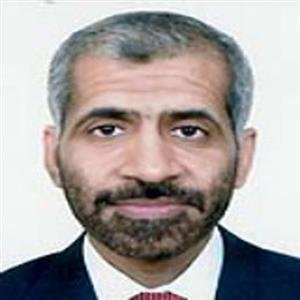
Dr. Iskandar bin Salem Al-Guthmi, a consultant and professor of cardiothoracic surgery at the Faculty of Medicine, King Abdul Aziz University Hospital in Jeddah, explained that, by the end of 2009, the number of lung transplants amounted to more than 30 thousand operations, but the number is very limited in the Kingdom, referring to the lack of Organ donation after death as a result of the lack of educational awareness of the importance of donation and saving the lives of people who are in dire need. A closed device in the size of the lungs and is connected to a ventilator and then used and implanted to the patient.
What diseases affect the lung and cause it to fail in its function?
There are many diseases, but the most common is pulmonary fibrosis of unknown cause, which is characterized by its slow continuous development and ends in lung failure. There are other diseases such as chronic pneumonia resulting from recurring pneumonia that causes rupture and expansion of bronchial tubes, and thus lung failure, as well as diseases resulting from smoking, which cause erosion of the membranes, alveoli and bronchi.
There is a shortage of specialists in lung transplantation. What are the reasons? Is this field witnessing development and progress?
Lung transplantation depends on a program and a highly qualified specialized medical team from a technical and professional point of view, resulting from long and continuous training in distinguished, internationally acclaimed centers, but these centers are limited in the number of fingers in the hand, and thus this is reflected in the number of specialists in this field.
Lung Transplant It is connected to a ventilator and feeding the lungs with a liquid of low temperature and rich in protein through the pulmonary artery for 24 hours, and then it is used and transplanted to the patient.
How many lung transplant operations in the world, and in the Kingdom in particular? Do you have a statistic on the number of patients on the waiting list for lung transplantation?
Until the end of 2009, lung transplantation operations amounted to more than 30 thousand operations, in the Kingdom the number is very limited. The reason for this may be the lack of organ donation after death due to the lack of educational awareness of the importance of donation and saving the lives of people who need it most, and for the secretariat the Saudi Center for Organ Transplantation He carries out good awareness campaigns by setting up public forums. The waiting list for lung transplantation is large and increasing and unfortunately there are patients on the waiting list who are dying due to the absence of a donor organ.
It is noted that cardiac surgery centers are concentrated in one or two cities. Do you think that there is a real importance to the distribution of health services in general throughout the Kingdom?
Cardiac surgery centers in the Kingdom are many and are not regulated in terms of geography and the population of different regions and cities, and this in itself has a negative impact on the level of care provided. For example, the city of Jeddah has a population of approximately 3.5 million people. It has ten government and private heart centers. Most of these centers lack scientific and academic competence and uncle, due to the lack of a logical distribution of heart patients, and this has led to twice the number of cardiac cases compared to each center. Consequently, it led to weak professional experience based on medical evidence as well as research experience in most of these centers.
In general, the number of heart centers to be established depends on the geography of the region in terms of population and the percentage of heart diseases prevalent in that area. There are international standards for establishing a new heart center, and in order for it to be recognized as an acceptable, effective and safe center, it is for the center to prove that the minimum number of open heart operations is performed, which is not less than 200 heart surgeries per year for a period of three years from the establishment of the center, with an emphasis on increasing the number of Surgeries every year. After that, the continuation or withdrawal of the license will be reconsidered.
Therefore, I call upon the Ministry of Health, represented in its wonderful minister, Dr. Abdullah Al-Rabeeah, for whom I have all the esteem and respect, to monitor these centers in the Kingdom and ensure their eligibility to work and conform to international standards. For example, in the city of Jeddah, the number of diagnostic or interventional cardiac catheterization cases expected to be performed per year for adults is ten thousand cases, and the number of open heart operations expected to be performed per year is 2,500. At most.
The Kingdom has come a long way in the field of heart surgery. How would you describe the achievements in this field? What is new (studies research) in heart diseases and surgery?
Heart surgery in the Kingdom has developed over the years from the beginning of the eighties until now, and this is the result of the generous and continuous support of the state - may God protect it - that has had a positive impact on the achievements in the field of cardiothoracic surgery. For example, cardiothoracic surgery is performed by using endoscopes through small openings, such as using a robot (robot) that is characteristic of King Abdul Aziz University Hospital. Operations are conducted in limited centers in Europe and America.
Have we talked about chest diseases and how are they prevented?
Lung cancer is a fatal chest disease. Unfortunately, the number of cases in the Kingdom continues to increase in both males and females, and the main reason is the increase in the number of smokers. As 90 percent of lung cancer is strongly related to smoking, and many of these cases come in advanced stages that cannot be treated. Therefore, prevention is by stopping and avoiding smoking and by continuous periodic health examination to discover it in its early stages and treat it. Therefore, I call upon the general public, females and males who have been infected with smoking, and their age is 50 years and over to undergo low-dose spiral CT of the thoracic cavity every year, and to consult a competent and competent doctor to look into these cases, so that the disease is discovered in its early stages.