The consultant obesity and minimally invasive surgery at King Abdulaziz University, Professor Abdulmalik bin Muhammad Saleh Al-Taf, was able to register a global patent from the American Patent Office, after leading a scientific team at King Abdulaziz University to an artificial surgical network with innovative anti-bacterial properties.
Professor Al-Taf explained that this achievement was made by the grace of God and then with the support of the Custodian of the Two Holy Mosques and the Crown Prince for innovative scientists and in line with the Kingdom''s 2030 vision, stressing the prestigious scientific position of distinguished Saudi scientists who contribute their expertise, research and production to scientific progress in the world.
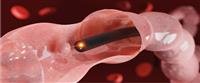
Professor Abdel-Malek Al-Taf revealed that the invention is to a surgical artificial mesh that can be used in surgeries to treat hernias in contaminated surgical areas.
He pointed out that in some advanced hernia cases, the surgical areas are contaminated with bacteria present in the tissues of the body, which constitutes an obstacle to the use of artificial networks, and in those cases surgeons are forced to treat the hernia without using a mesh or using a (vital) mesh that is less effective than artificial networks. The innovator secretes an antibiotic into the surrounding tissues for a period of no less than 14 days, which leads to getting rid of bacteria that may be contaminating the tissues.
Professor Taf stated that the scientific team used nanotechnology to engineer the surgical artificial network material and incorporate antibiotics into the network’s structure, and then they were tested on experimental animals and proved their effectiveness.
The scientific team that worked for 4 years at King Abdulaziz University to reach this achievement consisted of the team leader, Professor Abdul-Malik Al-Taf, and the membership of Professor Siham Al-Sayed Abdel-Hadi, Dr. Faisal Abdel-Hadi, and Professor Mahmoud Yassin Abdel-Majeed.