
of genomes causing intellectual disability
Intellectual impairment is a quantifiable, phenotypic, inherited defect caused by genetic and environmental factors. It may be called mental retardation or intellectual disability, and it is a disability characterized by below average capabilities in intellectual performance and adaptive behavior that covers many social and daily practical skills. This deficit arises before the age of eighteen. People with intellectual disabilities can learn new skills, but they learn them more slowly than usual. There are varying degrees of intellectual disability, ranging from slight to severe.
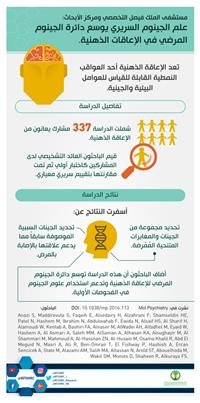
A specialized team of scientists and doctors at King Faisal Specialist Hospital and Research Center has cooperated with specialists from the Children''s Hospital and the Department of Neurosciences at the Institute of Neurosciences in King Fahd Medical City, the Children''s Department at King Khalid University Hospital, and the Children''s Department at King Abdulaziz Medical City Hospital, And the pediatric department at Prince Sultan Military Medical City, the Department of Psychopathology at the College of Medicine at King Saud University, the Department of Pathological Psychology at the University of California in San Francisco, the National Research Center in Egypt, the Department of Neurosurgery at the Yale University College of Medicine of America, and King Abdul University God for Science and Technology, the Department of Pediatrics at the University of Jordan, the Department of Pediatrics and Clinical and Genetic Metabolism at the Hamad Medical Corporation in Qatar, and the Department of Anatomy and Cell Life Science at Al-Faisal University in Riyadh, employing some diagnostic genetics tools approved to study a total of (337) individuals. They suffer from this impairment, and results were compared with the clinical evaluation of the same group in parallel.
The disease was diagnosed clinically in 337/54 (16%) of cases, and it was confirmed in 54/38 (70%) of them only, while its diagnosis was confirmed in (58%) of cases using genetic analysis methods. As for the genetic defects, they ranged between transcriptional changes, point mutations, and finding a fragile X-type sexual stimulus to a lesser extent.
Point mutations were identified as recessive states, which is consistent with the reality of hyperbreeding among relatives in the studied sample. A number of them were found to be associated with the sexual gamete (X), and a number of others were found to be dominant in the beginning.
The study was able to diagnose three new genes with special specifications and consider them responsible for this pathology, and it was also able to confirm recessive and original patterns in (32) genes that were considered responsible for the case based on a number of evidences, and it was found that one of them was possible (disrupted) in practice. One of the cases of excessive magnesium levels in the blood (treatable) associated with poor growth and development of nerves.
This study confirmed the involvement of previous genes as pathogens of mental deficiency, and previous studies agreed to assign other genes - previously known - responsible for them. It also contributed to broadening the range of genes as a pathogen, and supported the trend of using diagnostic genetics methods as the preferred tests to diagnose those suffering from these diseases. Case.