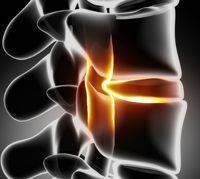
Many patients complain of pain in the lower back area when the lower back meets the seat region, may God bless you. These pains may increase with the passage of time, become excruciatingly annoying and painful and interfere with the daily activities of the patient or the patient. Although the vast majority of the causes that lead to the emergence of pain are benign causes and are not worrisome, accurate diagnosis is required in these cases in order to avoid turning a blind eye to the cases that require special attention. The coccyx area is subjected to severe pressure when sitting and is a sensitive and irritating area.
Non-bacterial infections
These constitute 90% of the causes of coccyx pain. These inflammation are non-bacterial (inflammation). These infections affect the ligaments that surround the last great, small ossicles of the spine, and this bone is located in the coccyx area and does not have strong connections with the rest of the bones of the spine that are not great above it and therefore are linked to ligaments that may be subjected to stress or inflammation and cause Pains. These small ossicles in the coccyx area are subject to some movement in order to allow the pelvis to expand and exit the fetus during childbirth and therefore they are exposed to trauma or infections during childbirth and this is one of the reasons for the occurrence of these pains. Also in people whose work requires sitting for long periods, especially those who sit on a chair with a floor or a hard seat, which leads to the occurrence of pressure in this area and the emergence of these irritations and non-bacterial infections. In addition, any severe fall on the coccyx area may lead to the emergence of these infections. Usually the patient or patient complains of chronic or acute pain after a fall that increases when sitting, after sitting and when starting to get up from a chair, but it disappears after standing and disappears while walking. It does not affect kneeling or prostrating, but it may appear again when the patient lies on his back during sleep. And the clinical examination shows the presence of pain when pressing on the coccyx area. As for the x-rays, it is usually taken to ensure that there are no fractures, but it is not of great benefit in the diagnosis. As for the treatment in these cases, it is done by taking a rest, avoiding sitting on the floor, avoiding sitting on hard chairs, using a coccyx pillow, using warm compresses or a warm bath, and using anti-inflammatory and analgesic medicines. The vast majority of patients respond to this program, and in some simple cases, we may resort to administering topical injections containing the anti-inflammatory Depo-Dipole to control symptoms.
Coccyx fractures
This is one of the reasons that lead to the emergence of pain in the coccyx area. It usually occurs as a result of falling from the stairs or falling into the bathroom on the backside or in rare cases as a result of traffic accidents, may God protect us and you from his evil. In this case, the pain is sharp and intense, and there is a history of a fall or injury. And the clinical examination shows the presence of severe pain in the coccyx area, so that the patient cannot bear pressure on it severely. As for X-rays or CT scans, they are taken to find out the location of the fracture or hair and the extent of its severity and if there is displacement of the vertebrae that make up the coccyx area. In the vast majority of cases, the hair or the fracture is simple and does not require any surgical intervention and is treated by using a medical pillow and pain reliever medicines and avoiding sitting on hard floors. Even in cases where the coccyx is tilted forward as a result of the fall, no surgical procedures are taken, but rather the plan that we mentioned earlier is resorted to.
Pilonidal sinus
This fistula is located in the coccyx area, and the patient usually complains of pain and frequent bacterial infections that return from time to time and there are traces of pus secretions or blood from this fistula. This fistula occurs as a result of an opening from the skin to the area around the coccyx that is exposed to bacterial infections and pus and blood collects in it and then bursts from time to time and appears in the form of secretions, as mentioned previously. The diagnosis is made with a clinical examination, and these cases are treated by a consultant general surgery, and treatment is usually done by taking antibiotics to eliminate bacterial infection and bacteria, and in chronic cases, surgical intervention may be resorted to by a consultant general surgery to remove the fistula and remove the pus-forming pockets From time to time.
Tumors in the coccyx region
This is one of the rare causes, thank God, for the occurrence of pain in the coccyx area. Tumors may be benign or non-benign tumors that occur in the bones that form the lower part of the spine, known as the sacrum. Although these tumors are rare, they do occur and should be suspected when the coccyx pain is chronic and increases over time, when it becomes irritating during rest, during sleep, and when it does not respond to the treatments mentioned above. In these cases, MRI, CT and X-rays must be done to the area of the lower spine, which is located around the coccyx, to diagnose these cases and treat them early. In the event of these tumors, God forbid, the treatment is under the supervision of an integrated medical staff consisting of a consultant oncology, a consultant general surgery and a consultant orthopedic surgeon. And when discovered early, these cases can, God Almighty, eliminate them and eliminate the disease completely.
Rheumatic diseases
In some cases of coccyx pain, the underlying cause of these pain may be the presence of some rheumatic diseases and immune diseases that lead to infections in the small areas and joints surrounding the coccyx bones such as the sacroiliac joint. These joints may be susceptible to rheumatic infections in patients with rheumatoid disease (RA) or some rheumatic immune diseases such as ankylosing spondylitis. These infections lead the patient to feel pain in the lower back and coccyx region, which increases in intensity with the passage of time. In these cases, the diagnosis is made by laboratory tests and x-rays, and the treatment is carried out under the supervision of a rheumatologist, who gives the patient drugs to control the primary disease in addition to drugs to control inflammation in these joints. The doctor may resort to administering the topical injection of Dipomdrol with anti-inflammatory property from time to time to remove the pain and symptoms that the patient is complaining of.
Tips and recommendations
Although there are many reasons that lead to the emergence of coccyx pain, the vast majority of these pains are the result of benign diseases, easy to diagnose and easy to treat, God willing. In the event that the pain continues, it must resort to specialized rays in order to accurately diagnose the situation and give the appropriate treatment, God willing.