services
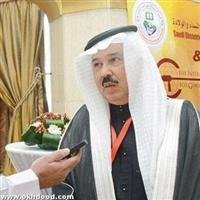
The former president of the Saudi Obstetrics and Gynecology Society, Professor Hassan Saleh Jamal, revealed that health challenges are so many and the statistics are very painful, as the reports of the World Health Organization on the Arab Gulf region and not the Kingdom are only catastrophic. Breast and other diseases are prevalent in us at amazing and astronomical rates, and thus we are at the forefront of countries in this aspect, and all of this poses challenges for us, and for the secretariat, the authorities responsible for health services and health institutions are making great efforts, but they are not sufficient. Because if these efforts were sufficient, disease statistics would have improved.
Regarding our question about the increase in disease rates despite the health efforts made, and where the defect lies, is it in the awareness programs or in the community members who are unable to absorb these programs, he said:
The defect in both parties, for example, we find that many conferences and seminars come out with important recommendations, but unfortunately they are buried in drawers and are not implemented at the time that those in charge of these conferences and seminars must activate these recommendations and implement their axes on the ground, and let me in this context give an example, we find that Some Asian countries, such as Singapore, Malaysia and Indonesia, are considered developing countries, but they are now very developed countries because they implement all the recommendations made by the large conferences with extreme precision and care.
He added, according to Okaz newspaper, “There are many areas of the Kingdom that are not the main ones still suffering and complaining of a shortage of many health services, especially equipment and technologies. The urgent need to limit the demands of these sub-regions and provide the technologies and specialized cadres in them.
About our maternal mortality rates, he said
Although the percentage is from 14 to 17 cases out of 100 thousand cases, which is a small percentage compared to many countries, it remains high even though there are many countries where deaths reach between 60 and 70 cases out of every 100 thousand women, while we find maternal deaths in European countries reaching To one or two cases out of 100 thousand, and from this standpoint, there must be effective and strong follow-up by the Council of Health Ministers in the Cooperation Countries, which has an important role to play in reducing maternal and child mortality rates and diseases, especially we have high capabilities and great minds, and all of that It is achieved by implementing the recommendations and not ignoring them, and for the secretariat, we, as an obstetrics and gynecology association, do not have high budgets to implement the recommendations. It is sufficient that our role is based on holding international conferences, attracting the best doctors, dealing with scientific research, exchanging experiences, and ultimately coming up with one recommendations and vision in facing the challenges facing women''s health. It remains to implement the recommendations on others.
Dr. The beauty of the community also, unfortunately, is still lenient with the awareness programs, as we often find that the individual arrives at the hospital and his illness has exacerbated or arrived at a late stage and in the last breath despite the awareness programs, appeals and campaigns that focus on early detection and attention to health.
Professor Jamal concluded by saying, “Efforts must be joint in all respects, with seriousness and transparency, away from courtesies. I am very sad about what the health of women in the Gulf has achieved according to statistics. All reports related to women''s health do not bode well, so we have no excuse. There are competencies available, so many of our health matters must be reconsidered. Hospitals will not improve for us unless we transform all our health centers that have lost their prestige into model centers that treat cold cases and leave the difficult task for hospitals. Unfortunately, we find that emergencies are preoccupied with cold cases at the expense of patients. The existing emergencies and our services are of no quality, and the lack of awareness of the patient who complains of coughing and goes to the hospital leaving behind the health center has d major gaps and lost many of the responsibilities and role of health centers, which are the first line of defense in facing cold cases.