
The American University of Beirut (AUB) held its second Biomedical Research Day at the Charles Hostler Center for Student Activities, organized by the Office of the Associate Dean for Interdisciplinary Programs at the College of Medicine, Dr Ayad Jaffa. Dr. Jaffa spoke at the beginning of the event and said that the meeting aims to unify the university research family and provide an appropriate environment for scientific exchange.
As for the Vice Dean for Academic Affairs, Dr. Ahmed Dalal, the Dean of the College of Medicine, Dr. Muhammad Al-Sayegh, and a member of the University''s Board of Trustees, Mr. Farouk Jaber, they focused in their speeches on the importance of partnerships between multidisciplinary research and their impact on the quality of the university''s scientific product. Dr. Dalal said that multidisciplinary research and its partnerships accelerate and facilitate solutions to the world''s serious problems.
Mr. Farouk Gabr, who donated a prize in his name to the participants in the meeting, assured that the university possesses all the ingredients for multidisciplinary research. He announced a doubling of his endowment grant for biomedical research. The award is a one-year scholarship that gathers researchers from various disciplines to conduct research of common interest.
This year, the award was won by Dr. George Nimer and Dr. Marwan Saban, from the College of Medicine, and Dr. Zakaria Qumbris and Dr. Hala Muhtaseb from the College of Arts and Sciences. And they all spoke about their research that dealt with cardiovascular disease and cancer.
Researchers Nimer and Gombris found that some genes in the kidney may cause heart disease, while the researchers concluded that some cancer cells mutate to possess stem cell properties and therefore resist treatment.
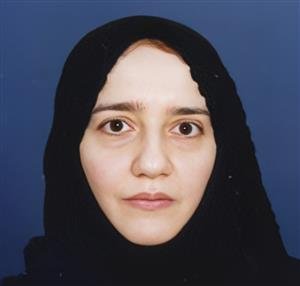
The keynote speech at the meeting was delivered by Dr. Aida Ibrahim Al-Aqeel, Senior Specialist in Pediatrics from the Saudi Armed Forces Hospital in Riyadh and Chief Scientist at King Faisal Specialist Hospital. Dr. Al-Aqeel spoke about the influence of culture and religion on regional medicine. She said that four thousand children are born annually in Lebanon with congenital disorders due to inbreeding, and 90 percent of her patients are from this category. She spoke about the challenges facing doctors in the Middle East, such as exam costs, religious and ethical considerations.
During the meeting, a student poster competition was held, and four posters out of the 34 submitted projects won. The winning posters focused on a disease that affects the nervous system in children (Hayat Harati), intestinal E. pylori (Patricia Magames), and a protein that affects diabetes (Kawthar Bresh) and leukemia (Zeina Desouki).