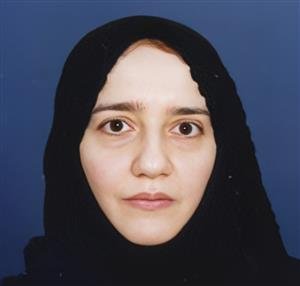
Saudi doctor Aida Ibrahim Al-Aqeel discovered a new disease resulting from inbreeding, and also discovered the gene carrying this hereditary disease. It seems that the practical importance of this discovery was behind her obtaining, as the first Arab woman, the Distinguished Researcher Award in the United States for the year 2002. It can be said that the march of the Saudi researcher, Dr. Aida Ibrahim Al-Aqil, a consultant genetics and pediatric diseases at the Military Hospital in Riyadh, presents a non-stereotypical picture that differs What the Western media usually report about Saudi women.
This graduate in biology and genetic diseases from Kuwaiti, British and American universities, who is currently working at the Military Hospital in Riyadh, was able to discover a previously unknown disease that affects families who practice inbreeding in particular.
Dr. Aida Al-Aqeel was not satisfied with discovering the new disease, which he called "Agil Sandrum", but, after research conducted at King Faisal Specialist Hospital and in the United States, she was able to identify the gene "gene" carrying the genetic disease, and her findings were published in the American Journal of Research American Journal of Medical Genetics.
The problem in inbreeding
Dr. Aida Ibrahim Al-Aqeel told Swissinfo on the sidelines of giving a lecture in Geneva at the invitation of the World Health Organization on December 16, 2003 that the case of a patient who was referred to her from the city of Taif aroused her curiosity, as the symptoms that she discovered are inflammation of the joints, swelling of the limbs and erosion of the bones And facial abnormalities, which were not known to her before.
The doctor added, "The symptoms that appeared on this Saudi patient were not similar to what is known of the diseases and due to the scarcity of similar cases, she had to try to search for the causes of this disease."
Among the factors that helped in the new discovery were that 6 members of the patient''s family had the same disease and the presence of patients from three other families who had the same symptoms in King Faisal Specialist Hospital in Riyadh.
And Dr. Al-Aqeel added that finding the genetic cause of this disease was not difficult, because it is the result of inbreeding, which was actually done through research conducted in Saudi Arabia and the United States.
The Saudi doctor, with the help of the team of researchers working with her, was able to locate the gene carrying this hereditary disease, as it was found that it is located in the small arm of chromosome 16.
Dr. Aida Ibrahim Al-Aqeel considers that the most important thing in this discovery is that the gene that causes the disease known as Matrix Metalloproteinase Gene 2 belongs to a new class of genes that affects the intercellular substance known as Matrix, which is important in cell growth.
The first Arab female researcher
While abstaining from inbreeding remains the best social remedy to reduce its risks, medical treatment of its genetic consequences is currently limited to resorting to the use of medicines intended to treat joint diseases and strengthen bones, according to Dr. Aida Ibrahim Al-Aqeel.
On the other hand, the discovery of the gene that causes the disease opens the doors of hope for creating a treatment that is not limited to treating this new genetic disease, but rather helps to cure all joint diseases, according to Dr. Al-Aqeel.
The Saudi doctor was awarded the Distinguished Researcher Prize for the year 2002 by the American Federation for Medical Research in recognition of the importance of the discovery that she has made. She is the first Arab researcher to receive this award.
Although this scientific success will not change much of the prevailing perception of Saudi women, the evidence is established that opportunities are available for Saudi women to emerge in advanced scientific fields if some conditions are met, perhaps at the forefront of which is an open family environment like the one in which Dr. Al-Aqeel was raised.
Mohamed Sharif - swissinfo - Geneva