Dr. Abdul Aziz Al-Nuwaiser is considered one of the most prominent specialists in asthma and allergies, and because of the importance of the topic we met with him to learn about the causes of asthma, its diagnosis and how to treat it .. Here is the text of the dialogue .. - What is asthma? Asthma is a chronic inflammatory lung disease characterized by frequent respiratory difficulties. During normal breathing, air is freely in and out of the lungs. But during an asthma attack, the lining of the airways swells and the muscles around it tighten, and the mucous membrane blocks the narrow air passages inside the lungs, making breathing difficult. The airways become highly responsive to environmental changes, leading to wheezing and coughing. Asthma symptoms change from hour to hour, day to day, week to week, and for months. These symptoms worsen at night and in the early morning hours. The severity of asthma varies from person to person. Some patients suffer from occasional symptoms (after strenuous exercise, for example), while others suffer from symptoms that interfere with their daily life, while others suffer from a severe and dangerous condition that almost prevents them or prevents them from going to school and work.
What is the cause of asthma?
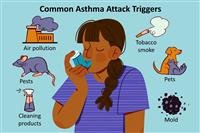
The airways of asthmatics narrow more easily than it does in healthy people, and they usually inhale allergens. The reasons for these abnormal airways and their association with allergies remain unknown. Many factors can trigger an asthma attack, and they include viral infection, exposure to allergens (such as mites and protein particles falling from dogs, cats, and insects), exercise, smoking, air pollution, severe psychological agitation, chemical stimuli, and drugs (such as aspirin and beta blockers). Every asthma patient reacts to a different set of factors. Determining these factors for each person is an essential step towards understanding how to control an asthma attack, and that many scientists are studying the role that genetic factors play in asthma.
Who gets asthma?
The World Health Organization has estimated that there are between 100 and 150 million asthma patients around the world and this number is still growing. Around the world, deaths due to asthma have reached more than 180,000 annually. Asthma is a social health problem in developing and developed countries alike. Asthma affects people of different ages and races, but it often originates in childhood. Indeed, asthma is the most common chronic disease that leads to absenteeism from school.
How is asthma diagnosed?
A thorough medical examination, practical examinations and tests on lung function give the information needed to diagnose asthma. Symptoms include shortness of breath, wheezing and chest tightness that worsen at night and in the early morning hours. Symptoms occur and get worse during exercise in Riyadh in the presence of allergens and viral infections.
Pathological conditions in adolescents who mainly complain of coughing or those who complain of wheezing associated with respiratory infections are usually misdiagnosed as bronchitis or pneumonia (including acute respiratory infection) and thus are treated ineffectively with antibiotics Or cough medicine. Follow-on smokers and older adults usually suffer from chronic obstructive pulmonary disease, with symptoms similar to asthma. But they could have asthma and benefit from treatment.
Measuring lung function is important for diagnosing and monitoring asthma. These vacuoles include a spirometry to provide an assessment of airflow and maximal flow capabilities to measure the maximum velocity at which air passes out of the lung.
This spirometry is performed in the doctor’s office on the other hand. Maximum flow meters are available in a portable and plastic format and are ideal for home or workplace use. Thus, most patients and their assistants have an effective opportunity to assess response to treatment and notice early signs of relapse.
How is asthma treated?
Controlling asthma is defined by the absence of symptoms and acute attacks, lack of access to medication and emergency rooms, and provides a normal level of movement, which includes exercise and normal lung function. This can be performed in most patients and has no drug side effects. Asthma is controlled by implementing an effective asthma management program. The GINA program includes the following six points:
Patient accommodation to establish a partnership to manage asthma
Evaluate and monitor disease severity by measuring symptoms and lung function
Avoidance or control of the floaters that cause asthma
Create long-term treatment plans to manage asthma cases
Create management plans for asthma attacks
Ensure regular ongoing care
Two types of drugs are used
Long-term preventive medications (especially anti-inflammatories such as
Glucocorticosteroids or leukotriene, which prevent symptoms and seizures from occurring.
Fast-acting bronchiodilators that work quickly to treat seizures or eliminate symptoms.
Why does asthma get worse?
The rapid increase of asthma around the world is one of the biggest conundrums in modern medicine that the most striking increases have occurred in Australia, where asthma has been diagnosed in a quarter of the country’s children. In the United States, the number of people with asthma has more than doubled to nearly two 17.3 million in 1998, compared to 6.7 million in 1980.
It is about this problem that research has been focused on environmental causes and viral infections in children and young children. Ten years ago, scientists thought that diesel exhaust and other pollutants could cause an asthma epidemic, however, they now believe that the situation is more complex. In addition to studies being conducted to examine the role of genes in the development of asthma, scientists study the immune system at the beginning of life.