its causes and treatment
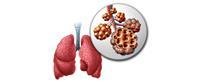
Pulmonary hypertension is a disease caused by the continuous narrowing of the blood vessels (arteries) of the lungs and blockage of large parts of them, resulting in an increase in the pressure of those arteries, which leads to an increase in the effort on the right ventricle of the heart and then failure to perform its function. Normally, the right ventricle of the heart pumps blood into the lung through the pulmonary artery characterized by low pressure. The right ventricle of the heart is designed to function effectively only in those special circumstances. Unlike the left ventricle, the right ventricle cannot function effectively in the face of pulmonary artery hypertension, which leads to its failure.
Until recently, this disease was considered a fatal disease. In the period prior to the availability of modern medicines to treat the disease, patients affected by it died within a period of time ranging from two to three years from the beginning of the diagnosis of the disease and the emergence of its clinical symptoms.
Pathological history Talk to "your health" Dr. Majdi Muhammad Idris, head of the Saudi group for pulmonary hypertension, consultant chest diseases and head of the chest diseases department at the Armed Forces Hospital in Riyadh, indicating that the first discovery of this disease was dated 1891 AD, when he was diagnosed in a patient after His death and his autopsy, and it was found that the patient was suffering from pathological changes and thickening in the walls of the vessels and pulmonary arteries, without the presence of any other clear diseases in the heart or lung. About 60 years after this discovery (in 1951), 39 other cases were diagnosed with the same specifications, and the disease was called for the first time the disease "primary pulmonary artery hypertension".
The incidence of this dangerous disease among the general population is not known precisely, and previous estimates estimated that ratio at about 1 to 2 cases per million, although subsequent estimates have given rates much higher than that. In the United States of America, about 300 new cases are diagnosed annually. Unfortunately, there are no accurate statistics on the disease in the Kingdom of Saudi Arabia. Therefore, the Saudi Group specializing in pulmonary hypertension diseases and the Saudi Society of Lung Diseases is in the process of studying the rate of emergence and spread of the disease in the Kingdom.
It is noted that most of those infected with this disease are middle-aged women (20 to 40 years), but the disease also affects men and children of varying ages.
Thickening of artery walls
Dr. Magdy Idris, pointed out that in most cases, the main cause of the disease is unknown or not apparent (hence the disease was initially called primary pulmonary artery hypertension). It is believed in such cases that the lung and its arteries are exposed to a specific shock or injury (Injury) of unknown causes, leading to the beginning of changes in the tissues of the walls of blood vessels and their thickening. These changes are the result of very complex processes that lead to disturbances in the work of blood vessel cells, which results in an imbalance in the work of these cells, and thus an increase in the secretion of some substances that lead to the steady thickness of the walls of blood vessels and increase their hardening.
Known reasons
Although the cause of the initial shock is usually unknown, in some cases the causes are known. Among those reasons:
Some appetite suppressant drugs (Aminorex & Fenfluramine) that have been withdrawn from the market, and other modern drugs are carefully looked at to ensure that they will not be similar to the previous ones.
Some genetic diseases and genetic predisposition (BMPR II).
Some rheumatic and immunological diseases (such as lupus).
Some infectious diseases, such as acquired immune deficiency disease (AIDS) and schistosomiasis.
Pulmonary thromboembolism and left heart failure.
Some blood diseases.
Some lung diseases and chronic shortness of breath.
Symptoms of the disease
Dr. Magdy Idris The most important reason for delayed diagnosis of the disease is the absence of special symptoms that raise suspicion in the early stages of the disease. Likewise, the quantitative scarcity of the disease and the lack of clinical experience for many physicians are also among the reasons for the delay in diagnosing many cases. In the early stages, the patient may complain of general symptoms such as lethargy, fatigue, chest pain, and difficulty breathing while moving or exerting effort, which increases with time, and in the later stages the patient suffers from difficulty breathing in the event of doing the slightest muscle or physical effort, even while sitting. The patient may complain of temporary loss of consciousness upon exerting some effort, and this symptom especially represents a serious warning that the patient''s condition has become very advanced, and that the performance of the heart muscle has actually failed as a result of its work against very high levels of pulmonary artery pressure (as mentioned previously).
It is necessary for doctors to be able to diagnose the disease at an early stage, especially in patients who suffer from some diseases that cause or accompany the disease of pulmonary artery hypertension, such as some blood diseases, rheumatic diseases and immunology.
Diagnosis The diagnosis of the disease - after examination and clinical study - takes place in 3 stages prior to treatment:
The first stage: measurement of pulmonary artery pressure.
The second stage: studying the causes of pulmonary artery hypertension.
The third stage: studying the extent of the deterioration of the condition and thus choosing the appropriate treatment.
In the first stage, the primary study is to read the pulmonary artery pressure by means of Echocardiography. In addition to the initial reading of pulmonary artery pressure, this study gives a good impression of the state of the heart, and the extent of effort on the right ventricle by looking at some other influences, such as the thickness of the right ventricular wall, its size and the extent of its expansion, fluid accumulation around the heart, as well as the deviation of the wall separating the two ventricles . It is important to know that cardiac ultrasound - despite its importance - only gives a first impression, and it always requires a full study of the heart and lung through a catheterization process for the right side - and sometimes the left - of the heart, where during that study the final and definitive diagnosis of the condition is made. On the one hand, and obtaining some necessary readings useful for the treating physician to know the progress of the case on the other hand.
Also, during the catheterization process, the action of some drugs and their effect on the function of the heart and the response of the pulmonary artery pressure to it are studied, as no drugs can be given in the future except after these studies are conducted, as some of the medicines used may have severe negative effects in some cases if they are misused. There is no doubt that the diagnostic catheterization of the heart and lung arteries is considered one of the most safe studies if it is conducted in specialized places under the supervision of the doctor with the required competence and experience.
Tests and analyzes
In the second stage, the known causes that may cause the disease (as mentioned previously) are studied. Where it is necessary to conduct the necessary analyzes and rays to ensure that there are no causative diseases such as rheumatic diseases, schistosomiasis, blood diseases, AIDS, chronic pulmonary thrombosis, or others. In the absence of any of these diseases, the disease is called - in this case - pulmonary hypertension disease of unknown cause (it was previously known as primary pulmonary artery hypertension).
The third stage aims to study the progress of the disease. This stage is one of the basic stages of carefully evaluating the patient, as the use of modern treatments of various kinds depends mainly on the stage of disease progression.
Evaluating the case and in this case, the attending physician relies on some important data and information before starting any type of treatment. And that data depends mainly on the following:
1 - This information provided by the aforementioned catheterization process, particularly regarding the action and effect of drugs on the pulmonary artery and heart function (Vasoreactivity test). The result of these tests determines the extent to which the patient needs advanced modern drugs (Target therapy), or whether his condition can be treated using traditional medicines that dilate the arteries of vision (Calcium Channel Blockers).
2 - This information is derived from the symptoms of the disease and the patient''s ability to move and exert effort, and is divided as follows based on the division of the World Health Organization:
First place: the patient''s ability to perform normal physical activity, which does not lead to any increase in disease symptoms (difficulty breathing, chest pain, or loss of consciousness).
The second place: the patient is able to do the normal activity, but this activity is accompanied by a slight increase in symptoms, and these symptoms completely disappear upon rest.
Third place: the patient is free of any symptoms when completely resting, except that a slight muscular effort is accompanied by a clear and sharp increase in the symptoms of the disease.
Fourth place: the presence of symptoms even in sleep and completely resting mode. These patients tend to have clinical indications of heart failure (right ventricle) such as swollen feet.
3 - This information is obtained from studying the patients'' stress condition and the extent of the effect of the stress on the heart and lung condition in particular, and on the patient''s condition in general. Although there are some advanced devices to give accurate information in this field, a simple stress test (which is the distance a patient can travel in 6 minutes) is sufficient to give a good picture of the stress status of patients with this disease.
treatment
After carrying out all the aforementioned accurate diagnosis of the disease and making sure of the presence (or absence) of any pathogenic diseases or conditions, and extracting the necessary information about the stage of disease progression, the treating physician develops an appropriate treatment plan based on two main axes:
The first axis: It is based on the assertion that the treatment includes the section concerned with general advice, which depends on the following: