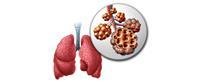
and lung diseases gives new hope to patients with pulmonary arterial hypertension!
Chronic pulmonary artery hypertension is a rare disease of pulmonary hypertension. It is considered a severe and progressive disease that affects the lungs and heart, turns the patient''s life upside down, and poses a threat to his life. In Lebanon, a new oral treatment regimen has recently become available to people with this disease, and it is especially useful for those patients who do not recover or have disease recurrence after surgery. It should be noted that pulmonary arterial hypertension is one of five different types of pulmonary hypertension disease, which is a progressive and life-threatening disease caused by a significant increase in blood pressure in the pulmonary arteries, so the small blood vessels inside the lungs begin to constrict and narrow that is often associated with Right heart or lead to death. Pulmonary arterial hypertension results in morphological changes in the arteries of the lungs, causing the blood vessels in the lungs to narrow, and making it difficult for the heart to pump blood to them. Pulmonary arterial hypertension is a rare disease that affects an estimated 15-52 people out of a million people globally, and is more prevalent among women than among men. In most cases, this disease is of unknown cause, but the genetic factor may sometimes play a role in that.
Despite the availability of many pharmacological treatment options for patients with pulmonary arterial hypertension over more than a decade, information is still limited regarding its course, and hence the need to devise effective native treatment options. Currently, the mortality rate of patients suffering from this disease remains high, as it remains at 15% in the first year and 32% after three years of diagnosis.
As for chronic thromboembolic pulmonary hypertension, it is a severe and life-threatening disease and a type of pulmonary hypertension where blood clots in the pulmonary arteries gradually increase the blood pressure in the pulmonary arteries (pulmonary embolism), which results in an increased volumetric load on the right ventricle . Chronic thromboembolic pulmonary hypertension is considered a rare disease and can be compared in terms of the number of cases in the world with pulmonary arterial hypertension, as the number of cases is estimated at 8-40 people per million worldwide. This disease may develop after previous episodes of pulmonary embolism, and the underlying cause of this disease is still not understood and unknown until now, but the only possible treatment is to remove the thrombus and the lining of the pulmonary artery, which is a surgical procedure through which a blood clot is surgically removed and removed from The arterial endothelium of the pulmonary artery, however, a large number of patients suffering from this disease cannot be treated through surgeries, and this disease remains in some of them in the emergence or returns after the thrombus and pulmonary artery lining operation, and therefore these patients need treatment regimens Medicines approved to deal with this disease.
What do doctors say about the symptoms, diagnosis, and available treatments?
About the diagnosis of the disease, Dr. Georges Dabr, head of the pulmonary medicine and intensive care department at the Hotel Dieu de France Hospital, an assistant professor at the Faculty of Medicine at Saint Joseph University, says:
This is the much-needed treatment for patients who do not have proven treatment options in cases that cannot be treated with surgical intervention, and in which the injured do not overcome the disease or recur after surgery. Pulmonary hypertension is often devastating and accompanied by debilitating symptoms, where the patient begins to suffer and complain of shortness of breath, dizziness and fainting, and from here becomes a treatment that achieves serious clinical improvement and enables patients to participate in daily activities that many of us take for granted, a big step to Imam is often much needed.
It should be noted here that the results of the main clinical trials of chronic thromboembolic pulmonary hypertension and the existing statistics have shown that the treatment of riociguat developed by Bayer and began to be used by the United States and Europe three years ago is the first and only drug that has demonstrated a significant improvement in patients. Pulmonary hypertension caused by chronic thromboembolism, which cannot be treated through surgical intervention, or in patients with chronic thromboembolic pulmonary hypertension that continues to exist or reappear after surgery. Riociguat is also prescribed for patients with pulmonary arterial hypertension where the course of the disease is still somewhat unknown, although several approved treatments are available. Another pivotal trial, Patent-1, showed that riociguat has demonstrated significant and early clinical efficacy, and is administered alone or in combination with other treatments for pulmonary arterial hypertension.
According to statistics, the treatment showed a significant and continuous improvement in the patient across a wide range of endpoints in clinical trials, as it succeeded in doubling the level of physical activity, and contributed to delaying the progression of the disease, and led to an improvement in heart and lung function, and reduced associated symptoms such as distress. In breathing, it resulted in a significant improvement in the patient''s quality of life.
Also, surgeries are used as the only treatment approved in some cases that include chronic thromboembolic pulmonary hypertension, where the thrombus and the lining of the pulmonary artery caused by the disease are removed, and despite that, up to 40 percent of people with chronic thromboembolic pulmonary hypertension They cannot be treated surgically, and 35 percent of them do not fully recover or return to disease after surgery.
Dr. Wagdy-Abi-Saleh - 1
When asked about the group most affected by pulmonary arterial hypertension, Dr. Wagdy Abi Saleh, a specialist in chest diseases, says:
Firstly, pulmonary hypertension is a serious disease that leads to death at a high rate if it is not treated, and unfortunately it affects a group of people, which is the youth group, and of course it affects other groups, but the youth group has a large percentage, especially women, as they suffer from this disease more than men. And the drugs that were used in recent years gave great hope to improving patients'' ability to walk and to do exercise in general, and until now we see the beginning of promises that these drugs prolong the lives of patients and make them able to continue their daily lives normally. As for recovery, the cure rate is still good today.
Is the incidence of this disease increasing at the global level?
The incidence of this disease is not high at the global level, but this disease affects greatly because it affects an age group of people, namely the young group that is still in the prime of work and giving. Before adopting the drugs, we had only one choice, which is to perform a heart and lung transplant, which of course is one of the big and difficult operations.
In your opinion, are the awareness campaigns sufficient to secure treatment for patients?
Awareness is essential for any disease, not only with regard to pulmonary artery hypertension, and it should be noted that some people think that if someone suffers from pulmonary hypertension, he can take antihypertensive medication, knowing that this patient responds completely differently to blood pressure lowering drugs. In terms of securing treatment, there must be support from the guarantors because the cost of treating this disease is very high, and today we see some guarantors such as Social Security and the Ministry of Health have begun to cover the very high costs of treatment. Even those who have good financial capabilities find them high, but the fact that this is The disease is not common. In my opinion, there is a possibility for the state and official guarantors to help cover treatment so that patients can receive it and radically improve their lives.
Dr. Magdy Idris and the similarity of symptoms
We ask Dr. Majdi Muhammad Idris, head of the Saudi Group for Pulmonary Hypertension, a consultant chest disease and head of the chest diseases department at the Armed Forces Hospital in Riyadh, about the symptom that pushes the patient to visit the doctor and says:
The dangerous symptom is fainting. For example, if a person does something and experiences fainting repeatedly and not once or twice, then he has reached an advanced stage of the disease. And most patients suffer shortness of breath, and this is why we know rheumatologists and cardiologists that when a patient feels short of breath without knowing the reason, they think about pulmonary artery hypertension.
What about the similarity of the symptoms of pulmonary hypertension with other symptoms?
This is true. The symptoms of the disease in the beginning are symptoms similar to other diseases such as chronic obstructive pulmonary disease or asthma. There is a belief that pulmonary hypertension disease is not known to doctors in general, or it has become clear to doctors that it is a rare disease that affects only one in a million people, and that there is no cure for this disease or that doctors are not very interested, and this is all incorrect because the disease affects about 50 In a million, not one in a million, but it is not common, but what is important is that the disease is diagnosed in its initial stages, and this is important because the outcome of treatment becomes much better if it is done early, and treatment has become available. I think that as in the case of cancer tumors, a team works together to reach better results. Also, there must be a working group for this particular disease because it is perhaps the only disease that brings cardiologists together.
Which group is most vulnerable to this disease?
Globally, women are affected by a greater rate, and this disease is often related to female hormones. There is a genetic factor, and usually when the disease is hereditary the disease is severe.
And when is surgery required?
Surgery is required in three cases of the disease, of course there is the big operation, which is the lung transplantation that we do in very advanced cases where other treatments have not succeeded, but in less serious cases, we make an opening between the right and left atria of the heart so that not all of the blood goes to the lung. And he puts pressure on it, as we do a shunt that helps a little and relieves symptoms, while the third operation we do if the person has pulmonary hypertension and has had a stroke, then we perform the operation to save him from the stroke.
Will the association undertake research on the level of the Arab world as a whole?
We started in the Gulf countries and we hope to do this research, but we are waiting for the countries to show interest in this disease and the research as a whole, as there must be interest by doctors, and we are happy to see interest in this disease in Lebanon, and there is some interest from Egypt and Algeria, and we hope that it will pay attention. All Arab countries have this type of research. Even if there is no cure, it is important to have a diagnosis of this disease.