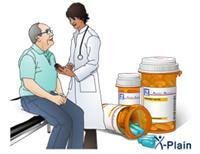
Patients with diseases that affect the blood vessels or the heart sometimes suffer from blood clots. And blood clots can be dangerous for some people because they may cause loss of a limb, or strokes, and even death. In order to reduce the risk of harmful blood clots, health care providers may ask patients to take a medicine called a blood thinner or blood thinner. Millions of patients use blood thinners to prevent complications from harmful blood clots. Warfarin is a popular prescription blood thinner. Warfarin reduces the body''s ability to form clots. This reduces the possibility of harmful blood clots forming in the heart and blood vessels, or around medical devices implanted in the body, such as mechanical heart valves, for example. Warfarin is a relatively safe drug if taken properly by the patient. The patient should check the prothrombin time regularly, maintain consistent eating and physical activity habits, and communicate with the health care provider when needed. Knowing the benefits and risks of warfarin is also important. The health care provider may refer the patient to a clinic that specializes in preventing thrombosis. The personnel at these clinics have the medical expertise and skills to monitor warfarin treatment.
an introduction
Warfarin is a blood thinner or blood thinner. It reduces the body''s ability to form harmful blood clots. The healthcare provider gives the patient enough warfarin to thin the blood without over-thinning it. Thinning blood too much, or too little, can cause later problems. This health information explains warfarin. It covers how to take warfarin and when consulting a healthcare provider is necessary.
Warfarin use
The patient should always take the warafarin prescribed by the healthcare provider at the same time each day. The health care provider will give the patient enough warfarin to thin the blood, not to thin it too much. And if the blood is not thin enough, blood clots can form in the blood vessels and the heart. If the blood is too thin, the patient is at risk of prolonged bleeding. Prolonged bleeding can lead to a large amount of blood loss if the patient is injured in an accident. Loss of a large amount of blood can be fatal. The patient should take the amount of warfarin that the health care provider has prescribed, and have his blood thinning checked regularly.
Usage Instructions
In order for the patient to maintain his blood thinning level within the required limits, he must maintain regular eating habits and physical activity. The patient should consult a health care provider before taking any new medicines, especially antibiotics and over-the-counter medicines. The patient should inform any new healthcare provider that they are taking warfarin, especially if there is a possibility of surgery or injection. A woman should tell her healthcare provider if she is pregnant or if she could be pregnant. If a person forgets to take a dose of warfarin, they may not take an extra tablet to make up for it. It is important to keep the amount of vitamin K in the food constant. And the patient has to eat a fixed amount of green vegetables every day. It is important for the patient to have their prothrombin time checked regularly. The patient''s health care provider determines the dates for this examination.
When is a consultation with a healthcare provider necessary
Some side effects of warfarin are normal. Among these effects
Flatulence.
Changes in the taste of things.
Chills or feeling cold.
Gas or abdominal pain.
Hair loss.
If these side effects become severe, or if they do not go away, a healthcare provider should be consulted. Even if a patient is taking the prescribed amount of warfarin, serious internal bleeding, or blood clots, can occur. Thus it is important for the patient to report to the health care provider any signs of internal bleeding or a blood clot. The patient, or one of his friends or family members, should contact the health care provider if the patient experiences a serious fall or if he hits his head, especially if he develops a headache afterward, or if he feels sleepy or weak. If the patient notices any blood in his urine or faeces, or if the color of urine or stool becomes very dark, he should consult a health care provider. If the patient notices the appearance of abnormal bruises, large areas of bruising, or blue and black marks on his skin, for unknown reasons, he should inform the health care provider. These signs may indicate bleeding under the skin. Small bruises that occur due to minor accidents, such as a leg bumping into furniture, are normal things that do not require contact with a health care provider. The patient should consult a health care provider if he has the following:
Dizziness.
breathing difficulties.
Chest pain or pressure.
More tired or weak than usual.
These signs could indicate blood loss and anemia. The patient should inform the health care provider if bleeding that does not stop due to a wound, or from the nose, if this bleeding continues for more than seven minutes. The patient should consult a health care provider immediately if he has the following:
rash.
Hoarseness
Urticaria
Itch.
Trouble swallowing.
If a patient develops flu-like symptoms, he or she should consult a health care provider immediately. Among these symptoms may be the following:
Diarrhea.
nausea.
vomiting.
A patient should consult a healthcare provider immediately if he or she has
infection.
Loss of appetite.
Pain in the upper right of the abdomen.
Yellowing of the eyes or skin.
The patient should consult a health care provider immediately if he notices swelling in
Eyes.
the face.
Throat.
the tongue.
Lips.
He should also consult a health care provider if his palms, feet, ankles, or lower legs are swollen. The patient should contact the health care provider if he notices more bleeding than usual when brushing or flossing his teeth. If the patient is menstruating, she should inform the health care provider if she notices more bleeding than usual during her period. She must also tell him if she has bleeding between periods. If the patient has a high fever or an illness that appears to be getting worse, he or she should consult a health care provider. The patient should also consult a health care provider if he notices blood when he coughs or vomits, if his stools are loose or liquid, or if he develops an infection that leads to high fever and chills.
Conclusion
Warfarin is a blood-thinning medication. It reduces the body''s ability to form harmful blood clots. The health care provider will give the patient enough warfarin to thin the blood, not to thin it too much. And if the blood is not thin enough, blood clots can form in the blood vessels and the heart. If the blood thinning is too much, the patient is at risk of bleeding for a longer time. It is important to keep the amount of vitamin K in the patient’s diet constant. And the patient has to eat a fixed amount of green vegetables every day. It is also important to be physically active on a regular basis. Even if a patient is taking the prescribed amount of warfarin, serious internal bleeding, or blood clots, can occur. Thus it is important for the patient to report to the health care provider any signs of internal bleeding or a blood clot. The patient should contact a health care provider if he notices any bleeding, bruising, dizziness, or abnormal chest pain. Communication with a healthcare provider can be helpful in helping them use warfarin in a way that treats blood clots in the best possible way.