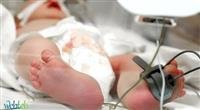

of preterm infants
Preterm infants are defined as those born at the age of less than 37 weeks (equivalent to 3 weeks before the due date of a full normal birth) and weighing less than 2.27 kilograms (equivalent to 5 pounds). They are at risk of developing a greater number of health problems than babies born into a full-term pregnancy, and they may face long-term health problems that affect the brain, lungs, hearing or vision. In some cases, the premature baby may need special care and stay in the neonatal intensive care unit, and newborns between the ages of 25 and 29 weeks of pregnancy are fed intravenously or through a tube.
According to the World Health Organization, it is estimated that 15 million babies are born prematurely each year (before 37 weeks of pregnancy), between 5 and 18 percent of all children born, across 184 countries in the world, and this number is rising.
Preterm birth complications are a major cause of death among children under the age of five, and three quarters of these deaths can be prevented through current, effective, modern interventions.
The countries of the world have celebrated the International Day of the Premature Child on the seventeenth of November every year since 2011 This happened last Tuesday, and this year the slogan “Care for a Better Future” was adopted, which aims to raise awareness of the problems of premature labor, and its impact on families, and work with partners around the world to prevent them, and raise awareness of the importance of following-up pregnancy and maintaining the ideal weight during the period Pregnancy with regular monitoring, blood sugar level control and blood pressure control to avoid premature labor.
Problems in premature babies
On the categories of premature babies, Prof. Dr. Adel bin Salem Al-Harbi, consultant pediatrics and chest diseases in Prince Sultan Military Medical City in Riyadh and president of the Saudi Society for Pediatric Chest Medicine, spoke to “Your Health”, and stated that premature babies fall into four categories according to their due date, and these categories are :
> First category: children born between 34 weeks and 36 weeks of pregnancy.
> The second category: includes those born between 32 and 34 weeks.
> The third category: includes those born less than 32 weeks of pregnancy.
The fourth category: includes births of 25 weeks or less.
As for the common health problems of premature infants, Professor Adel Al-Harbi emphasized the importance of classifying the premature baby in order to provide him with appropriate care, as each group has special ways to take care of them according to age and the health problems that may accompany them, and among the most prominent problems are the following:
> Respiratory problems: It is one of the most common problems that may affect premature babies that result in difficulty breathing, due to the incomplete maturity of the respiratory system of the premature baby and the poor antibodies in his body that are transmitted from the mother to the newborn through the placenta, which makes him vulnerable to many diseases. Respiratory. Respiratory Syncytial Virus, RSV, is one of the most common.
Cardiovascular problems: A premature baby may suffer from birth defects such as the patent ductus arteriosus, which is a continuous opening between the aorta and the pulmonary artery. Premature birth may also cause low blood pressure in a premature baby.
Brain problems: premature labor may increase the incidence of bleeding in the brain and some neurological diseases such as epilepsy.
> Difficulty controlling the body temperature of a premature newborn: due to the lack of fat stored under the surface of the skin, which leads to the inability of the child''''s body to generate enough heat to compensate for the heat lost from it. Also, low body temperature in premature babies may lead to breathing problems and a in the blood sugar level.
Blood problems: In premature babies, the incidence of anemia and jaundice increases significantly during the first months of birth.
> Other problems: such as psychological and behavioral problems, developmental delay, hearing, vision and cognitive skills in a premature baby.
Respiratory syncytial virus
The President of the Saudi Pediatric Society, Professor Adel Al-Harbi, explained that the respiratory syncytial virus is the main cause of infections and infections of the lungs and respiratory system in children. The virus spreads in the Kingdom of Saudi Arabia widely during the rainy and winter seasons, starting from October to March, and may sometimes continue until April. Respiratory syncytial virus is a common respiratory virus that infects most children before they reach the age of two. The infection does not cause more than a cold for most infants and young children, but nevertheless, the effect of this virus may be severe and life-threatening for certain groups of children.
Who are the children at risk of infection with it? Professor Al-Harbi answers that children at risk of severe, life-threatening respiratory syncytial virus infection are: premature newborns, young children with heart or lung diseases, and children with weak immune systems, such as those undergoing chemotherapy or organ transplantation. The virus is through the eyes, nose or mouth, and the virus spreads easily through the air in the form of lets that can infect the respiratory system. The infection usually occurs when a person infected with the virus coughs or sneezes near a healthy person, and the virus can be transmitted through direct contact, such as shaking hands. The virus can survive for hours on hard objects such as rooftops, stair bars and children''''s toys.
Symptoms and diagnosis
And about statistics on respiratory syncytial virus in Saudi Arabia, according to the latest studies, the respiratory syncytial virus is the main cause of acute respiratory infections in an infant and the main reason for visiting the hospital. 97.4% of ARI cases due to viruses in children are associated with respiratory syncytial virus.
The main symptoms of infection with the virus are
A chronic cough with a whistling sound in the chest
Significant rise in temperature
breathing difficulties
Impairment of the child''''s ability to breastfeed due to difficulty breathing
Sneezing with runny nose
Discomfort and crying
Diagnosis of respiratory syncytial virus depends on
Blood tests that indicate the number of white cells in the child''''s body, which indicates if the cause is caused by infection with a virus or bacteria.
Chest x-ray, which gives a clear picture of the location of the child''''s lung infection.
A swab of secretions from the nose or mouth to check for signs of infection with the virus.
Monitor the level of oxygen in the child''''s blood.
Noticing the symptoms of the disease.
Complications and prevention
As for the complications of infection with syncytial virus, they are
Frequent admission of premature babies in hospitals and treatment centers - Increasing the possibility of pneumonia and bronchitis when this virus is transmitted to the lower respiratory system of the premature baby, which makes it the main cause of their pneumonia.
Increase in otitis media when the virus enters the cavity behind the middle ear, increasing the possibility of developing chest diseases such as asthma.
As for the prevention of respiratory syncytial virus, it includes
Make sure to wash hands with soap and water for at least 20 seconds, or use an alcohol-based hand sanitizer before touching an infected child to protect him from germs and microbes.
Avoid smoking in the home or near the infant, as tobacco smoke increases the chance of infection with respiratory syncytial virus and increases the severity of symptoms.
Keeping the child away from anyone suffering from colds or fever, especially in the first two months of the infant’s life, and the child''''s exposure to the danger of crowded places should also be reduced.
Take care to ensure that the surfaces of the house, such as kitchen and bathroom surfaces, and all tools are clean, and used tissue must be disposed of immediately.
Periodically washing and disinfecting the supplies of the injured child.
Take care to sterilize the house continuously and wash clothes well before and after exposure to the infected child.
Isolate the injured child from the rest of the family, especially children, to avoid spreading the infection to them.
Avoid close contact with the premature baby, such as kissing or hugging him, or sharing cups or food utensils with infected people.
In light of the Corona pandemic, we must not be negligent in giving children the scheduled doses of vaccines on time to protect them from the dangers of infection with respiratory syncytial virus.
A Saudi health initiative
On the Saudi Initiative for Diagnosis, Treatment and Prevention, Professor Adel Al-Harbi stated that the Saudi Society of Pediatric Pulmonology, believing in the dangers of this disease, last year issued an initiative entitled “The Saudi Initiative of bronchiolitis diagnosis, management, and prevention (SIBRO) », it included best practices in the management of bronchiolitis in children as well as information on methods of diagnosis, treatment and prevention, as well as precautions to prevent infection with respiratory syncytial virus as it is the main cause of most cases of pneumonia.
Al-Harbi added that there is a safe and available preventive treatment that can help protect some children at great risk caused by the complications resulting from infection with respiratory syncytial virus, in hospitals throughout the Kingdom.