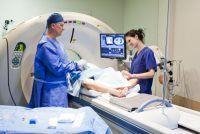
What are X-rays and how do they work?
In general, medical images help in the development and success of the diagnosis, and thus access to the required treatment, whether in children or adults.
X-rays are an examination in which electromagnetic radiation (electromagnetic radiation) issued by a special radiation device penetrates the tissues of the body, hitting a plate placed behind the body, forming an image of the body parts that have been penetrated by the rays.
These rays that penetrate the body are what raises the fear of many, so do they have any harm and risks to the body and its health? Is it possible that these disadvantages outweigh the required benefits? Follow the article to reach its conclusion to the correct and reliable answer.
Indications for the use of X-rays
X-rays are used to find the causes of pain in the following cases
An enlarged heart.
Blockage of blood vessels.
Bone pain, to see if it is caused by a fracture, osteoporosis, or cancer.
Digestive problems.
Pain and tooth decay.
Benefits of x-rays
X-ray examination is extremely important, as it helps diagnose many different diseases.
The most important benefits of x-rays are the following
It helps diagnose certain diseases in a painless way, with the aim of evaluating available treatment options.
Supports and facilitates treatment and surgical plans.
Help the medical staff through catheterization or the introduction of any medical device into the body, to know the path of this device, as the work is done according to what the medical team sees through x-rays.
It helps in treating and eradicating tumors as well as getting rid of any blood clots or blockages in the body.
X-ray risks
In general, there are risks and benefits associated with everything in life, as well as with X-rays.
The use of Ionizing radiation in X-ray examination may cause damage to the genetic material (DNA) in the body, and among the most important risks associated with this radiation are the following:
Exposure to high levels of X-rays can cause redness of the skin and hair loss.
Very slight increase in the risk of developing cancer as a result of continuous exposure to x-rays.
So far, science has not been able to prove the inevitable relationship between exposure to X-rays and cancer, as it found that continuous exposure to X-rays may increase the risk of cancer, but slightly, and this matter depends on the following:
Radiation dose: The higher the dose of X-ray exposure, the higher the risk of cancer.
Patient''s age: People who are exposed to this radiation continuously at an early age have a higher risk of developing cancer.
Patient''s gender: Women have a higher risk of developing cancer from radiation exposure.
The destination area: Some parts of the body are more susceptible to cancer from radiation than others.
Benefits and risks: what is the solution?
You may find that the risks of X-rays outweigh the benefits, and this is precisely why doctors finally resort to this option.
You must make sure that when the doctor asks you for this test, he is fully aware that the benefits outweigh the risks.
Feel free to ask your physician questions about the topic and ask him for some clarification about anything on your mind.