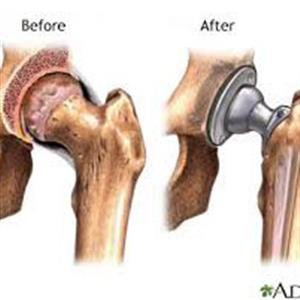

In most cases, the doctor will allow the patient to put their feet on the floor and walk the day after surgery after hip replacement surgery.
In some patients, they may not be allowed to walk. Depending on the situation, the patient may be allowed to put their feet on the floor and walk a month, two or three months after the surgery.
However, most patients can walk with a walker a day or two after the surgery. Walking with a wagon so that the foot is not pressed to the ground is not only allowed for all patients, but it is also necessary and mandatory (unless the doctor deems it inappropriate for some reason).
It has also been said whether a patient can put pressure on the operated leg while walking with a walk-in bed varies depending on the patient and the type of surgery. In these cases, the doctor''s advice must be followed.
When walking, it is necessary to pay attention to the following points
• Be sure to ask your doctor when you can press the surgical leg to the ground and how much pressure
• The patient should use the walker or crutch for a few weeks after surgery, and as long as the movement and strength of the muscles around the hip joint is not good, there is a high risk of falling, and climbing and descending stairs may be dangerous.
• The patient must get out of a chair or bed at least once every hour and walk
• If the attending physician allows the patient to put weight on the leg that has undergone surgery, he should gradually begin daily routine activities at home.
• According to a regular schedule, the patient should walk for a certain amount at home every day, of course, and this is on the advice of his doctor. Walking time and distance should be increased each day, and it is best to walk outside for a while each day if possible.
The purpose of hip replacement surgery is to relieve pelvic pain so that the patient can walk easily, but walking with a prosthetic joint requires skill.
A patient who has not walked properly for a long time due to pelvic joint pain loses many of the correct walking skills, so these skills must be restored. This is possible with ongoing practice, and a good physical therapist can help a lot.
The day after surgery, the physiotherapist teaches the patient to walk with a wagon. Never use a walker without training. The following tips will help you to use the stacker better.
Walking after pelvic joint replacement surgery with the help of a welk
After hip replacement surgery, hold the hip joint firmly in a completely upright position so that both hands are pressed against the hip equally. Place your undamaged foot completely on the floor so that your weight is fully applied to that foot.
Do not press the foot of the injured side completely on the ground, and allow your hands to do the work of the leg for which the surgery was performed. This is by holding the weaker with both hands, which means that some of your weight will be borne by your hands instead of the injured leg.
The orthopedist will determine how much weight you can place on the leg on the affected side.
You may not be allowed to place your foot on the ground at all, or your doctor may allow you to place your foot on the ground for as long as possible.
Then raise the walker or stacker with both hands off the ground and place it slightly to the imam on the ground. Then, if your doctor allows you to put weight on your operated leg, take it one step further.
When walking on the floor, try to get your heels to fall on the floor. Then bring the healthy leg forward in the same way and place it next to the injured side leg. Be very careful, when the healthy foot wants to advance, it must be lifted off the ground.
However, you should be aware that if you do not use your hands, all of your weight will fall on the leg that was operated on, which is not correct.
So when the healthy side foot is above the ground and advancing, the weight force must be divided into two parts and fed into the right hand and the left hand.
If your doctor allows you to put weight on your operated leg, some weight will be placed on that leg. In other words, in this position, some weight should be applied to the foot and some weight on the hands.
Walk in no hurry and do these steps very slowly. You have never experienced this type of walking before, and it can be difficult for you at first, and like a child who has just learned to walk, you need to think about these steps for every step you take.
Gradually, these steps get stuck in your mind and you can do them without thinking and more quickly, but until you get to that stage, keep calm and walk slowly.
Walking with the help of crutches after hip replacement surgery
After hip replacement surgery in the first few weeks, it is necessary to walk with a walking machine, and when the balance, limb movement and muscle strength improves after a while, you can use a crutch instead of walking and then a cane.
Use of stairs after pelvic joint replacement surgery
After hip and pelvic joint replacement surgery, you may use the stairs when hip mobility and strength improves. First of all, you should use the diaper next to the stairs and go up or down the stairs one by one.
When climbing the stairs, raise the good foot first and when going down, place the injured foot first. The height of the stairs should be 15 cm maximum.
Walking unaided after hip replacement surgery
The purpose of pelvic joint replacement surgery is to relieve pain so that you can walk comfortably. For walking, pay attention to the following points
• Use the stick until you have enough balance and strength.
• At first, walk 3 to 4 times a day for 5 to 10 minutes each time. When your strength gradually increases, increase it to 2 to 3 times a day for 20 to 30 minutes each time.
• Finally, try to walk 3 to 4 times a week for 20 to 30 minutes each time.