

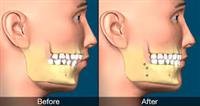
Jaw surgery can readjust or realign the jaw. It’s also referred to as orthognathic surgery. It’s performed by oral or maxillofacial surgeons working along with an orthodontist most of the time.
There are several reasons why jaw surgery may be recommended. For example, jaw surgery could adjust a misaligned bite due to abnormal jaw growth or repair an injury.
Continue reading as we dive deeper into the types of jaw surgery, when they’re performed, and more.
Why is jaw surgery done?
Jaw surgery may be recommended if you have a jaw issue that can’t be addressed with orthodontics alone. Orthodontics is a specialized type of dentistry concerned with the positioning of the jaws and teeth.
Your orthodontist and oral surgeon will work together to help develop a treatment plan that’s appropriate for your condition.
Some examples of things that jaw surgery can help with include
adjusting your bite, which is how your teeth fit together when your mouth is closed
correcting conditions that affect the symmetry of your face
helping ease pain due to a temporomandibular joint (TMJ) disorder
repairing an injury or congenital condition involving the face, such as a cleft palate
preventing further wear and tear to your teeth
making activities like biting, chewing, or swallowing easier
addressing breathing problems, such as mouth breathing and obstructive sleep apnea
The optimal time for jaw surgery is after the jaw has stopped growing, typically in the late teens or early 20s.
Maxillary osteotomy
Maxillary osteotomy is the surgery that’s done on your upper jaw (maxilla).
Conditions that may call for maxillary osteotomy include
an upper jaw that protrudes or recedes significantly
an open bite, which is when your back teeth (molars) don’t touch when your mouth is closed
a crossbite, which is when some of your bottom teeth sit outside of your upper teeth when your mouth is closed
midfacial hyperplasia, which is a condition where growth in the middle portion of your face is reduced
Procedure overview
During this procedure, your surgeon will
make an incision in the gums above your upper teeth, allowing them to access the bones of your upper jaw
cut into the bone of your upper jaw in a way that allows them to move it as a single unit
move this portion of your upper jaw forward so that it aligns and fits properly with your lower teeth
place plates or screws to hold the adjusted bone in its new position
use stitches to close the incision in your gums
Mandibular osteotomy
Mandibular osteotomy refers to surgery that’s performed on your lower jaw (mandible). It’s most often done when your lower jaw protrudes or recedes significantly.
Procedure overview
When you have a mandibular osteotomy, your surgeon will
make an incision into your gums on each side of your lower jaw, just behind your molars
cut the bone of the lower jaw, which allows the surgeon to carefully move it into a new position
move the lower jawbone either forwards or backwards into a new position
place plates or screws to hold the adjusted jawbone in its new position
close the incisions in your gums with stitches
Bimaxillary osteotomy
Bimaxillary osteotomy is the surgery performed on both your upper and your lower jaw. It’s done when a condition affects both jaws.
Procedure overview
The techniques used for this surgery include those that we’ve discussed for the maxillary and mandibular osteotomy procedures.
Because operating on both the upper and lower jaw can be complex, your surgeon may use 3-D modeling software to help plan the surgery.
HEALTHLINE EVENT
There is hope ahead
Watch Lesley Stahl, Alyssa Milano, D.L. Hughley & more as they recount the past year and look ahead to the future. Watch our insightful and uplifting conversation on hope, vaccines, mental health & more.
Genioplasty
Genioplasty is surgery on the chin. It can help correct a receding chin. It may sometimes be performed with a mandibular osteotomy for a receded lower jaw.
Procedure overview
During a genioplasty, your surgeon will
make an incision into your gums around your lower lip
cut part of the chinbone, which allows them to move it
carefully move the chinbone into its new position
place small plates or screws to help hold the adjusted bone in its new position
close the incision with stitches
TMJ surgery
Your doctor may recommend TMJ surgery if other treatments haven’t been effective at relieving your TMJ symptoms.
There are a few types of TMJ surgery
Arthrocentesis. Arthrocentesis is a minimally invasive procedure that involves using small needles to inject fluid into the TMJ. This can help lubricate the joint and wash out any lingering debris or byproducts of inflammation.
Arthroscopy. During arthroscopy, a thin tube called a cannula is ed into the joint. The surgeon then uses a thin scope (arthroscope) and small tools to operate on the joint.
Open joint surgery. Open joint surgery (arthrotomy) is the most invasive type of TMJ surgery. For this procedure, an incision is made in front of your ear. Your doctor can then work to replace or remove affected TMJ components.
What can I expect pre- and postsurgery?
Below, we’ll explore what you can expect when you have jaw surgery.
Before surgery
In many cases, an orthodontist has placed braces or aligners onto your teeth in the months before your surgery. This helps align your teeth in preparation for your procedure.
You’ll likely have a few appointments before your surgery. These help your orthodontist and surgeon plan out your procedure. Preparation can include taking measurements, molds, or X-rays of your mouth.
Sometimes, 3-D modeling on a computer is used as well.
During surgery
Jaw surgery is performed using general anesthesia. That means you’ll be asleep during your procedure.
Most surgeries take 2 to 5 hours, but the exact length of time depends on the specific procedure being performed.
During jaw surgery, most of the incisions are made inside your mouth, although in some cases very small incisions will be made on the outside.
Overall, scarring on your face or chin is unlikely.
Recovery
Most people stay in the hospital for 1 to 4 days after their surgery.
When you’re able to leave the hospital, your doctor will give you instructions for eating and oral hygiene. It’s important to follow these instructions carefully during recovery.
After your surgery, it’s normal to experience swelling, stiffness, and discomfort in your face and jaw. These should go away over time.
In the meantime, your doctor will prescribe medications to help ease these symptoms.
In some cases, you may experience numbness in your top or bottom lip. This is usually temporary and will go away over a period of weeks or months. In rarer cases, it may be permanent.
Recovery can take anywhere between 6 and 12 weeks. After several weeks of recovery, your orthodontist will continue aligning your teeth with braces.
When your braces are removed, your orthodontist will give you a retainer to help keep your teeth aligned.
What are the risks?
Having surgery on your jaw is generally very safe.
However, as with any surgery, it has some risks. Your surgeon should inform you of these risks before your procedure.
The potential risks of jaw surgery include
a bad reaction to the anesthesia
excessive bleeding
infection at the surgical site
injury to the nerves of the jaw
fracture of the jaw
problems with bite or alignment following surgery, which could require an additional procedure
relapse of the jaw back to its original position
new TMJ pain
Some surgeries may have an increased risk compared to others.
A 2019 study found that people who underwent a bimaxillary osteotomy had an increased risk for complications compared to those who underwent a maxillary or mandibular osteotomy alone.


