You’ve probably heard the term stomach stapling. But what does that mean exactly? Is stomach stapling a procedure to lose weight?
Did you know there are two common weight loss surgery procedures that involve stomach stapling?
What is Stomach Stapling?
Stomach stapling is not the technical name of any procedure. However, there is one procedure that only staples your stomach. It’s the gastric sleeve procedure. Gastric sleeve surgery only became popular in 2009. And you may have heard your grandma say, ‘She lost a lot of weight. Did she get that stomach stapling thing?’
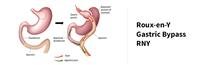
The term stomach stapling has been used since bariatric surgery started. Why? Well, it’s much easier to remember than laparoscopic roux-en-y gastric bypass. Gastric bypass is the likely procedure that people refer to when they say ‘stomach stapling.’
Gastric bypass has been around for more than 20 years and is considered the ‘Gold Standard’ of weight loss surgery. It’s considered the ‘Gold Standard’ because it’s the most researched of all procedures, it has excellent results and a low risk profile. And aside from the Lap Band, which everyone knows because of Allergan’s marketing team, gastric bypass is the ‘other’ weight loss procedure.
In this article we will discuss both gastric bypass and gastric sleeve surgery the two common stomach stapling procedures. However, it’s important to note there are some other procedures that also include stomach stapling (these are less common).
Mini-gastric bypass
This procedure is relatively new and typically not covered by insurance. However, it does have some strong proponents.
It claims to have less complications, shorter operating times, and weight loss similar to gastric bypass.
Banded sleeve gastrectomy
This procedure had some proponents about 5 years ago.
However, there wasn’t much data to support improved long-term weight loss by adding a band to a sleeve gastrectomy (the procedures original intent).
Duodenal Switch
A less common but very effective procedure for weight loss surgery.
It is often covered by insurance.
Gastric Bypass Surgery – Staple My Stomach, Please
Gastric bypass surgery is a very effective weight loss surgery procedure. This procedure combines two weight loss mechanisms.
Restriction
The stomach is reduced in size. This restricts the amount of food you can eat in a single sitting.
If you try to eat more than your stomach can hold, you will feel sick.
Malabsorption
Part of your intestines are bypassed (typically about 150 cm).
Your intestines process the food and absorb nutrients.
The less time your food is processed, the less calories you absorb.
Less calories = reduced weight.
Gastric Sleeve Surgery – Only Staple My Stomach
Gastric sleeve surgery is on fire. It’s become very popular since it was first approved for insurance coverage in 2009. The procedure is straightforward, easy to understand, and produces excellent weight loss (up to 68% according to this study). Complication rates are acceptable and hunger levels are significantly reduced afterwards. This article compares gastric bypass and gastric sleeve. Gastric sleeve works by only utilizing restriction.
Restriction.
The stomach is reduced by about 70%.
The stomach is stapled from the bottom to the top, removing the majority of the greater curvature.
The hormone ghrelin causes hunger. And because 70% of the stomach is removed, hunger is significantly reduced.