
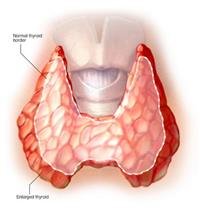
Overview
Hyperthyroidism (overactive thyroid) occurs when your thyroid gland produces too much of the hormone thyroxine. Hyperthyroidism can accelerate your body''s metabolism, causing unintentional weight loss and a rapid or irregular heartbeat.
Several treatments are available for hyperthyroidism. Doctors use anti-thyroid medications and radioactive iodine to slow the production of thyroid hormones. Sometimes, hyperthyroidism treatment involves surgery to remove all or part of your thyroid gland.
Although hyperthyroidism can be serious if you ignore it, most people respond well once hyperthyroidism is diagnosed and treated.
Symptoms
Hyperthyroidism can mimic other health problems, which can make it difficult for your doctor to diagnose. It can also cause a wide variety of signs and symptoms, including:
Unintentional weight loss, even when your appetite and food intake stay the same or increase
Rapid heartbeat (tachycardia) — commonly more than 100 beats a minute
Irregular heartbeat (arrhythmia)
Pounding of your heart (palpitations)
Increased appetite
Nervousness, anxiety and irritability
Tremor — usually a fine trembling in your hands and fingers
Sweating
Changes in menstrual patterns
Increased sensitivity to heat
Changes in bowel patterns, especially more frequent bowel movements
An enlarged thyroid gland (goiter), which may appear as a swelling at the base of your neck
Fatigue, muscle weakness
Difficulty sleeping
Skin thinning
Fine, brittle hair
Older adults are more likely to have either no signs or symptoms or subtle ones, such as an increased heart rate, heat intolerance and a tendency to become tired during ordinary activities.
Graves'' ophthalmopathy
Sometimes an uncommon problem called Graves'' ophthalmopathy may affect your eyes, especially if you smoke. This disorder makes your eyeballs protrude beyond their normal protective orbits when the tissues and muscles behind your eyes swell. Eye problems often improve without treatment.
Signs and symptoms of Graves'' ophthalmopathy include
Dry eyes
Red or swollen eyes
Excessive tearing or discomfort in one or both eyes
Light sensitivity, blurry or double vision, inflammation, or reduced eye movement
Protruding eyeballs
When to see a doctor
If you experience unexplained weight loss, a rapid heartbeat, unusual sweating, swelling at the base of your neck or other signs and symptoms associated with hyperthyroidism, see your doctor. It''s important to completely describe the changes you''ve observed, because many signs and symptoms of hyperthyroidism may be associated with a number of other conditions.
If you''ve been treated for hyperthyroidism or you currently are being treated, see your doctor regularly as advised so that he or she can monitor your condition.
Causes
Hyperthyroidism can be caused by a number of conditions, including Graves'' disease, Plummer''s disease and thyroiditis.
Your thyroid is a small, butterfly-shaped gland at the base of your neck, just below your Adam''s apple. The thyroid gland has an enormous impact on your health. Every aspect of your metabolism is regulated by thyroid hormones.
Your thyroid gland produces two main hormones, thyroxine (T4) and triiodothyronine (T3), that influence every cell in your body. They maintain the rate at which your body uses fats and carbohydrates, help control your body temperature, influence your heart rate, and help regulate the production of protein. Your thyroid also produces a hormone that helps regulate the amount of calcium in your blood (calcitonin).
Reasons for too much thyroxine (T4)
Normally, your thyroid releases the right amount of hormones, but sometimes it produces too much T4. This may occur for a number of reasons, including:
Graves'' disease. Graves'' disease is an autoimmune disorder in which antibodies produced by your immune system stimulate your thyroid to produce too much T4. It''s the most common cause of hyperthyroidism.
Hyperfunctioning thyroid nodules (toxic adenoma, toxic multinodular goiter or Plummer''s disease). This form of hyperthyroidism occurs when one or more adenomas of your thyroid produce too much T4. An adenoma is a part of the gland that has walled itself off from the rest of the gland, forming noncancerous (benign) lumps that may cause an enlargement of the thyroid.
Thyroiditis. Sometimes your thyroid gland can become inflamed after pregnancy, due to an autoimmune condition or for unknown reasons. The inflammation can cause excess thyroid hormone stored in the gland to leak into your bloodstream. Some types of thyroiditis may cause pain, while others are painless.
Risk factors
Risk factors for hyperthyroidism, include
A family history, particularly of Graves'' disease
Female sex
A personal history of certain chronic illnesses, such as type 1 diabetes, pernicious anemia and primary adrenal insufficiency
Complications
Hyperthyroidism can lead to a number of complications
Heart problems. Some of the most serious complications of hyperthyroidism involve the heart. These include a rapid heart rate, a heart rhythm disorder called atrial fibrillation that increases your risk of stroke, and congestive heart failure — a condition in which your heart can''t circulate enough blood to meet your body''s needs.
Brittle bones. Untreated hyperthyroidism can also lead to weak, brittle bones (osteoporosis). The strength of your bones depends, in part, on the amount of calcium and other minerals they contain. Too much thyroid hormone interferes with your body''s ability to incorporate calcium into your bones.
Eye problems. People with Graves'' ophthalmopathy develop eye problems, including bulging, red or swollen eyes, sensitivity to light, and blurring or double vision. Untreated, severe eye problems can lead to vision loss.
Red, swollen skin. In rare cases, people with Graves'' disease develop Graves'' dermopathy. This affects the skin, causing redness and swelling, often on the shins and feet.
Thyrotoxic crisis. Hyperthyroidism also places you at risk of thyrotoxic crisis — a sudden intensification of your symptoms, leading to a fever, a rapid pulse and even delirium. If this occurs, seek immediate medical care.
Complications
Complications of a brain AVM include
Bleeding in the brain (hemorrhage). An AVM puts extreme pressure on the walls of the affected arteries and veins, causing them to become thin or weak. This may result in the AVM rupturing and bleeding into the brain (a hemorrhage).
This risk of a brain AVM bleeding ranges around 2 percent each year. The risk of hemorrhage may be higher for certain types of AVMs, or if you have experienced previous AVM ruptures.
Some hemorrhages associated with AVMs go undetected because they cause no major brain damage or symptoms, but potentially life-threatening bleeding episodes may occur.
Brain AVMs account for about 2 percent of all hemorrhagic strokes each year and are often the cause of hemorrhage in children and young adults who experience brain hemorrhage.
Reduced oxygen to brain tissue. With an AVM, blood bypasses the network of capillaries and flows directly from arteries to veins. Blood rushes quickly through the ed path because it isn''t slowed down by channels of smaller blood vessels.
Surrounding brain tissues can''t easily absorb oxygen from the fast-flowing blood. Without enough oxygen, brain tissues weaken or may die off completely. This results in stroke-like symptoms, such as difficulty speaking, weakness, numbness, vision loss or severe unsteadiness.Thin or weak blood vessels. An AVM puts extreme pressure on the thin and weak walls of the blood vessels. A bulge in a blood vessel wall (aneurysm) may develop and become susceptible to rupture.
Brain damage. As you grow, your body may recruit more arteries to supply blood to the fast-flowing AVM. As a result, some AVMs may get bigger and displace or compress portions of the brain. This may prevent protective fluids from flowing freely around the hemispheres of the brain.
If fluid builds up, it can push brain tissue up against the skull (hydrocephalus).