spine problems
Interventional radiology is used to treat many chronic diseases, including the treatment of spinal problems, and interventional radiology is used to reduce surgical interventions through the use of various devices, whether it is ultrasound, magnetic resonance, or CT scans, so that they are employed in the treatment of patients without surgery and is easily done. Without pain, complications, or bleeding as is the case in traditional surgeries, local anesthesia is used and not a general anesthetic, and there is no cut in tissues much, and is suitable for all ages, but each case has a special nature according to the diagnosis of the doctor who specializes in treating spinal problems at the Shifa Center for Interventional Radiology. In this article, we will address the topic of the role of interventional radiology for treating spinal problems at the Shifa Center.
What is the role of interventional radiology for treating spine problems?
There are many people who suffer from diseases of the spine, including herniated disc, spondylolisthesis, narrowing of the nerve canal and vertebral fractures due to several reasons. We will address spinal diseases, causes and methods of treatment.
Spine diseases
There are some diseases that may affect the spine, including
Slipped disc
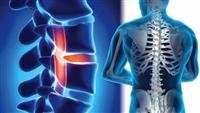
It is the solid part that resembles a ring, and when an injury or weakness occurs in the disc, the liquid substance is expelled to the outer part, and this is called a slipped or herniated disc. A herniated disc causes discomfort and pain, especially when the slipped cartilage is compressed on a spinal nerve, either in the lower back or neck, and the pain may extend to the arms or legs, and it worsens during the night, or when standing or sitting.
Causes of a herniated disc
A herniated disc occurs due to several reasons, including
Constant pressure on the vertebrae and cartilage, muscle weakness, excess weight, and erratic movements, such as bending or sitting
And this is accompanied by the presence of severe and severe pain in the back, and the spine includes a complex network of nerves and blood vessels, and in the event that the herniated disc causes pressure on the adjacent nerves or muscles, the victim may suffer from some other additional symptoms, including the feeling of severe pain in the legs If a herniated disc occurs in the lower back, the pain is often concentrated in the buttocks, thigh, and legs, and the pain can extend to parts of the foot.
Degenerative spine diseases
Degenerative diseases affect the spine when one of the spinal discs loses its strength, and degenerative disc disease is what is known as disc disease, which is the occurrence of changes in the discs of the spine, which causes severe pain. A person becomes infected with this disease when the intervertebral discs dry up and lose the fluid in them, which leads to friction of the vertebrae between them and lose their ability to absorb the shocks that one is exposed to.
Causes of degenerative spine diseases
Age is one of the most important causes of rupture and corrosion, because it changes the water and protein content in the cartilage of the body, which weakens and becomes brittle.
When dryness occurs in this material, the space between the vertebrae becomes less than normal, which leads to a loss of the ability to absorb shocks, and it may also result from a herniated disc, as this occurs naturally when aging, and leads to a feeling of pain in the back, as it may The pain is transmitted to other places in the body, such as pain and numbness in the lower leg, or in the shoulder and arms
Spinal cord injury
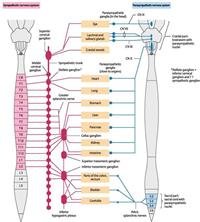
The spinal cord is defined as a group of main nerves that transmit electrical signals from the brain to different parts of the body and vice versa, as the spinal cord with the brain forms what is called the central nervous system, and extends from the base of the brain to the lower back, and when damage occurs in it, this leads to an effect on the function of The spine thus affects movement and speech
Causes of spinal cord injury
There are reasons that can affect the nature of movement, including
Road accidents can also affect the spine.
Falling back and spinal cord injury.
Infection with some diseases that cause a defect in the functions of the spinal cord, such as: polio and spina bifida.
Spinal stenosis
It is a condition in which the channel through which the spinal cord passes becomes narrowed, which leads to pressure on it or on the nerve roots close to it, and this causes pain and numbness in the hands, feet, arms, and legs. This problem occurs when the spaces between the bones that make up the vertebrae narrow, which leads to pressure on those bones and on the nerves that extend from the spine to the arms and legs, and this occurs most often in the lower back or neck,
Causes of spinal stenosis
There are several reasons for spinal stenosis, including
Tumors in the spine, bone overgrowth, or spinal injuries.
Spinal tumors
Tumors of the spine may be cancerous or non-cancerous, and they can also arise in the spine and be called primary or have moved from another place in the body to the vertebrae and then called secondary. About a third of primary spinal cord tumors originate in the cells inside the spinal cord and are among the most common tumors. These tumors can extend into the medulla to block the flow of cerebrospinal fluid and cause a fluid-filled cavity to form, while most primary spinal cord tumors originate in cells adjacent to the spinal cord.
The most important of which is a meningioma that affects the covering of the meninges of the spinal cord or a neuroma that originates in the roots of the nerves that leave the spinal cord
Interventional radiology for the treatment of diseases of the spine
Shifa Center provides interventional radiology oncology to get rid of diseases of the spine without resorting to surgical intervention, including herniated disc, spondylolisthesis, narrowing of the neural canal and vertebral fractures, referring to the cause of herniated disc. Part of it is removed by means of a needle that penetrates the back with radiation, and treatment can also be done by suctioning water, drilling, laser, or vaporization, and these medical interventions take place under the influence of local anesthesia, and the doctor does not have to put anything to support the place of the cartilage and the part that was removed, unless He warned that the cartilage may return again after years in the event of non-compliance with medical instructions such as carrying heavy weights.
What are the advantages of interventional radiotherapy over surgical intervention?
Interventional radiotherapy does not require a large surgical incision, but the doctor can see the problem through medical imaging methods and then direct very accurate medical equipment that does not exceed 2 mm to deal with it.
Most of the interventional radiology operations are one day operations, and the patient often leaves the hospital on the same day or the next day.
The patient does not need general anesthesia, but only local anesthesia, and thus it becomes suitable for patients who cannot undergo general anesthesia.
It is safer, with a high percentage of patients, as it is less painful than surgery and is suitable for elderly patients.
Radiation therapy does not need to remove any part of the patient’s organs to get rid of the problem, as in cases of treatment of uterine fibroids in women, which may require surgery to remove the hysterectomy.
The complication rate is much less than the complications resulting from surgery, and it takes place without any side effects.
You need a very small recovery period compared to the surgery.
The patient can return to work, be active and live normally in a short period of time.
Treatment of varicocele in men, where the interventional rays target only the affected place and the existing problem and treat it without the pores of the surrounding healthy tissues or affect the functions of the affected organ or surrounding organs.