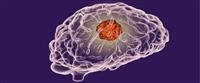
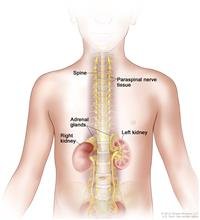
Neuroblastoma is a cancer of the sympathetic nervous system that forms in the adrenal gland and on both sides of the spine, from the fetal stage and during childhood.
The infection may be local or it may spread to the liver, bones, bone marrow, lymph nodes and skin. In one of the rare forms of neuroblastoma with special biological characteristics, which affects children under the age of one year, the tumor disappears spontaneously.
Symptoms of neuroblastoma
The tumor is the appearance of a hard lump in the abdomen, bleeding around the eye, or bone pain.
Diagnosis of neuroblastoma
Diagnosis is made by taking a sample (piobsy) and examining the bone marrow (bone marrow).
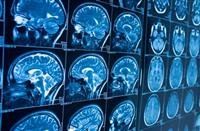
The urine of most patients contains vanillylmandelic acid (VMA) or homovanillic acid (HVA), which are substances from tumor cells, as the concentration of these two substances in the urine decreases as treatment progresses. As for determining the extent of the disease, it is done through an ultrasound examination (ultrasound), computed tomography (CT) or magnetic resonance imaging (MRI).
MIBG is a substance that is injected through a vein and collects inside neuroblastoma cells. And, with the help of this material, schematic imaging helps to detect cancer cells in various parts of the body.
Because neuroblastoma tends to spread to the bone marrow as well, patients undergo a biopsy (biopsy) process from the bone marrow, by ing a large injection into the pelvic bone under anesthesia.
Neuroblastoma treatment
The treatment depends on the extent of the tumor and some biometrics that include chromosomal changes and genes in the cancer cells. All of these give an estimate of the severity and severity of the injury.
When the surgeon succeeds in removing the tumor masses and when the tumor is not spreading, the treatment ends with the surgery.
When a surgeon does not succeed in removing the tumor, or when the disease is widespread, the chances of a cure are low. The main component of treatment is chemotherapy, which is a combination of several drugs, and over several courses of treatment.
The treatment period extends for several months, after which an attempt is made to eradicate the primary (primary) tumor if it has not been removed immediately after diagnosis.
In some cases, an autologous bone marrow transplant is performed. This treatment involves giving chemical drugs in a very high concentration in order to eliminate all remnants of the disease. Since this treatment causes irreparable damage to the blood cell production system, stem cells (Stem cells), which have been frozen outside the body previously, are introduced into the patient''s blood, in order to ultimately lead to the restoration of the blood production system.
This treatment requires a hospital stay of about one month, in a special department. Due to its complexity, special medical staff and special conditions are provided for the patient.
In some cases, radiotherapy is added to the site of the primary tumor.
Also, giving the patient doses of vitamin (A), which contributes to the elimination of cancer cells, and treatment with specific antibodies to neuroblastoma cells, may be part of the treatment process.