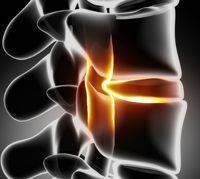
What is a disc?
The disc is a part of the spine located between the vertebrae to absorb shocks and give the spinal column its flexibility and movement. It consists of an outer ring of fibers with a gelatinous substance inside.
What is a herniated disc?
A herniated disc occurs when the gelatinous portion slides in and out through a hernia in the fibrous portion of the disc. This soft gelatinous part slips into the nerve canals and presses on parts of the nerves, and thus leads to pain in the back, thigh and leg, which is known by the general population as sciatica.
What are the reasons that lead to a slipped disc?
There are many factors that may lead to a herniated disc, including incorrect postures when sitting, walking and working, such as bending over, carrying weights in the wrong way, weight gain, or work that causes stress on the lower back.
What are the symptoms of slipped disc?
Herniated disc in the lumbar vertebrae leads to pain in the lower back that extends to the posterior side of the hip, thigh and leg, in addition to the possibility associated with this weakness in the muscles of the foot and leg, change in sensation or loss of ability to control urine or stool.
How long is the diagnosis made?
The diagnosis is made after examining the patient clinically and conducting specialized rays such as x-rays and magnetic resonance rays
How is the treatment of these cases?
The treatment is divided into two parts: conservative treatment and surgical treatment
Conservative treatment is successful in many patients and consists of rest for several days, the use of anti-inflammatory medicines, painkillers, muscle-pathological medicines, and physical therapy. You should also avoid any habits or factors that lead to stress in the lower back
As for surgical treatment, it is used when conservative treatment fails to remove symptoms within four to six weeks.
What is the surgical treatment?
It is the process of removing the slipped part of the disc that compresses the nerves through a small incision (2 to 3 cm) in the back and using a microscope, the operation usually takes 45 to 60 minutes and is done under complete anesthesia.
Is there risk of the surgery? What is its success rate?
The success rate of the operation is more than 95%, and usually the patient wakes up from anesthesia and the disc pain has disappeared, as for the wound pain, it is simple and lasts for a day or two, and usually the patient can move and walk on the same day of the operation or the next day, and with advances in the field of anesthesia and spine surgery These operations are considered very safe and they are routine surgery in advanced centers.
When the patient can return to normal life?
Immediately after the operation, the patient can walk, sit and travel by plane or car for short distances and he can return to office work within three weeks and return to any other work within six weeks.
Are there solutions other than surgery?
In some cases, a needle may be given in the back that contains an anti-inflammatory substance that works the work of cortisone and may lead to relief of pain and inflammation in the nerve
what about curing the disk with the scope and enzymes?
In very few cases, a laparoscope can be used to remove the slipped part of the disc, and this leads to a reduction in the wound from 3 cm to 1 or 2 cm. As for the enzymes and other substances, it has not been scientifically proven that they have a successful role in these cases and, on the contrary, may lead to difficulty in treatment Later
How can I avoid slipped disc?
It can be avoided by following the following things
First: Maintaining the ideal weight
Second: Continuously practicing sports and maintaining lower back fitness
Third: Using proper methods to lift, pick up, and move things
Fourth: Maintaining the straightness of the back when walking and sitting
Fifth: the use of supportive devices such as medical mattresses and lower back pillows
Are there native or popular ways to treat these conditions?
Some patients may resort to native or folk medicine, such as cupping, Chinese needles, ironing, hot sand baths, and some herbs such as fenugreek and others. Although they may lead to a temporary improvement in pain, medical and scientific research has not proven the effectiveness of these native methods and their scientific effect is similar to the effect of analgesic drugs.
Back Care Instructions
What should be done and what should not be done?
Seating
You must sit upright while maintaining a straight back and use a small cushion behind the back, and you should avoid sitting on low furniture or on the floor for long periods or sitting in a curve.
Bend
The knees should be bent and the back kept straight when picking up things from the ground, and avoiding work that requires bending forward for long periods, such as sweeping, planting, etc.
Weight lifting
The back must be kept straight when lifting and carrying and avoiding lifting and carrying heavy objects as much as possible.
Sleep
A medium firm mattress should be used
Traveling by car or plane
You must maintain a straight back, use a medical pillow behind the back, and try to stand and walk every half hour