
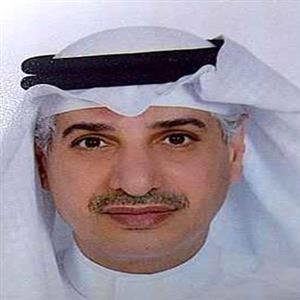
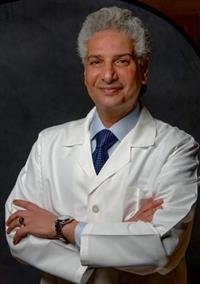
is indescribable when seeing my patients'' smile.
For many years, our Arab world has not known a certified specialist in contemporary plastic and corrective maxillofacial surgery, which has been approved by the Council of Delegates of the American Dental Association as a substitute for the previous designation of the specialty, which is "Oral surgery" stood where it became named
Oral and maxillofacial surgery is a recognized specialty in dentistry that includes diagnosis, surgical treatment of diseases, and Injuries and defects that affect both the functional and cosmetic aspects of the soft and hard tissues of the oral, facial and maxillary region.
Dr. Othman Al-Tuwairqi is one of the few pioneers in this field, as he is the first dentist from the Arab Gulf states to obtain an award 1996 American Fellowship in Oral, Maxillofacial and Facial Surgery.
After graduating from the College of Dentistry at King Saud University in 1988, he went to Boston, in the states United States of America to begin a decade-and-a-half study journey at Tufts, Harvard and Boston universities Boston and Antigua, USA, five graduate degrees in Dentistry The DMD is a Master of Dental Science and MSD a Ph.D. in Molecular Biology. MD, and finally, the American Board Certificate in Oral, Maxillofacial and Facial Surgery OMFS.
His colleagues and everyone who had a share of treatment in his clinics unite that he has experience and distinction in various fields of his specialization, especially in the field of orthodontic jaw surgery, and in addition to the above, Dr. Othman Al-Tuwairqi holds a PhD in Microbiology From Harvard University ... He also worked as an associate professor at Harvard University in Boston and an associate professor at the University of Maryland as well as an associate professor at King Faisal University in Saudi Arabia. Dr. Othman himself devoted himself to the medical confrontation (the neglect of general dentists that negatively affects the lives of patients and hinders them for life, if Through a poor diagnosis or by forgetting the patient''s right to refer to the appropriate specialist for advice).
His indescribable happiness when seeing happiness fill the faces of his patients, and his attractive and spontaneous smile reminds you of the verses of poetry that he always repeats, which is: “Do not cut off the hand of the well-known from anyone ... If you appreciate, the days are times. The Gulf Mirror magazine met him in Washington and had this dialogue with him:
Othman. What do you think about this introductory introduction about you, and did you shorten a major stage of your life?
They are appropriate sentences for how I came to this specialty, this specialty was concerned with oral surgery, then it began to spread widely in Europe and then went as well to America, and after a time in which many fields were introduced that deal with the face and its beautification, congenital deformities and accidents, so doctors wanted there to be an official recipe for adding medicine. Medical certificates are referred to as certifications that help the surgeon to excel in this way.
And you were the title of this creativity, Dr. Othman ... But can we know what are the motivations that made you turn to this specialization? Are there certain motives that brought you to this place?
There is a saying that is always given in the university court, which is that the catalyst is the main reason for reaching the goal. A strong motivation to search in this field was my PhD thesis on the activity of cancer cells in bone cancer, especially the jaw and jaw bones, and we reached appropriate results.
Dr. Othman, was there a trend in the family for science and medicine, and was there someone who encouraged you at the beginning?
When we were young, we were fascinated by the doctor and his social standing, so this was a strong motivation to not specialize in medicine.
Was it difficult to get to Boston, and what were the challenges you faced during your college days and studies?
The challenges were in acceptance, as admission there takes a look at countries that want to invest in their children. In most cases, there is a governmental link with the university class and with distinguished universities in other cities.
Dr. Othman, why are there plastic surgeries, and when did face and maxillofacial surgeries start to appear? And when was the first operation you performed?
First of all, I say that a lot of congenital corrections and development in the science of facial surgery emerged during the first and second world wars because it d a group of patients who needed this care and during these wars studies were established on its basis and a distinct scientific outcome resulted that was invested in one way or another in treating problems of the face and hands, and if we were We look at a paradigm shift in facial cosmetic treatment. We can say that in the middle of the eighteenth century, the trend began to a specific medical model to correct birth defects, and they began from those stages to what we find today. There was an integrated development where all modern technologies are now used and where the risks are reduced and the time decreased.
Dr. Othman, you participated with a medical team in the famous operation in the United States of America for face transplantation that took place at the University of Maryland, during which a patient''s entire face and jaws were transplanted due to congenital anomalies ... How do you remember that operation?
This process is another paradigm shift in medicine and the medical community. There were simple solutions to losing a part of the face or a certain area and covering it with several solutions, but now this paradigm shift came with a radical solution to the face and also this important incident prompts us to mention that there are new things now through technology to develop Human stem cells, and at Harvard University, there is a laboratory for the formation of the ear and the liver, and they have research that has not been completed yet, as they set specific plans to produce body parts after ten, twenty or even forty years.
Dr. Othman, did you, as a Saudi figure, face difficulties, or was the easy way for you?
If you are in a place of the same nature as you, then there will be competition or conflict. As for when you go out to another place, the standards differ and the standards of the West, as you know, are completely different from the standards of the East.
Why is there a demand among men for plastic surgery?
In the past, there was a very simple segment ... But now, between 25-30% of patients are men, man now sees that his health is excellent and he lacks only a good appearance, but there are no specific standards in medicine that determine when to perform such cosmetic surgery on the face, it is the desire of those who The person is nothing more.
Dr. Othman, you say that girls perform facial plastic surgeries in search of beauty and improve their appearance, and that some women perform these operations to hide wrinkles and signs of aging. My question is, what do you think is the reason why girls of twenty years of age are so inclined to such operations?
How do you see the woman at the age of forty performing such operations, and why is there a general lack of conviction in the form?
There are issues and symptoms at this time, including social media and ancestors that make a person’s view unacceptable to him when he sees his image, and he proceeds to these operations and in the Arab world there is a role for the family in giving advice, but it is missing here in the West, so here at the age of 18 you have the right to decide what you want.
And an old woman?
Botox and fluorine are in the world of aesthetic medicine for a certain age, but now they are misused.
Dr. Othman, you always repeat the phrase commitment to excellence? Why?
Excellence only comes from an ideal for you and I have many examples in my life. They gave me a strong incentive to give greater results and produce more, most of them from the West.


