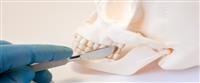
bone of the face
Saudi study on the most important complications of traffic accidents
Last week, the fourth annual International Conference on Oral and Maxillofacial Surgery was held in Jeddah last week, and a number of speakers specialized in this field globally, regionally and locally participated in it to exchange experiences and present the latest technologies used in this field. The conference included a competition for the "best scientific paper" out of fifty papers submitted from various medical specialties and hospitals in the Kingdom''s regions.
Facial injuries
Dr. Rahaf Yousef Al-Habbab, Consultant Oral and Maxillofacial Surgeon, Head of the Reconstructive Surgery Unit and Supervisor of the Saudi Board and Education, Department of Oral and Maxillofacial Surgery at King Fahd General Hospital in Jeddah - participated in the conference with a scientific research. The research won first place in the competition for the best scientific paper, to be published in the International Journal of Surgery Mouth, face and jaws in this month''s issue.
The research is a statistical study of the largest bone in the face exposed to injuries, their causes, and comparing them with the results of other international research, and this research is considered the first of its kind in the western region of Saudi Arabia.
Dr. Rahaf Al-Habbab says that the aim of this study, which was conducted in a retrospective graph method, is to analyze demographic characteristics with causes of accidents and patterns of maxillofacial fractures among patients from the western region of Saudi Arabia who were treated at King Fahd Hospital in Jeddah in the Kingdom from 1998 to year 2016.
The study was conducted on a number of 612 patients who had suffered (886) fractures of the facial bones. It included several statistics on maxillofacial injuries. The study showed that the lower jaw was the most frequently fractured facial bone (61.2 percent), followed by the cheekbones (37.2 percent), the orbital bones (12.8 percent), the nasal bones (7.5 percent), and the bones of the nose (7.5 percent). The forehead (6.3 percent), then the rest of the upper jaw in different proportions.
The study also showed that 60% of the maxillofacial injuries are caused by traffic accidents, followed in sequence: fights (17.3%), falls from heights (16.7%), sports injuries (3.9%), and finally home accidents (2.3%). ). In addition, the statistics indicated that 86.4% of the maxillofacial fractures victims were males and only 13.6% were females, and most of them were between the ages of 20-30 years.
Global comparison
The incidence of maxillofacial fractures continues to increase in all parts of the world, and as expected, the causes and types of injury differ from one country to another. Previous studies support the view that differences in both types and causes of maxillofacial fractures depend to a large extent on the cultural, social and economic variables of the peoples, for example, in developed countries, especially in Europe, physical assaults were the main cause of maxillofacial fractures, followed by car accidents.
The findings of this study support the results of other reports, including those conducted in Middle Eastern countries such as Jordan, Libya and Kuwait, as well as Iran, and also in other regions in the Kingdom of Saudi Arabia. In contrast to the Saudi results, a 10-year review conducted in Austria showed that the most common cause of maxillofacial fractures was activities of daily living and falls.
The results of this study are consistent with other studies conducted in other parts of the world, where it was found in an Australian study that there is a continuous increase in maxillofacial injuries as a result of traffic accidents. On the other hand, it was reported that the maxillofacial injuries associated with the assault were more common in developed countries While in developing countries, traffic accidents remain the most common factor due to non-compliance with road safety regulations, failure to comply with the use of seat belts and adherence to legal speed.
Dr. Rahaf Al-Habbab explained that maxillofacial injuries can have a profound impact on quality of life, including physiological, psychological and aesthetic disorders. Moreover, there is always a possibility of exposure to other severe concomitant injuries, including injuries to the central nervous system, as long as the location of these fractures is the head, not to mention the causes or mechanism of injury. The risk and death rates associated with these fractures can exceed those associated with other causes, including heart disease and cancer.
The reported facts differ from one country to another, and even within the same country. This great variation depends on various contributing factors, the most important of which are gender, age, social, economic, cultural and environmental factors in different periods of the year, as well as the mechanism of injury.
Developments in the treatment of facial fractures
Dr. Rahaf Al-Habbab explained that the methods of treating maxillofacial fractures differ according to the type of fracture. For example, when there is a fracture in one area of the bone, the fracture is called (simple fracture). However, when there are fractures in multiple parts of the bone, it is called an (advanced fracture). In the case of penetration of the skin with parts of the broken bone, it is called an (open fracture), and it is called a (closed fracture) in the absence of penetration.
She added that not all types of maxillofacial fractures require surgical intervention. The main goals of fracture repair are to restore the structure of the facial bones to what they were before the fracture and restore their function. It is preferable to perform fracture restoration and stabilization in the first two weeks of the injury.
The bone is stabilized using titanium chips and screws at the fracture sites in order to prevent the movement of the bones against the forces of the facial and skeletal muscles and to allow them to heal. Stainless steel wire can also be used to correct and repair fractures if metal slats are not available.
Currently, efforts are being made to obtain accurate correction of oral and maxillofacial deformities, and a trend is being made towards the development of high-resolution tomography, computer equipment and image-processing programs capable of reproducing as accurate and identical molds as possible for the patient''s face to facilitate the process of 3D bone positioning.
The use of a mobile Cone Beam CT has shown great value in intraoperative 3D imaging, which can also be used with surgical navigation systems, thus improving intraoperative quality control.
In sum, this study shows the importance of rationalizing citizens by adhering to traffic rules and laws, as well as not exceeding the legal speed and fastening the seat belt.
Among the suggested means for preventing maxillofacial fractures: adherence to the rules and instructions of traffic driving, wearing a seat belt while driving, not being distracted by mobile phones, wearing a helmet when driving a motorcycle, wearing condoms to protect the face and mouth while practicing violent sports such as boxing and wrestling, as well as famous football and practicing Skiing, wearing appropriate dental protectors during friction, hitting and collision sports to prevent cerebral concussions as well as protecting teeth from fracture and dislocation, according to the American Dental Association.