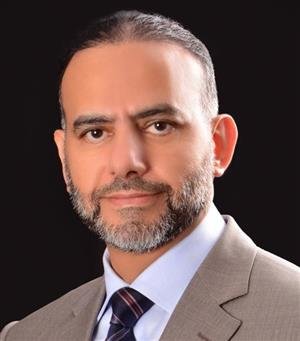

The Director of the Sleep Medicine and Research Center at King Abdulaziz University Hospital in Jeddah, Professor Siraj Omar Wali, revealed that sleep apnea syndrome “sleep apnea” is scientifically known as the suspension of air flow through the upper respiratory tract for ten seconds or more during sleep, and it recurs tens to hundreds of times per day. One night, and during an episode of apnea, the oxygen saturation rate in the blood s below the normal level, before each episode usually ends with a loud snort.
"Sleep apnea syndrome" affects about one billion people around the world, and is treated according to its level of severity, as in simple cases, treatment is done by changing the patient''s lifestyle, such as losing weight, not smoking, and treating allergic rhinitis, but in moderate and severe cases. Treatment is done in several ways.
He added: One of these methods is the use of a continuous positive airway pressure (CPAP) device: it is the ideal and most effective way to treat sleep apnea syndrome, as the device sends continuous air pressure to flow through the nasal passage and from there to the upper airway or throat, and this leads to Making the pressure inside the airway positive regularly during inhalation and exhalation "compared to atmospheric pressure", and thus works to keep the throat open during sleep without blockage, which helps the patient to have a healthy and deep sleep.
He added: Despite the results of studies that prove that the device does not have a positive effect in reducing inflammatory markers such as CRP and fibrinogen caused by sleep disorder, there are many studies that have proven its positive effect in improving sleep quality, daytime sleepiness, high blood pressure, as other studies have shown. Its effect in preventing the recurrence of heart rhythm disturbances and the success of its treatments, and also in preventing the occurrence of heart and brain strokes.
And Abizaid: Of other treatment methods, mouth-layer devices to expand the annular passage: It is a device designed to keep the throat open by pushing the jaw forward, and it is useful in mild and moderate cases, and despite its effectiveness, it is less effective than CPAP, but it is more acceptable to patients. .
Wali said: Surgery is usually the last solution to treat sleep apnea syndrome and after the failure of previous treatments, and it is suitable for a few, and surgical treatments include nose surgery: This surgery may help open the airway and ensure the continuity of breathing during sleep without interruption, for example. Correction of the curvature of the nose and the eradication of adenoids.
He added: It also includes the surgical evaluation of the shape of the uvula, palate and pharynx: This process depends on the removal of the tonsils, the uvula and part of the back of the soft palate that is connected to the uvula, thus expanding the pharynx and it is an effective treatment for snoring, but not for sleep strangulation in general.
And he said: It also includes correcting the position of the jaw by advancing the jaw, where the jaw is pushed forward to expand the space behind the tongue and the soft palate to reduce the possibility of obstruction.
He concluded by saying: In general, for moderate and severe cases, CPAP therapy is considered the best so far.