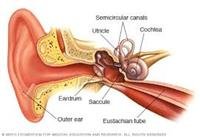
Vestibular neuritis is a condition characterized by a sudden, severe attack of vertigo (a false sense of movement or rotation) caused by inflammation of the vestibular neuritis (a branch of the eighth cranial nerve) that helps control balance.
Vestibular neuronitis is often caused by a viral infection.
Symptoms
Vestibular neuronitis may present as a single, isolated, severe attack of vertigo lasting 7-10 days, but many patients complain of additional attacks of less severe vertigo that persist for a few weeks afterward. The first attack of vertigo is usually the most severe. Vertigo is a false feeling that the person and/or things around them are moving or spinning. Most patients describe this unpleasant sensation as "dizziness", although people use the term "dizziness" to describe various other sensations, such as light-headedness.
The episode of vertigo is accompanied by nausea, vomiting, and nystagmus (rapid vibrating movement of the eyeballs in one direction nating with slowly returning to the original position). The vertigo is severe at first, then gradually decreases over several days, while the feeling of imbalance persists for several months. Patients do not complain of tinnitus, and hearing is usually not affected.
the diagnosis
Hearing tests
Nystagmus tests
gadolinium-enhanced magnetic resonance imaging (MRI)
The doctor uses hearing tests and nystagmus tests to help diagnose the condition and determine the cause of the vertigo.
A gadolinium-enhanced MRI of the head should be done to make sure that symptoms are not caused by another disorder, such as a tumor.
processing
The doctor may prescribe medicines such as meclizine or lorazepam to relieve dizziness
Medicines such as prochlorperazine are prescribed to relieve vomiting
Sometimes the doctor may prescribe corticosteroids such as prednisone
Intravenous fluids are prescribed if vomiting persists
physical therapy
Treatment for vertigo is aimed only at relieving the symptoms it causes and often includes medications such as meclizine, lorazepam or scopolamine. Nausea and vomiting can also be relieved by taking pills or suppositories containing prochlorperazine. These medications should be used for a short period of time, because prolonged use may actually prolong symptoms, especially in older adults. In addition, corticosteroids may be used for a short time. If vomiting continues for a long time, the patient may need intravenous infusion of fluids and electrolytes.
Although vertigo subsides relatively quickly (over several days), the feeling of light-headedness may persist for up to several weeks or months. During this period, doctors encourage patients to maintain their normal activity. It may be helpful to have a specialized type of physical therapy, called vestibular therapy.