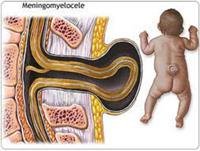
Myelomeningocele is an open incision in the spine that occurs when the closure of the spine and spinal cord is not intact. The membranes surrounding the spinal cord (spinal cord) protrude outside the open vertebra, and some of the sheathed nerve segments of the spinal cord emerge from the posterior side.
An open fissure in the spine (spina bifida aperta) is classified into three levels
a. The most common condition is meningocele. It is the exit of the components of the spinal cord covered with a thin tissue, which resembles a fungus (fungus) through the incision in the posterior part. Sometimes spinal fluid leaks through these tissues.
NS. A less common condition is meningocele. It is the exit of the envelopes and components of the spinal fluid without the exit of the nerve compounds. In this case, too, the envelopes are covered with a thin tissue or leather, and resemble mushrooms.
NS. Another case is myeloschisis. A situation in which the back skin components of the spine and membranes are completely missing, and if we look at the back we see the spinal cord completely exposed.
Normally, the functioning of the subclinical neural spinal cord is disturbed, if not non-existent. Therefore, the higher the incision and involving larger parts of the spinal cord, the wider and more serious the neurological disorder.
1. Neurosurgery injuries in a number of sub-compounds
a. Motor injury (the ability to move the legs) with paralysis.
NS. Sensory injury.
NS. Injury to the nerves to the bladder (urinary bladder) and anus, which can cause incontinence.
Dr.. In most children with an open cleft in the spine, there is an extra incision at the contact area between the head and neck. In this case, there is a prolapse of the components of the cerebellum, brain stem and other parts of the posterior foramina into the spinal canal. This syndrome is known as Arnold-chiari syndrome type 2 (Arnold-chiari syndrome type 2).
As a result, there is an imbalance in the drainage of brain fluids, and hydrocephalus occurs. Based on this, most children with an open cleft usually need to have a tube installed early in their body that drains excess fluid from the brain into the ventricle (ventriculoperitoneal shunt).
2. Urinary Tract Disorders: Due to the weakening of the sphincters, bladder dysfunction may occur. Due to this disturbance in the evacuation of urine from the bladder, there is a very high possibility, in these children, of infection of the urinary tract. Most children need a combination of catheterization and drug therapy to prevent UTIs and to wean them from diapers.
3. The work of the intestines - in the majority of children, two problems meet: the first is the imperfection of the anus, and the second is the neurogenic colon. As a result, some of them develop constipation that can be treated with a proper diet and/or enema (several times a week).
4. Bone injuries - injuries that may lead to curvature (scoliosis) in the back, or a defect in the building of the legs and thighs joints. Some orthopedic problems can be treated through physiotherapy, while other cases require orthopedic surgery at a later stage.
5. Intellectual performance - In general, most children with an open spina bifida without a brain defect do not have any intellectual impairment. But in some cases, a number of them suffer from learning disabilities.
Usually, immediately after birth, the baby is sent to neurosurgery. Because the incision is open, fluid can leak from the brain and cause infection of the central nervous system (meningitis). Therefore, surgery is performed on the baby during the first or second day after birth in order to close the incision. During the surgery, the incision in the back is closed, preventing fluid leakage and infection. But the surgery does not reduce the condition of the paralysis or even the nerve damage that occurs in the part at the level of the incision and below it. Also, the medical staff, during the surgery, tries to repair the spinal canal as much as possible to reduce the spread of infection in the future, as well as to reduce the decline in the spinal cord.
Children with spina bifida can lead normal and active lives. Also, most of them can walk reasonable distances with the help of a leg brace. But most likely these children will also need a wheelchair to get around. The extent of disability is related to the height and position of the affected vertebra. For example, a defect in the height of the sacrum does not impede normal walking without the need for splints or crutches. Also, most children with abnormalities of this level can control their sphincters with the help of these treatments.
In general, children with spina bifida have a normal level of intelligence.
Prevention of myelomeningocele
In order to prevent this defect in the newborn (the fetus), the mother is advised to start taking folic acid three months before pregnancy, and continue taking it during the first three months of pregnancy. Taking folic acid reduces the risk and possibility of developing defects and abnormalities of the central nervous system by 70%-50%. Folic acid is very important for the development of the central nervous system of the fetus, and its intake helps reduce the risk of other birth defects such as cleft lip, cleft palate and other types of defects that may affect the heart.