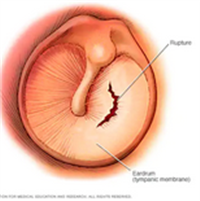
A ruptured eardrum (tympanic membrane perforation) is a hole or tear in the thin tissue that separates the ear canal from the middle ear (eardrum).
A ruptured eardrum can lead to hearing loss. It can also make your middle ear vulnerable to infection.
A ruptured eardrum usually heals within a few weeks without treatment. But sometimes a correction or surgical repair is required to heal.
Symptoms
Signs and symptoms of a ruptured eardrum may include
Ear pain that may subside quickly
Mucus-like or pus-filled or blood-filled discharge from your ears
hearing loss
Ringing in your ear (tinnitus)
Spinning sensation (vertigo)
Nausea or vomiting that can be caused by dizziness
When do you visit the doctor?
Call your doctor if you have signs or symptoms of a ruptured eardrum. The inner and middle ear are made of delicate structures that are highly sensitive to injury or disease. It''s important to try to deduce the cause of your ear symptoms and determine whether you''ve ruptured eardrums.
the reasons
Causes of a ruptured eardrum (perforated eardrum) may include
Middle ear infection (otitis media). Middle ear infections often lead to fluid buildup in your middle ear. The pressure of these fluids may perforate the eardrum.
Barotrauma. Barotrauma is the effort exerted on the eardrum when the air pressure in the middle ear is out of balance with the air pressure in the surrounding environment. If the pressure is too much, the eardrum may perforate. Barotrauma is often caused by changes in air pressure associated with air travel.
Other events that may cause sudden changes in pressure — and possibly a perforation of the eardrum — include diving and a direct blow to the ear, such as when an air bag in a car hits it.
Loud sounds or explosions (acoustic shock). Rarely, a loud sound or explosion, such as from an explosion or gunshot — primarily a strong sound wave — can cause a perforation of the eardrum.
Foreign objects in your ear. Small objects — such as cotton buds or hairpins — can puncture or rupture the eardrum.
Severe head trauma. A severe injury — such as a fracture of the base of the skull — may dislodge or damage the structures of the middle and inner ear, including the eardrum.
Complications
The eardrum has two primary roles
hearing. When sound waves hit it, the eardrum vibrates - the first step by which the contents of the middle and inner ear translate the sound waves into nerve impulses.
protection. The eardrum also acts as a barrier, protecting the middle ear from water, bacteria and other foreign matter.
If the eardrum ruptures, uncommon problems can occur, especially if it fails to self-heal after three to six months. Possible complications include:
hearing loss. Hearing loss is usually temporary, lasting only until the tear in the eardrum heals. The size and location of the tear affect the degree of hearing loss.
Middle ear infection (otitis media). A ruptured "perforation" of the eardrum allows bacteria to enter the ear. If the eardrum does not heal, a small number of people may become susceptible to persistent "recurrent or chronic" infections. In that small group, hearing loss or chronic discharge can occur.
A cyst in the middle ear (cholesteatoma). Although this happens rarely, this cyst of skin cells and other debris grows in the middle ear as a long-term result of a ruptured eardrum.
The remnants of the ear canal naturally move toward the outer ear with the help of protective earwax. If your eardrum ruptures, the remains of skin can enter your middle ear and form a cyst.
The middle ear cyst provides a favorable environment for bacteria containing proteins that damage the bones of the middle ear.
protection
Follow these guidelines to avoid a perforated eardrum
Treat middle ear infections. Be aware of signs and symptoms of middle ear infections, such as earache, fever, nasal congestion, and hearing loss. Children with otitis media are often irritable and may refuse food. Ask your primary care doctor for an urgent evaluation to prevent a possible ruptured eardrum.
Protect your ears during flights. If possible, don''t fly if you have a cold or an active allergy that may cause nasal or ear congestion. During boarding and landing, protect your ears with pressure-adjusting earplugs, yawning or chewing gum.
Or use the Valsalva maneuver, gently blowing the air into your nose as if you were blowing your nose while clenching your nostrils with your mouth closed. Do not sleep while going up and down.
Keep your ears clear of foreign objects. Never attempt to remove secretions or hardened earwax with items such as a cotton swab, piece of paper, or a hairpin. These things can rupture or perforate your eardrum. Aware your children of the harm that may occur if they put foreign objects in their ears.
Watch out for the explosion noise. Avoid activities that cause your ears to explode. If your hobbies or work involves planned activities that make a blasting noise, protect your ears from unnecessary damage by wearing earplugs or earmuffs.