What is a buried wisdom tooth? What are its causes and symptoms? What are the available treatment methods? You can find the most important information and details in the article.
Let''s get acquainted with the following on the buried wisdom tooth and the most important information related to it:
What is a buried wisdom tooth?
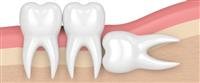
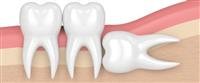
An buried wisdom tooth is a wisdom tooth that cannot fully erupt from the gums, but remains partially or completely embedded below the surface of the gums.
Due to the inability of the buried wisdom tooth to penetrate the surface of the gums to the outside, it may begin to move diagonally or horizontally below the surface of the gums, which may negatively affect the adjacent molars.
Doctors often recommend removing buried wisdom teeth, even in cases where there are no accompanying troublesome symptoms, for fear of future health complications.
Symptoms of buried wisdom tooth
The symptoms of buried wisdom teeth are as follows
continuous headache.
jaw pain
Difficulty opening the mouth.
The same foul smell.
An unpleasant taste when chewing food with molars close to the affected area of the gums.
Swollen and swollen lymph nodes in the neck.
Swelling or tenderness in the area around the buried wisdom tooth.
bleeding gums
It is worth noting that there may not be any symptoms associated with the buried wisdom tooth, but it should be noted that the absence of symptoms does not mean that the affected person is safe from health complications, as the buried wisdom tooth may cause the accumulation of bacteria under the gums, which may lead to inflammation.
Causes of a buried wisdom tooth
Wisdom molars usually appear in the mouth during the age group between 17-21 years, but some wisdom molars may not be able to erupt from the gums in some cases, but remain stuck below the gum surface, and the reason for this is often due to crowding of the jaws with the teeth.
The crowding of the jaws with the teeth prevents the wisdom molars from appearing, where the permanent teeth have appeared and occupied the majority of the empty spaces available in the jaws, leaving the wisdom teeth a relatively small space that may not be sufficient for their full growth and appearance, which leads to the injury of the buried wisdom tooth.
The buried wisdom tooth may grow and move inside the gum in different directions as follows:
At an angle where the molar is tilted, moving toward the back of the mouth.
At an angle where the molar is inclined, moving toward the molar next to it.
In a perpendicular direction, the molar attempts to erupt from the gums, but remains stuck to the jawbone.
Complications of a buried wisdom tooth
Here are some health complications that buried wisdom teeth may cause
Chronic gum disease: It may lead to the loss of some molars adjacent to the affected area in the future.
Additional pressure and crowding in the jaws: which may negatively affect the occlusion of the jaws and the arrangement of the teeth in the mouth, or may lead to damage to the teeth.
Tooth decay: the affected person may face difficulty when trying to clean the buried wisdom tooth or the area of the injury, which may lead to tooth decay or the decay of the surrounding molars over time.
Other complications: including
Periodontal infections.
Cysts or tumors in the gums or in the jawbones.
Pus or suppuration in the gums.
Damage to some of the nerves in the mouth.
Buried molar treatment
After diagnosing the condition and imaging the wisdom tooth using x-rays to assess its condition and location, the doctor discusses with the patient the following solutions to treat the buried wisdom tooth and control the condition as much as possible:
Treatments to control symptoms, such as prescription pain relievers, mouthwash made with salt and warm water, medicated antibacterial mouthwash, and antibiotics.
Surgical removal of the buried molar, a process that may be simple or complex depending on the condition of the buried molar and the direction of its growth, and in some cases some health complications may appear in the patient after undergoing this operation, such as:
bleeding.
inflammation.
malaise.
Pain and discomfort.
dry socket
Damage to the nerve of the molar adjacent to the extracted wisdom tooth.