what you need to know
Hearing involves more than just recognizing sounds — what we listen to affects our ability to learn and how we perceive the world around us. For adults, severe hearing loss can affect their social interaction, functioning, and overall health. Severe hearing impairs the normal developmental course of their language and social skills. A cochlear implant is a way to treat people who are deaf or hard of hearing. This cochlear is a small electronic device that measures and processes sounds, then stimulates the auditory nerve to deliver sound to a person who cannot hear sounds otherwise.
Cochlear implants: what you need to know
You should consider a cochlear implant if you
Suffering from severe hearing loss in both ears
Hear with both ears but at a low level of clarity
You can''t hear half of what is spoken or more even while wearing headphones
Relies heavily on reading lip movements to understand speech despite wearing headphones
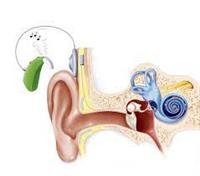
The cochlear implant device consists of two parts. The outer part is installed behind the ear, and it picks up sounds with a microphone. And then this part works to process the sounds and transfer them to the implanted inner part.
The implant is placed under the skin behind the ear during a day''s surgery and a thin cable and small electrodes reach the cochlea, which is part of the inner ear. The cable sends signals to the cochlear nerve, which in turn sends sound information to the brain to stimulate the sense of hearing.
Although the ''normal'' sense of hearing is not restored, with proper training and treatment it is possible to increase the level of awareness of sounds and facilitate lip reading and listening.
Our audiologists recommend a cochlear implant for a child at an early age where the results are best because it helps the child’s brain access the sounds needed to learn language skills. The youngest age a child can have cochlear implant surgery depends on the child’s size and health Most children reach the appropriate size for this surgery between 10 and 12 months of age.
We also recommend early intervention for adults and the elderly who are about to lose their hearing.
There is no upper age limit for a patient with a cochlear implant. Seniors who underwent cochlear implants at Johns Hopkins at the age of eighty and ninety have achieved good results.
For patients who have meaningful hearing abilities to hear low sounds but suffer from severe hearing loss when hearing high sounds, there is a cochlear device specially designed to suit these conditions. This device can provide a way to use earphones when listening to low sounds, and rely on the cochlear device when listening for loud sounds.
Post-operative rehabilitation and training plays a vital role in achieving the best possible results in your hearing ability. For patients coming from abroad to have surgery in Baltimore, we recommend first follow-up with Johns Hopkins audiologists and rehabilitation specialists during the first months after surgery. After that, we will work with patients to help them find audiologists and hearing rehabilitation specialists in their home country to take care of them. the long term.
To decide if you are a candidate for a cochlear implant, you can meet with a cochlear implant specialist at Johns Hopkins who will assess the structure of the ear and perform the full medical and audiological assessments.
When considering a cochlear implant, you may want to keep the following in mind
Cochlear implants do not restore hearing to a normal level. In a small percentage of people, cochlear implants may not improve their hearing ability in the first place.
You may lose the remainder of your normal ability to hear in the cochlear implanted ear.
You may have to use new or recharged batteries daily.
You will have to remove the outside of the cochlear apparatus when showering or swimming.
The magnets in the cochlear implant device blur the image during an MRI scan. Cochlear implant users may also need a head bandage or, in some cases, surgery to remove the magnet temporarily before an MRI scan.
The cochlear implant may be damaged in an accident or during sports.
About 1 percent of cochlear implants eventually fail. In those cases, a second surgery is required to replace the implanted device.
Cochlear implants are not the right solution for everyone. To find out if a cochlear implant is right for you:
You''ll undergo physical and hearing exams to assess your level of hearing loss.
You''ll have imaging tests to see the structure of your ear. These tests may include a CT scan and/or an MRI scan.
You may need to consult a psychiatrist or other counsellor.