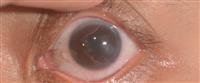
and important information
There are many procedures that can be used to correct vision problems, such as: LASIK surgery, what should you know about this process? What are its potential harms and benefits?
You may be tired of using eyeglasses or contact lenses, so you start thinking about the LASIK procedure, and here is the most important information about it as follows:
What is the LASIK operation?
LASIK surgery is one of the common vision correction procedures around the world, which refers to the local laser correction of keratomileusis.
It is a process through which the shape of the cornea, which is the front part of the eye, is corrected by means of special laser beams that correct any defect in the reflections of vision and vision, and thus the light is focused on the retina in the back of the eye.
Reasons for resorting to LASIK surgery
LASIK surgery is usually used to correct vision in the following cases
Nearsightedness.
Farsightedness.
Astigmatism, which causes blurred vision.
Preparing for LASIK surgery
Before setting the date of the operation, a number of necessary steps are taken first, as follows:
A full eye examination is performed to assess its condition and determine the severity of the damage.
The doctor is informed of the person''s medical history and informed of any medications the patient is currently taking.
The person is given a set of instructions that he must abide by before the date of the operation, as follows:
You must stop wearing contact lenses completely for a period ranging from several days to several weeks before the operation.
The patient should only eat a very light meal on the morning of the operation.
The patient should avoid wearing any jewelry in the hair or in the head area in general on the day of the operation.
What happens during LASIK operation?
During the LASIK process, the following steps are taken
The patient is subjected to local anesthesia in the eye, through anesthetic eye s that are instilled into the eye at least 10 minutes before the operation.
The process begins with the surgeon using a laser beam from a special device to make an incision in the surface of the cornea without completely separating it, allowing most of the corneal surface tissue to be removed from the inner corneal tissue.
Another type of laser beam is shed on the cornea to correct the existing vision problems, and here the patient is asked to stare directly and steadily at the laser beam for a short period.
The surface tissue is returned to its place and the treated cornea is covered with it after completion.
The aforementioned laser beams, known as the Excimer laser, correct the shape of the cornea according to a predetermined and calibrated pattern.
After LASIK surgery
This is what you should expect after LASIK
You will be given s to moisturize the eyes and prevent inflammation, which must be used daily for the period prescribed by the doctor.
Vision may appear blurry or blurry in the first few days after LASIK surgery, and this is normal.
Several visits are made to the doctor after the LASIK operation to inspect and monitor the recovery of the eyes.
Conditions that must be met by the patient
LASIK surgery is not suitable for everyone, but the patient''s condition is evaluated first to ensure that the following criteria are met:
The patient must be at least 18 years old.
That the defect sought to be treated is one of the types of problems that LASIK can treat.
The eye health should be good and the person should not have any eye disease.
That vision problems have not worsened and deteriorated significantly within a relatively short period.
Categories not suitable for LASIK surgery
There are a number of categories that LASIK does not fit into, namely
People who have a thin cornea.
Those with rapidly worsening and deteriorating vision problems.
People with various eye diseases, such as: cataracts, eye infections, chronic dry eyes, keratoconus, and glaucoma.
People with diabetes.
pregnant women.
Pros of LASIK surgery
If you are considering LASIK surgery, these are the most important advantages associated with it that you should know:
The LASIK process is relatively fast, its results appear and recovery is relatively fast as well, and it is generally considered safe.
The operation does not include any surgical stitches, nor does it require dressing the patient.
LASIK surgery is an ideal native to contact lenses and eyeglasses for many people who are suitable for this procedure.
The patient did not feel any pain during the LASIK operation, except for minor discomfort.
Possible downsides to LASIK surgery
These are some of the potential negatives associated with LASIK
LASIK surgery can cause chronic dry eyes and in rare cases unpleasant complications, such as: seeing halos at night, pain and itching in the eyes, and blurry or blurred vision.
Eye rubbing should be avoided completely for several months while the cornea is healing, for fear that the cut and incision made in it will not heal adequately.
Some people sometimes need to perform the operation again after several years, as the defect that was fixed in the first operation may gradually return, but it does not usually return with the same severity, but to a lesser extent.